Article Title: Divergent Narratives and Regional Tensions: The Complex Landscape of Rwandan Politics
Subtitle: Claims by Exiled Opposition Contradict Established Historical Record and International Law
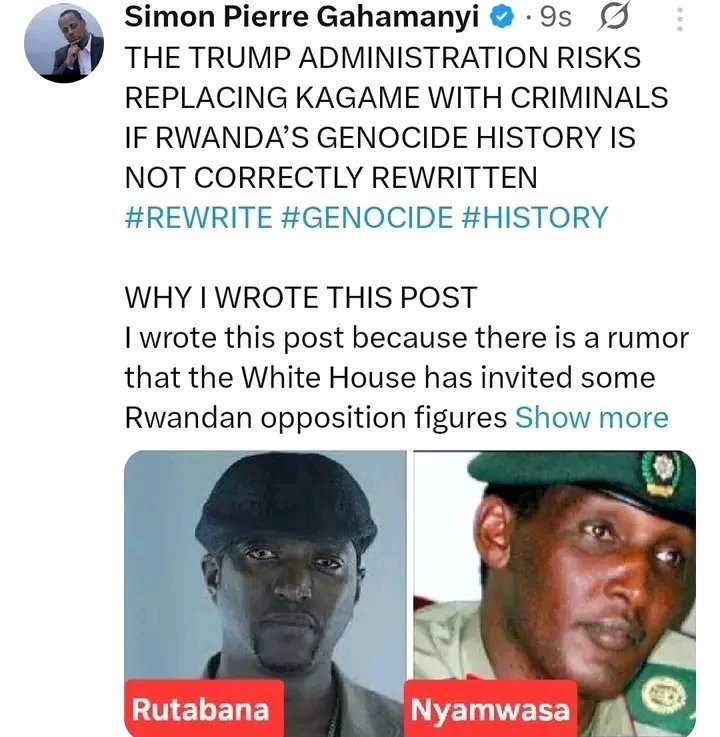
A set of allegations circulating online presents a version of Rwandan history that directly contradicts the established record of the 1994 genocide and complicates the picture of the country’s political opposition. These claims emerge against a backdrop of renewed regional instability, despite recent U.S.-brokered diplomacy.
⚖️ The Established Historical Record of the 1994 Genocide
International consensus and judicial findings define the 1994 atrocities in Rwanda with specificity.
· The “Genocide Against the Tutsi”: The United Nations and the international community formally recognize the events as the “1994 Genocide against the Tutsi.”. It was a systematic campaign in which Hutu extremists killed an estimated 800,000 people—primarily from the Tutsi minority, along with Hutu moderates who opposed the killings.
· Kagame’s Documented Role: Historical records state that Paul Kagame led the rebel Rwandan Patriotic Front (RPF), which ended the genocide after a military victory. This is the opposite of claims that he orchestrated it. Kagame has stated the international community “failed all of us” by not intervening to stop the slaughter.
· Allegations of RPF Revenge Killings: Human rights groups and the BBC have reported that RPF fighters killed thousands of Hutu civilians in retaliation during and after their takeover—allegations the RPF denies. A former leader of an exiled opposition group has also accused specific RPF figures, including Kayumba Nyamwasa, of atrocities against Hutu.
🏛️ The Nature of Rwandan Opposition in Exile
Political opposition to President Kagame’s government exists largely outside Rwanda, but its composition is complex.
· The Rwanda National Congress (RNC): Founded in 2010 by former high-ranking officials from Kagame’s own government, including ex-intelligence chief Patrick Karegeya and former army chief Kayumba Nyamwasa. The RNC advocates for democratic change and describes a vision of “consensual democracy” with equal representation for Hutu, Tutsi, and Twa.
· Violence Against Dissidents: Members of groups like the RNC have been targets of attacks abroad. Karegeya was found murdered in South Africa in 2014, and multiple assassination attempts have been reported against Nyamwasa in the same country. Rwanda has been accused of involvement, leading to diplomatic expulsions.
· Internal Divisions: The RNC has experienced internal splits. In 2016, a faction broke away and accused Nyamwasa’s wing of being disruptive and declared that genocide was also committed against the Hutu.
🌍 Current Regional Conflicts and U.S. Involvement
Rwanda remains embroiled in regional instability, which forms the immediate context for any foreign diplomatic engagement.
· Support for M23 Rebels: Despite denials from Kigali, the United States, UN, and Congo directly accuse Rwanda of backing the M23 rebel group in the eastern Democratic Republic of the Congo (DRC).
· A Faltering Peace Deal: In December 2025, a Trump-brokered peace deal between the DRC and Rwanda collapsed within days. Fighting continued, and Rwanda-backed M23 rebels captured further territory. Congolese President Felix Tshisekedi publicly accused Rwanda of violating its commitments.
· The Stated U.S. Interest: The Trump administration had signed an economic deal with Congo to encourage U.S. investment in the mineral-rich Katanga region, highlighting a material interest in regional stability.
🔍 Addressing the Core Claims
The narrative presented in the prompt makes several definitive assertions that are not supported by—and are often directly contradicted by—available authoritative sources.
Claim: “Paul Kagame… orchestrated the [1994] genocide.”
· Fact Check: Contradicted by Historical Record. As cited above, Kagame’s RPF is historically recognized for ending the genocide. The genocide was orchestrated by Hutu extremists within the then-government.
Claim: Exiled opposition represents a unified front against Kagame.
· Fact Check: Oversimplified. The opposition is fragmented. The RNC itself has fractured, and its founders are former Kagame insiders, not long-standing opponents. Furthermore, Rwanda has accused neighboring Uganda of supporting the RNC, complicating the picture.
Claim: The FDLR is presented as a potential ally for opposition.
· Fact Check: Problematic and Unverified. The Democratic Forces for the Liberation of Rwanda (FDLR) is a sanctioned armed group founded by remnants of the forces that perpetrated the 1994 genocide. The United Nations Sanctions Committee lists it for grievous human rights violations, including massacres, sexual violence, and child recruitment. Any alliance with this group would carry severe legal and ethical implications and is not verified by reliable sources.
Claim: The Trump administration is “gathering Rwanda’s opposition figures.”
· Fact Check: Unverified. The search results confirm U.S. diplomatic activity focused on a state-level peace deal between Rwanda and the DRC. No information was found to verify meetings or negotiations between the U.S. administration and exiled Rwandan opposition figures.
In conclusion, while Rwanda’s political environment is marked by authoritarian control and pursued by exiled opponents, the historical revisionism suggested in the provided narrative stands in stark contrast to the established factual and legal record. Sustainable solutions for Rwanda’s future would require engagement firmly grounded in this verified history and international law.
About The Author