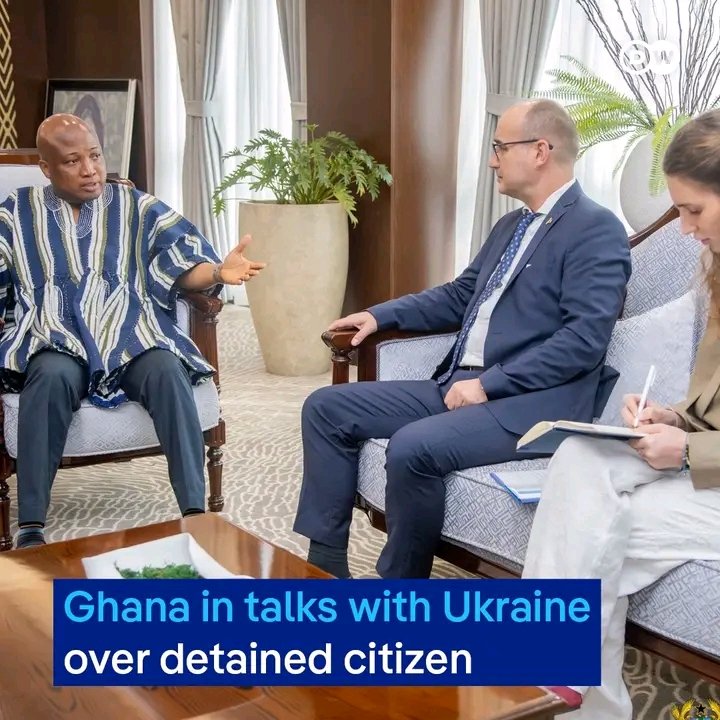
Ghana Negotiates for Citizen Held in Ukraine, Highlighting Africa’s Mercenary Dilemma
The Ghanaian government has entered formal diplomatic negotiations with Ukraine to secure the release of a Ghanaian national detained as a prisoner of war, after he was captured fighting for Russian forces . This case exposes a growing crisis across Africa, where thousands of citizens, lured by promises of high pay or tricked by fake job offers, are being recruited into Russia’s war in Ukraine, often with fatal consequences .
Ghana’s Foreign Minister, Samuel Okudzeto Ablakwa, announced that Ukraine formally notified Ghana of the citizen’s arrest and provided his identity, which has been verified . Evidence shows the man arrived in Moscow on July 7, 2024, and signed a contract to join a Russian motorized rifle regiment before being deployed to the Zaporizhzhia front line .
Minister Ablakwa has personally appealed to Ukraine’s Acting Ambassador in Ghana and plans to travel to Kyiv in the coming weeks to continue negotiations . Ghana has specifically objected to including its citizen in a Russia-Ukraine prisoner exchange, fearing it would endanger him .
A Continent-Wide Recruitment Pattern
The detained Ghanaian is not an isolated case. He is one of at least 1,400 individuals from 36 African nations currently fighting for Russia in Ukraine, according to the Ukrainian government . Ukrainian Foreign Minister Andrii Sybiha has described these military contracts as “equivalent to … a death sentence,” noting that most foreign recruits “do not survive more than a month” on the front lines .
· Deceptive Tactics: Recruiters often use deception. A Kenyan athlete, Evans Kibet, told the ABC he was lured to Russia for a sports festival, only to be forced into signing a contract in Russian he couldn’t read and sent to the front . A Cameroonian math teacher shared a similar story of being tricked .
· Government Responses: Multiple African governments are scrambling to respond:
· South Africa is investigating how 17 of its citizens were lured by “lucrative employment contracts” into mercenary forces and are now trapped in Ukraine’s Donbas region .
· Kenya has secured a commitment from Ukrainian President Volodymyr Zelenskyy to facilitate the release of any Kenyans in Ukrainian custody after its citizens were “illegally recruited” .
· Cameroon has banned its soldiers from traveling abroad without permission after so many troops, including special forces, joined the fighting in Ukraine .
The Pull of Economic Desperation
Analysts point to severe economic pressures as the primary driver. “Jobs are scarce in Africa, especially mid-type paying positions,” said Dr. Joseph Seigle of the Africa Centre for Strategic Studies. “The financial incentive is what generates the attention” .
Recruiters exploit this vulnerability by promising salaries up to ten times what men can earn at home, along with sign-up bonuses and the prospect of Russian passports . This comes amid high unemployment; for example, South Africa’s rate exceeds 30% .
A Complex Diplomatic and Legal Quagmire
The situation creates a severe dilemma for African governments:
· Diplomatic Neutrality: Countries like South Africa and Ghana maintain non-aligned or cordial relations with both Russia and Ukraine, complicating efforts to blame a specific nation for recruitment .
· Legal Limbo: Captured foreign fighters often end up in “legal limbo,” as neither Russia nor their home countries typically seek their return in prisoner swaps. Ukrainian officials state their priority is reclaiming their own soldiers .
· Citizen Welfare: Governments face domestic pressure to protect citizens abroad, even those who may have broken local laws by joining foreign armies. Ghana’s minister emphasized his administration’s commitment to ensuring “no citizen is left in harm’s way” .
Warnings and the Future
Governments are now issuing stern public warnings. Minister Ablakwa cautioned Ghanaian youth against “criminal recruitment and human trafficking networks” operating through the dark web . The U.S. State Department has also reissued its highest-level “Do Not Travel” warning for Russia, noting the risk of wrongful detention and that dual citizens may be forced into military service .
As Ghana pursues its diplomatic channel, the case underscores a painful truth: as long as conflict and economic desperation persist, some of the world’s most vulnerable people will remain targets for recruitment into foreign wars. The question for African governments is not only how to retrieve their citizens from distant battlefields but how to address the root causes that lead them there.
About The Author