Global Aviation Network in Turmoil as Iranian Missile Fire Forces Closure of All Dubai Airports
The global aviation system suffered an unprecedented shock on Saturday as Dubai—home to the world’s busiest international airport—shut down its airspace indefinitely following the launch of Iranian ballistic missiles.
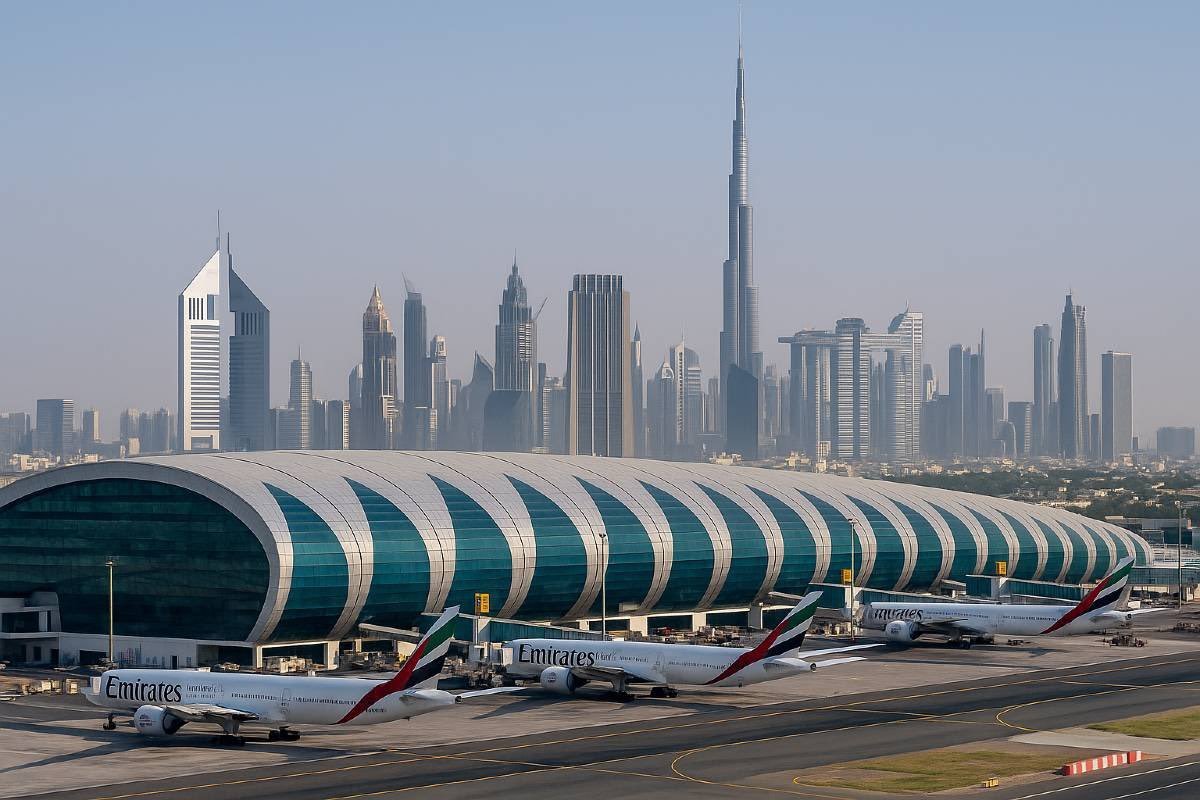
Dubai International (DXB) and Al Maktoum International (DWC) suspended all operations early this morning pursuant to an official directive from Dubai Airports, after projectiles entered the airspace of the United Arab Emirates. The disruption has resulted in the cancellation of over 280 flights, with an additional 250 delayed, effectively severing the primary air bridge between East and West.
The closures have triggered a cascading collapse of flight schedules across the Middle East and Central Asia, grounding national carriers and stranding passengers at a scale rarely seen in civil aviation history.
Carriers Grounded and Airspace Closed
The impact swept through the region’s major hubs within hours. Emirates, Etihad, and Qatar Airways were forced to halt operations. In a cascading effect, neighboring countries closed their airspace or suspended inbound traffic to avoid the trajectory of the missiles.
Air India issued a statement confirming the suspension of “every single flight to every destination in the entire Middle East” until further notice. Turkish Airlines halted service to ten destinations—including Bahrain, Iraq, Iran, Jordan, Kuwait, Lebanon, Oman, Syria, Qatar, and the UAE—with a tentative reschedule set for no earlier than March 2.
European network carriers were hit hard. Lufthansa suspended its Dubai routes, while Air France canceled service to Tel Aviv and Beirut. Low-cost giant Wizz Air announced a sweeping suspension of flights to Israel, Dubai, Abu Dhabi, and Amman lasting until at least March 7.
The ripple effects extended to British Airways, Virgin Atlantic, Japan Airlines, and a host of European flag carriers including Norwegian Air, LOT Polish, Scandinavian Airlines, Aegean, and Iberia. Regional operators Air Arabia, PIA (Pakistan International Airlines), Saudia, and Air Algerie all reported significant disruptions.
Perhaps the most telling indicator of the crisis’s longevity came from IndiGo, which suspended flights to Almaty, Baku, Tashkent, and Tbilisi until March 28—a full month of erased connectivity for Central Asia.
A Critical Node Fractures
Aviation analysts emphasize that Dubai is not merely one of many transit points; it is the single largest connecting hub for traffic moving between Asia, Europe, Africa, and the Middle East. The closure means that thousands of passengers flying from Mumbai to London, Singapore to Frankfurt, or Nairobi to New York—routes that typically utilize Gulf airspace for efficiency—now face cancellations or grueling detours.
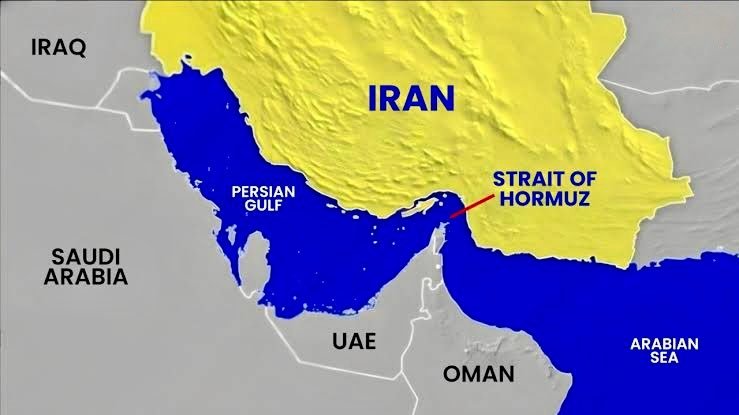
Airlines that choose to reroute are burning thousands of dollars in excess fuel per flight, navigating thousand-mile detours around closed sectors. The financial strain is compounded by oil prices spiking past $100 per barrel amid fears that the conflict could threaten the Strait of Hormuz, through which 21 million barrels of oil pass daily.
“The cost is compounding by the hour,” said a senior aviation consultant. “Carriers operating on razor-thin margins are now paying surge prices for fuel to fly longer routes around a war zone that didn’t exist yesterday.”
The Economic Fallout for the UAE
Beyond the immediate logistical nightmare, the closure poses an existential economic threat to Dubai’s business model. The emirate’s economy—anchored by tourism, trade, finance, and logistics—is entirely dependent on the velocity of movement through DXB.
The crisis carries a political dimension that the UAE will not soon forget. The missile fire that triggered the shutdown resulted in civilian casualties, with the UAE confirming a fatality in Abu Dhabi from falling debris. For a nation that has positioned itself as the safe, neutral, and connected hub of a volatile region, the reality that its airspace was used as a firing range by a foreign power is a bitter pill.
“Iran did not just attack military bases this morning,” one regional analyst noted. “Iran shut down the economic engine of the Gulf.”
As the international community awaits diplomatic responses, the airline industry is left to calculate a mounting bill. With no timeline for reopening and the threat of further escalation looming, the global aviation map has been redrawn—and at its center, the Gulf lies dark.
About The Author