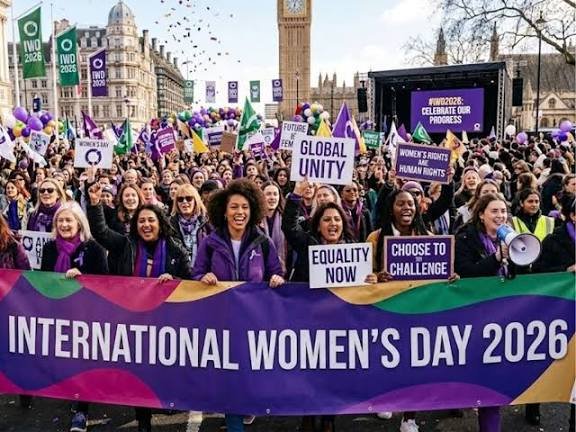
International Women’s Day 2026: From Labor Protests to Global Movement for Equality
March 8 marks International Women’s Day (IWD), a global celebration dedicated to recognizing the social, economic, cultural, and political achievements of women while advocating for gender equality and women’s rights. Observed annually in over 100 countries, the day has evolved from early labor protests into a worldwide movement promoting empowerment and equality across all sectors of society.
Origins Forged in Struggle
The roots of International Women’s Day reach deep into the early 20th century, a period of rapid industrialization and social upheaval when women workers began demanding better working conditions, fair wages, and the fundamental right to vote.
One of the earliest milestones occurred in 1909, when the Socialist Party of America organized the first National Woman’s Day in New York City on February 28. This event drew inspiration from growing labor movements and women’s protests against exploitation in factories, including the famous 1908 march of 15,000 women through Manhattan’s streets.
The vision for an international celebration emerged in 1910 at the International Socialist Women’s Conference in Copenhagen. German activist Clara Zetkin proposed establishing an annual day dedicated to women’s rights, and delegates from 17 countries unanimously supported the idea, aiming to advance campaigns for equality and women’s suffrage worldwide.
The first International Women’s Day celebrations followed in 1911 across Austria, Germany, Denmark, and Switzerland, where more than one million people participated in rallies advocating women’s rights and equal opportunities.
Why March 8?
The date March 8 became permanently associated with the celebration following a pivotal historical event in 1917. Amid World War I, women textile workers in Petrograd, Russia launched a strike demanding “bread and peace” due to severe food shortages and intolerable working conditions. The four-day protest helped spark the Russian Revolution, and soon afterward, women gained the right to vote in Russia.
The strike began on February 23 according to the Julian calendar then used in Russia—which corresponds to March 8 on the Gregorian calendar used internationally. The date became indelibly linked to women’s collective power to reshape history.
United Nations Recognition
Although activists and organizations celebrated the day for decades, it gained official global recognition when the United Nations formally recognized International Women’s Day in 1975 during the International Women’s Year.
Since then, the UN has used the occasion to highlight critical issues affecting women worldwide: equal pay, education access, healthcare, and protection from discrimination and violence. The organization introduced annual themes in 1996, beginning with “Celebrating the Past, Planning for the Future.”
2026 Themes: Rights, Justice, and Action
This year’s International Women’s Day arrives with complementary global themes reflecting both aspiration and urgency. The United Nations has designated “For ALL Women and Girls: Rights. Equality. Empowerment” as its official theme—a call to translate rhetoric into measurable change.
At a high-level dialogue held at the Beijing United Nations building on March 6, UN Women revealed sobering data: no country in the world has fully closed the legal rights gap between men and women. At the current pace, achieving full legal protection could take approximately 286 years.
Wang Chuqiao of UN Women China emphasized at the Beijing event: “Without justice, without action, rights are just empty words.”
How the World Celebrates Today
International Women’s Day is now observed across more than 100 countries through diverse activities reflecting local cultures while sharing common purpose.
In New York on March 9, UN Women’s official commemoration will feature Academy Award-winning actress and UN Women Goodwill Ambassador Anne Hathaway, alongside UN Deputy Secretary-General Amina J. Mohammed. The event precedes the 70th session of the Commission on the Status of Women—the UN’s largest annual gathering on gender equality.
In Lagos, Nigeria, Zenith Bank will host its annual IWD seminar on March 9 under the theme “Take It, You Own It,” encouraging women to step forward boldly into leadership roles. Meanwhile, International Inner Wheel District 911 will provide direct financial assistance to widows in a March 10 empowerment program.
Across Asia, celebrations reflect regional priorities. In the Philippines, SM Supermalls gathered entrepreneurs and advocates on March 6 for “The Future Is Hers: Create. Lead. Thrive.” summit. “March 8 marks the 115th anniversary of International Women’s Day,” noted Jessica Bianca Sy of SM Prime Holdings. “For more than a century, women around the world have been pushing boundaries, opening doors, and expanding what is possible.”
Australia hosts creative commemorations including the “Weaving Stories of Strength” arts workshop series in Launceston, Tasmania, where participants create collective wearable sculptures embodying solidarity and resilience.
Many countries grant women official recognition or time off. China offers women a half-day holiday, though implementation varies by employer. In Russia and post-Soviet states, men traditionally give flowers and small gifts to mothers, wives, and colleagues—flower sales typically double around the holiday. Italian men present bright yellow mimosa blossoms, a tradition dating to the Festa della Donna after World War II.
Why International Women’s Day Still Matters
Despite significant progress over the past century, gender equality remains a distant goal. The World Economic Forum’s Global Gender Gap Index confirms that full gender parity worldwide remains more than a century away at current rates of progress. The movement’s colors—purple for dignity and freedom, green for hope, and white for purity—carry historical weight from British suffragettes, reminding observers that the struggle spans generations.
Women in Afghanistan remain banned from secondary and university education under Taliban rule. In Iran, activists continue facing imprisonment for challenging mandatory hijab laws. Conflict zones from Gaza to Sudan have seen women subjected to gender-based violence, with UN investigators documenting allegations of sexual violence against both Israeli hostages and Palestinian detainees.
Lenlen Mesina, UN Women country program coordinator, speaking at the Manila summit, offered a sharp diagnosis: “Gender inequality is not just about attitudes. It is deeply embedded in systems—in policies, budgets, timelines, and power structures. And once you see that, you can no longer unsee it.”
Is There an International Men’s Day?
The question occasionally arises each March. International Men’s Day is observed on November 19 in more than 80 countries, focusing on men’s health, positive role models, and improving gender relations. Comedian Richard Herring has famously raised hundreds of thousands of pounds for domestic violence charities by engaging with those who complain about the absence of a men’s day, pointing out that addressing gender inequality benefits everyone.
Looking Forward
As 2026 events unfold worldwide, International Women’s Day serves three essential purposes: celebrating women’s achievements across society, raising awareness about persistent discrimination and inequality, and mobilizing action to create a more equitable world for future generations.
From its beginnings in labor protests through its evolution into a globally recognized movement, International Women’s Day symbolizes the ongoing struggle for equality and justice. Each March 8, the world pauses not only to honor women’s contributions but to renew commitments to building a fairer and more inclusive society—because with 286 years needed to close legal gaps, and no country having achieved full equality, the work remains as urgent as ever.
About The Author