Iran’s New Supreme Leader Issues Defiant First Statement as US-Israeli Strikes Continue
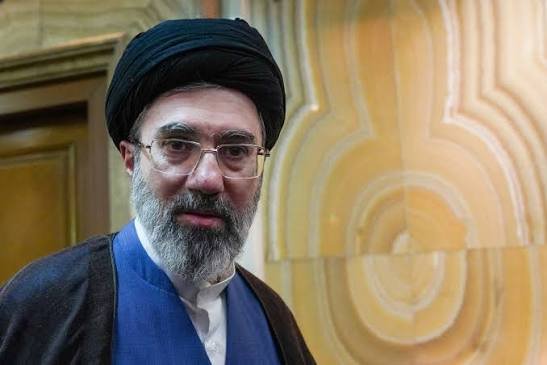
Tehran, Iran – Iran’s newly appointed Supreme Leader, Ayatollah Mojtaba Khamenei, issued his first public statement on Thursday, vowing to continue attacks on US bases in the region and keep the Strait of Hormuz closed, as US and Israeli strikes pounded the country for a second week.
In a message read on state television, the successor to the late Ayatollah Ali Khamenei doubled down on the Islamic Republic’s hardline posture, pledging to secure compensation from its enemies “through assets or destruction.”
“If [the enemy] refuses, we will take from its assets to the extent we deem appropriate, and if that is not possible, we will destroy its assets to the same extent,” the statement said, according to Al Jazeera’s Tohid Asadi reporting from Tehran.
The remarks come as multiple explosions were reported across Tehran and other Iranian cities amid ongoing US-Israeli attacks. According to UN figures cited in the live blog, at least 1,348 people have been killed in Iran, with up to 3.2 million displaced since the conflict intensified.
A Message of Continuity
Analysts suggest the new leader’s inaugural statement signals a continuation of the policies of his late father.
“This is very much the repetition of the standard Iranian lines,” said Rob Geist Pinfold, a lecturer in international security at King’s College London. “Rather than what the Trump administration might have been hoping for—a kind of change in rhetoric from the new supreme leader—what we’re actually hearing here is more of the same.”
In a symbolic move signaling his entry onto the global stage, Khamenei launched an account on X (formerly Twitter), posting his first message hours ago. The account follows only one other: that of his predecessor and father.
Regional Conflict Intensifies
The conflict continues to ripple across the Middle East. Iraq has shut down oil port operations following deadly attacks on two foreign tankers. Meanwhile, Bahrain, Kuwait, the UAE, and Saudi Arabia reported intercepting more Iranian missiles and drones.
Iranian President Masoud Pezeshkian outlined three conditions to end the war: recognition of Tehran’s “legitimate rights,” payment of reparations, and firm international guarantees against future aggression.
In a significant escalation of economic warfare, Iran has signaled it now has “free rein” to target financial institutions linked to the US and Israel. In response, major global banks and consulting firms have begun temporarily closing branches across the Gulf.
Gulf on Edge as Businesses Shutter
HSBC in Doha suspended operations, while Citibank and Standard Chartered closed offices in the UAE. Consulting giants PricewaterhouseCoopers (PwC) and Deloitte announced they are halting work in Saudi Arabia, Kuwait, Qatar, and the UAE to ensure employee safety.
The energy sector remains in turmoil. The International Energy Agency (IEA) warned that the war “is creating the largest supply disruption in the history of the global oil market.” US Energy Secretary Chris Wright admitted the US Navy is “not yet ready” to escort oil tankers through the blocked Strait of Hormuz, a vital chokepoint for global crude supplies.
The disruption is being felt as far away as Nepal, which announced it will begin rationing cooking gas starting Friday amid panic over potential shortages.
Lebanon and Hezbollah Engaged
The conflict has also engulfed Lebanon. The Israeli military announced new “waves of strikes” targeting Hezbollah infrastructure in Beirut. Lebanese health officials reported rising death tolls from strikes on the capital’s waterfront, where at least 12 people were killed, and the southern town of Aramoun, where five died.
Hezbollah responded by targeting the Zar’it settlement in northern Israel with missiles, part of what it described as a coordinated retaliation with Iran.
International Reactions
US President Donald Trump weighed in on the cultural dimension of the conflict, stating it was “not appropriate” for the Iranian national football team to attend the World Cup in the US, Canada, and Mexico this summer “for their own life and safety.”
Iranian Foreign Minister Abbas Araghchi accused Israel of bombing UNESCO World Heritage Sites, including some dating back to the 14th century, and called on the cultural body to break its silence.
In a move highlighting the widening scope of the conflict, Italy announced it is temporarily withdrawing all personnel from a military base in Iraqi Kurdistan following a drone attack.
As fighting continues on multiple fronts, Iran’s new leadership has signaled it will meet US pressure with defiance, leaving the region bracing for further escalation.
About The Author