Israel Accused of Planning Palestinian Displacement to Somaliland Amid Recognition Controversy
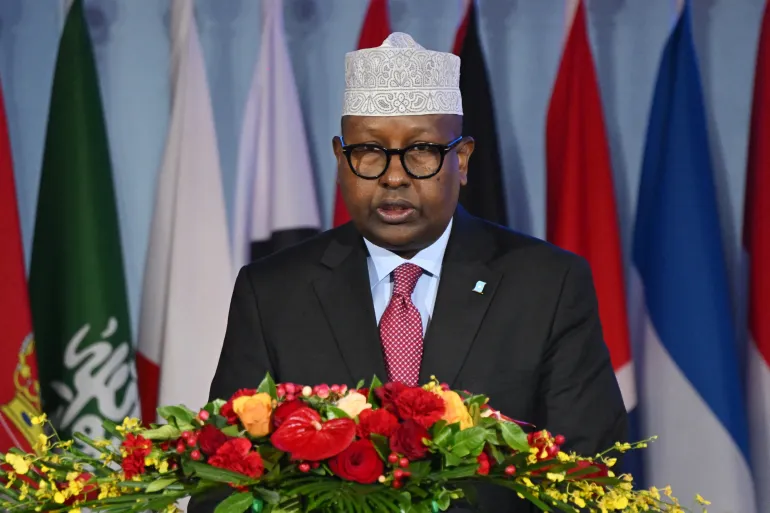
Somalia’s Defense Minister Ahmed Moalim Fiqi has made a serious accusation against Israel, claiming it plans to forcibly transfer Palestinians from Gaza to the breakaway region of Somaliland.
The allegation comes amid a major diplomatic crisis triggered by Israel’s recognition of Somaliland as an independent state in late December 2025—a move widely condemned by the international community.
Core Accusations and Official Denials
Minister Fiqi stated in an interview with Al Jazeera that Somalia possesses “confirmed information that Israel has a plan to transfer Palestinians and to send them to [Somaliland].” He denounced the alleged plan as a “serious violation” of international law.
Somalia’s President, Hassan Sheikh Mohamud, previously alleged that Somaliland had accepted three Israeli conditions for recognition: the resettlement of Palestinians, the establishment of an Israeli military base, and joining the Abraham Accords to normalize relations.
Israeli and Somaliland officials have firmly denied these claims. Israeli Foreign Minister Gideon Saar stated that the forcible displacement of Palestinians to Somaliland “was not part of our agreement”. A Somaliland government source, speaking anonymously, also confirmed that the relocation of Palestinians was not a concession they made.
Military Base Speculation
Alongside the displacement allegations, Minister Fiqi accused Israel of seeking to establish a military base on the strategic Bab al-Mandeb Strait, a crucial maritime chokepoint connecting the Gulf of Aden to the Red Sea.
A Somaliland foreign ministry official, Deqa Qasim, told Israeli media that the possibility of an Israeli military base is “on the table and being discussed,” contradicting earlier denials from her ministry. The Iran-backed Houthi rebels in Yemen have warned they would consider any Israeli presence in Somaliland a legitimate military target.
Wave of International Condemnation
Israel’s recognition of Somaliland and the subsequent high-level visit by Foreign Minister Gideon Saar to Hargeisa on January 6, 2026, have provoked a substantial international backlash.
A coalition of 22 countries and the Organization of Islamic Cooperation (OIC) issued a joint statement condemning the visit as an “illegal” act and a “clear violation” of Somalia’s sovereignty and territorial integrity. Signatories include Egypt, Saudi Arabia, Turkey, Iran, Pakistan, and the State of Palestine.
The OIC held an emergency summit in Jeddah, Saudi Arabia, adopting resolutions that condemned Israel’s recognition and reaffirmed support for Somalia’s unity. Many of these nations, along with the African Union, fear the move sets a dangerous precedent for separatist movements across the continent.
Other major powers have also weighed in:
· China stated that “no country should encourage or support other countries’ internal separatist forces for its own selfish interests”.
· India reaffirmed its support for Somalia’s sovereignty and territorial integrity, dampening rumors it would follow Israel’s lead.
· The United States offered a contrasting perspective at the UN, defending Israel’s right to make the decision.
Strategic Motives Behind the Move
Analysts point to several strategic reasons for Israel’s unprecedented recognition of Somaliland:
· Countering Regional Threats: Somaliland’s location on the Gulf of Aden offers Israel a potential foothold to counter the Houthi rebels in Yemen, who have repeatedly attacked Israeli-linked shipping. It also provides a vantage point near Iran, Israel’s primary regional adversary.
· Expanding Influence: Critics view the move as part of Prime Minister Benjamin Netanyahu’s strategy to expand Israel’s conflict theater and establish itself as a regional hegemon, particularly after more than two years of war in Gaza.
· Diplomatic Opportunism: With Israel facing increasing diplomatic isolation, Somaliland—which has sought international recognition for over 30 years—represents a willing, if controversial, partner.
Somaliland’s Complex Reality
Somaliland declared independence from Somalia in 1991 following a brutal civil war and has since maintained its own government, currency, and security forces. However, no United Nations member state had recognized it before Israel.
The region’s stability is often contrasted with the fragility of Somalia, but its internal situation is complex. The Somaliland government, based in Hargeisa, effectively controls only about 70% of the territory it claims, primarily inhabited by the Isaaq clan. Eastern regions are controlled by local administrations aligned with Somalia.
Potential for Escalation
The situation creates multiple risks for regional stability:
· Increased Somalia-Somaliland Tensions: Somalia views the recognition as an existential threat and an attack on its sovereignty.
· Internal Somaliland Conflict: If Hargeisa attempts to enforce its claimed borders over resistant eastern regions, it could spark new internal conflict.
· Broader Regional Instability: An Israeli military or intelligence presence could draw the Horn of Africa into the ongoing regional tensions linked to the Gaza war, particularly with the Houthis vowing to respond.
As diplomatic tensions continue to rise, Somalia’s President has renewed calls for dialogue with Somaliland’s leadership, warning that international recognition cannot be achieved without the consent of the Somali state. The coming weeks will test whether this crisis can be contained or if it will become a new flashpoint in an already volatile region.
About The Author