
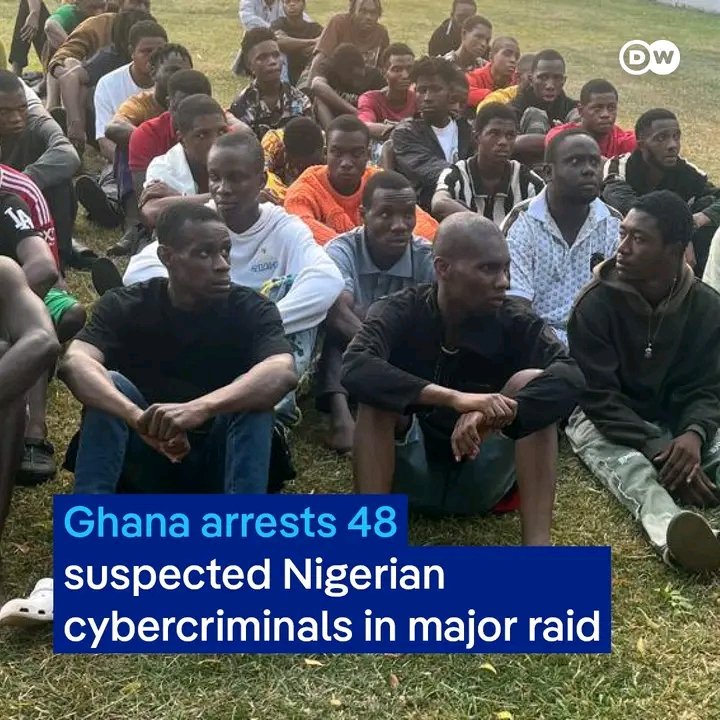
HEADLINE: Major Cybercrime Raid in Ghana Nets 50 Suspects, Seizes Digital Trove
A major multi-agency operation targeting organized cybercrime has led to the arrest of 50 individuals, believed to be Nigerian nationals, in a significant crackdown across Ghana. The suspects are accused of orchestrating a range of sophisticated online scams, including romance fraud, investment schemes, impersonation, and illegal digital gold trading.
The operation, spearheaded by the Cybersecurity Authority (CSA) in collaboration with the National Intelligence and Security agencies and the Ghana Police Service, culminated in a coordinated raid that disrupted a suspected extensive criminal network. Authorities recovered a substantial cache of equipment allegedly used in the scams, including 54 laptops, 39 mobile phones, and numerous internet routers and devices.
“The successful operation underscores our unwavering commitment to safeguarding Ghana’s digital ecosystem and combating transnational organized cybercrime,” a government spokesperson stated. “This should serve as a stern warning to criminal elements that Ghana is not a safe haven for such activities.”
The arrests highlight the growing threat of cybercrime within the region and Ghana’s increasing role as a battleground for digital law enforcement. While the nationalities of the suspects have not been formally confirmed pending verification, officials indicated they are believed to be Nigerian, pointing to the cross-border nature of modern cybercriminal enterprises.
The types of fraud cited—particularly romance and investment scams—are known for targeting victims globally, often resulting in substantial financial losses. The mention of “illegal online gold trading” suggests a blend of cyber fraud with other illicit financial activities.
The raid represents one of the largest publicized cybercrime crackdowns in Ghana this year and signals a heightened focus by authorities on cleaning up the country’s digital space. The suspects are expected to face charges under Ghana’s cybersecurity and electronic communications laws as the investigation continues.
About The Author