
Reports of Escalating Violence in South Kivu Despite Recent Regional Accord
GOMA, Democratic Republic of the Congo Despite the signing of a regional peace agreement in Washington D.C. less than two weeks ago, intense fighting and a major humanitarian crisis are reported in South Kivu province, eastern Democratic Republic of the Congo (DRC).
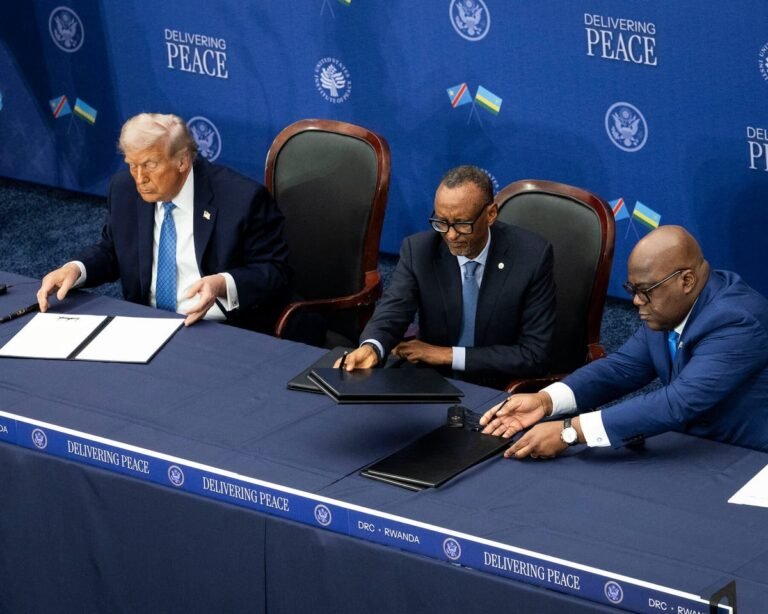
The “Washington Accord,” facilitated by former U.S. President Donald Trump and signed by the DRC and Rwandan governments on December 4, 2025, was intended to de-escalate the long-running conflict and address security concerns. However, local reports and a statement from a critic within the Rwandan military allege a sharp escalation on the ground.
A communication circulated under the name of RPF Gakwerere, who identifies as a Rwandan military corporal with over 30 years of service, accuses the Rwandan Defence Forces (RDF) and the M23 rebel group of launching renewed offensives in South Kivu beginning December 1. The statement claims these actions have displaced over 200,000 people in the past week alone.
The communiqué is fiercely critical of Rwandan President Paul Kagame, accusing his forces of pursuing a “violent mineral war” to plunder DRC’s resources and expand territorial control. It asserts that “carnage” has continued unabated since the accord was signed, labeling the agreement as ineffective in the face of alleged Rwandan ambitions.
These allegations from a purported insider align with reports from humanitarian organizations and local monitors in the region, which have documented renewed clashes between M23 fighters—who are widely believed by the UN and Western powers to be backed by Rwanda—and Congolese armed forces, supported by various local militias. The displacement figures, while difficult to independently verify immediately, are consistent with the scale of recent population movements reported by agencies like the UN’s OCHA.
Rwanda has consistently denied direct involvement with the M23 and has previously framed its military posture as necessary to secure its border against attacks from DRC-based armed groups hostile to Kigali. The Rwandan government has not yet publicly responded to this specific set of allegations regarding post-accord operations.
The DRC government, which signed the Washington Accord alongside Rwanda, has also not issued an official statement on the reported South Kivu offensive. The accord itself details commitments for a ceasefire, the withdrawal of M23 forces from occupied territories, and the cessation of external support for armed groups.
The reported violence in South Kivu represents a significant southern expansion of the conflict, which had been largely concentrated in North Kivu province around the city of Goma. This geographical spread threatens to dramatically worsen one of the world’s most severe humanitarian disasters.
International observers express deep concern that the latest fighting, so soon after a high-profile diplomatic initiative, could completely unravel the fragile peace process. Calls are mounting for independent verification of the situation on the ground and for sustained international pressure on all parties to adhere to their signed commitments.
About The Author