
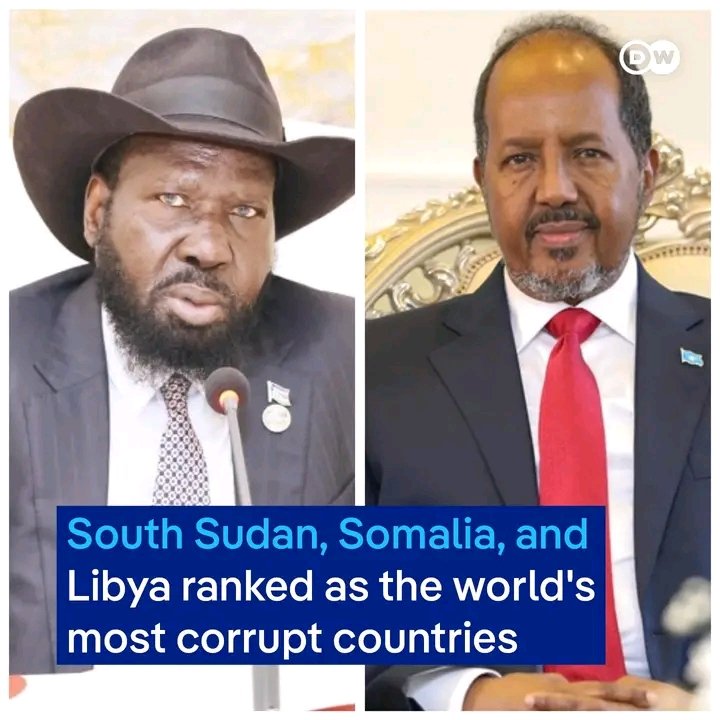
South Sudan and Somalia Ranked Most Corrupt Nations Globally, According to 2025 CPI
South Sudan and Somalia have been ranked as the world’s most corrupt countries, according to the 2025 Corruption Perceptions Index (CPI) released by Transparency International.
The annual index, which assesses 182 countries worldwide based on perceived levels of public sector corruption, places the two fragile Horn of Africa nations at the very bottom of the global rankings, highlighting the severe governance challenges plaguing both countries.
African Nations Dominate Bottom Ranks
Other African nations feature prominently among the global top five most corrupt list, with Libya, Eritrea, and Sudan joining South Sudan and Somalia in the lowest echelons of the index. The concentration of conflict-affected and politically unstable states at the bottom underscores the link between insecurity, weak institutions, and entrenched corruption.
The findings paint a troubling picture of governance across parts of the continent, where decades of instability, weak rule of law, and impunity have allowed graft to flourish unchecked.
Bright Spots: Africa’s Least Corrupt Nations
On a more positive note, several African countries have demonstrated strong performance in combating corruption. Seychelles leads the continent as the least corrupt nation, followed closely by Cape Verde, Botswana, and Rwanda. These countries have consistently maintained robust anti-corruption frameworks, independent institutions, and transparent governance practices.
Their performance demonstrates that progress is achievable even within challenging regional contexts, offering potential models for peers seeking to improve their standings.
Global Context and Warning
Transparency International accompanied the release with a stark warning that corruption remains a major global threat, driven by weak political will, declining democratic institutions, and poor governance worldwide. The organisation emphasised that the problem extends far beyond developing nations, though its impact is often most devastating in countries with limited institutional resilience.
No African country made it to the global top 10 corruption-free nations—a list dominated largely by European countries, with Denmark, Finland, and New Zealand typically leading the rankings. The persistent absence of African nations from the top tier reflects the systemic governance challenges that continue to hamper development across much of the continent.
Looking Ahead
The 2025 CPI serves as both a sobering assessment of current realities and a call to action for governments, civil society, and international partners. As the index demonstrates, corruption is not inevitable but rather the product of political choices and institutional failures that can be addressed through sustained commitment and reform.
For the continent’s highest and lowest performers alike, the message is clear: fighting corruption requires unwavering political will, strong institutions, and active citizen engagement.
About The Author