The Tuskegee Syphilis Study: A 40-Year Betrayal in the Name of Science
For four decades, the United States Public Health Service (PHS) conducted a clinical study on human subjects that stands as one of the most flagrant violations of medical ethics in modern history. Known officially as the Tuskegee Study of Untreated Syphilis in the Negro Male, it exploited, deceived, and ultimately condemned 600 African American men to preventable suffering and death. Its legacy endures as a dark chapter in American medicine and a primary source of deep-seated mistrust in public health within Black communities.
The Study’s Foundation in Racism and Deception
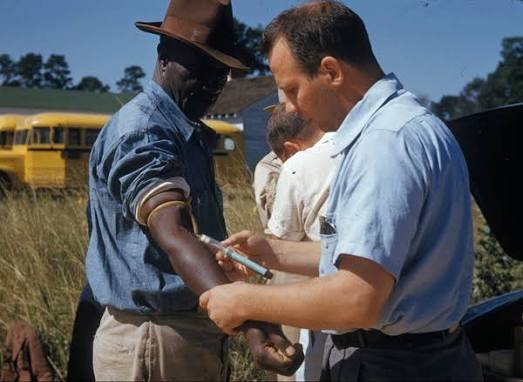
Initiated in 1932 in Macon County, Alabama, the study’s stated purpose was to observe the “natural history” of untreated syphilis. This goal was rooted in the racist pseudo-scientific belief that syphilis manifested differently in Black bodies than in white ones. To fulfill this aim, researchers recruited 600 poor, Black sharecroppers—399 with latent syphilis and 201 without (serving as a control group).
The betrayal began with the first lie. Participants were told they were being treated for “bad blood,” a local colloquialism for a range of ailments including anemia and fatigue. They were never informed they had syphilis, nor that they were subjects in an experiment designed to withhold treatment. In place of genuine medicine, men received placebos like aspirin, mineral supplements, and even toxic, non-curative substances such as arsenic, all while being subjected to painful, diagnostic spinal taps billed as “special free treatment.”
The Unconscionable Decision: Denying a Cure
The study’s profound immorality was cemented in the mid-1940s with the discovery of penicillin. By 1947, the antibiotic was established as a safe, effective, and standard cure for syphilis. This breakthrough presented the PHS with a clear ethical crossroads: treat the suffering men or continue observing them.
The agency chose the latter. A conscious, documented decision was made to actively withhold penicillin from the participants. Researchers went further, taking steps to ensure the men could not access the cure elsewhere. They provided lists of participants to local draft boards to prevent treatment during WWII service, and even intervened with other doctors in the area. The study continued, unmoved by medical progress or human suffering.
Human Cost: A Trail of Suffering and Death
The consequences of untreated syphilis are severe and systematic. The disease progresses to a tertiary stage, damaging the heart, brain, nervous system, and other organs, leading to blindness, insanity, heart disease, and death.
By the time the study was forcibly shut down in 1972:
· At least 128 men had died directly from syphilis or its complications.
· 40 wives had been infected.
· 19 children were born with congenital syphilis.
· Only 74 of the original test subjects were alive.
One of the last survivors, Herman Shaw, summarized the participants’ plight at President Clinton’s 1997 apology ceremony: “We were treated unfairly, to some extent like guinea pigs. We were not paid. We were not doctors. We had no choice, no alternative, except to be involved in the Tuskegee Syphilis Study.”
The Whistleblower and Public Outrage
The study persisted largely in silence until Peter Buxtun, a young PHS venereal disease investigator, learned of it. Appalled, he filed formal ethical complaints with the PHS in 1966 and again in 1968. His concerns were dismissed by a federal panel that infamously voted to continue the study until all participants died and could be autopsied.
Frustrated by institutional inaction, Buxtun leaked the story to Jean Heller, an investigative reporter with the Associated Press. Her front-page exposé on July 25, 1972, sparked immediate and widespread national outrage, leading to congressional hearings and the study’s abrupt termination just months later.
Aftermath: Apology, Settlement, and Lasting Scars
The public scandal led to direct consequences:
· A 1974 class-action lawsuit, Pollard v. United States, resulted in a $10 million settlement and the creation of the Tuskegee Health Benefit Program to provide lifetime medical care to survivors and their families.
· On May 16, 1997, President Bill Clinton issued a formal presidential apology on behalf of the nation to the eight surviving elderly participants. “What was done cannot be undone,” he said. “But we can end the silence. We can stop turning our heads away. We can look at you in the eye and finally say, on behalf of the American people: what the United States government did was shameful, and I am sorry.”
· The scandal directly catalyzed major regulatory reform, leading to the 1974 National Research Act, which mandated the creation of Institutional Review Boards (IRBs) and established strict federal guidelines requiring informed consent for all research involving human subjects.
An Enduring Legacy of Mistrust
The Tuskegee Study is not a relic of the past but a living wound. Academic research, including a notable 2016 study in the Quarterly Journal of Economics, has quantified its devastating legacy. It found that the 1972 news coverage caused a significant drop in healthcare utilization among older Black men, leading to increased mortality. The study estimated this event could explain over a third of the 1980 life expectancy gap between older Black and white men.
Today, “Tuskegee” remains a shorthand for government-sanctioned medical racism. It is frequently cited as a root cause of vaccine hesitancy and general medical distrust in Black communities, a stark reminder that ethical breaches in health care can erode public trust for generations.
The Tuskegee Syphilis Study serves as the foundational case study in modern bioethics—a permanent testament to what happens when scientific inquiry is divorced from human dignity, and racial prejudice is allowed to dictate medical practice.
About The Author