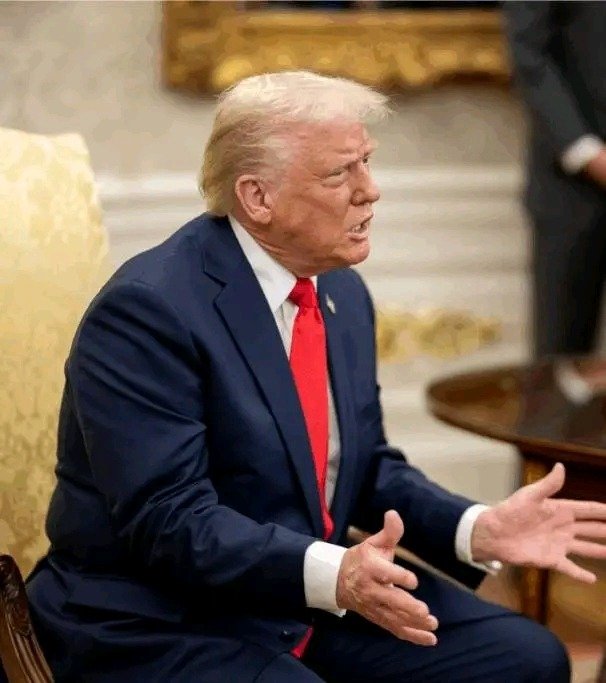
Uganda and U.S. Strike Deal: Sanctions Lifted in Exchange for Deportee Agreement
KAMPALA – The Ugandan government has reaffirmed its commitment to a controversial agreement with the United States to accept deportees, a move that comes amid a significant diplomatic development: the lifting of American sanctions on high-ranking Ugandan officials.
According to reports, the commitment to the deportee pact has been met with criticism both domestically and internationally. However, the government’s resolve appears to have been bolstered by a reciprocal agreement from former U.S. President Donald Trump. In return for Uganda’s cooperation on immigration, President Trump has agreed to lift sanctions imposed in 2021 on several prominent Ugandan officials accused of corruption and human rights abuses.
The sanctions, which were enacted by the U.S. Department of State under the Magnitsky Act, had designated several individuals for their alleged involvement in “significant corruption” or “gross violations of human rights.” The measures involved asset freezes and travel bans.
Among the most high-profile officials now set to have their sanctions lifted is Anita Among, the Speaker of Uganda’s Parliament. She was accused by the U.S. of “significant corruption tied to her leadership of Uganda’s Parliament.”
Other officials previously designated include:
· Mary Goretti Kitutu, the former Minister of Karamoja Affairs.
· Agnes Nandutu, the former Minister of State for Karamoja Affairs.
· Amos Lugolobi, the current Minister of State for Finance. All three were sanctioned for their alleged roles in a corruption scandal involving the misuse of resources meant for the vulnerable Karamoja region.
The list also included Peter Elwelu, the former deputy chief of the Ugandan Peoples’ Defence Forces (UPDF). His designation was due to his alleged involvement in “gross violations of human rights,” a reference widely believed to be connected to the UPDF’s lethal raid on the Rwenzururu palace in 2016.
The deal marks a notable shift in the diplomatic relationship between the two nations. While the Ugandan government has welcomed the lifting of sanctions as a positive step, critics argue it represents a concession that undermines the original purpose of the penalties: to hold individuals accountable for corruption and human rights violations.
The details of the deportee agreement, including the number of individuals to be deported to Uganda and the timeline for the sanctions being lifted, have not been immediately disclosed. The arrangement is likely to be viewed as a major foreign policy achievement for the Ugandan government.
About The Author