

Uganda’s UN Envoy Dismisses Bobi Wine’s US Activities as “Publicity Stunt”
Uganda’s Permanent Representative to the United Nations, Adonia Ayebare, has dismissed opposition leader Robert Kyagulanyi, commonly known as Bobi Wine, recent engagements in the United States as mere “publicity stunts” aimed at exciting his supporters back home.
The exchange unfolded on social media platform X (formerly Twitter) on March 19-20, 2026, following Bobi Wine’s apparent activities near Capitol Hill in Washington, D.C.—the historic seat of the U.S. government housing the Capitol, Supreme Court, and Library of Congress.
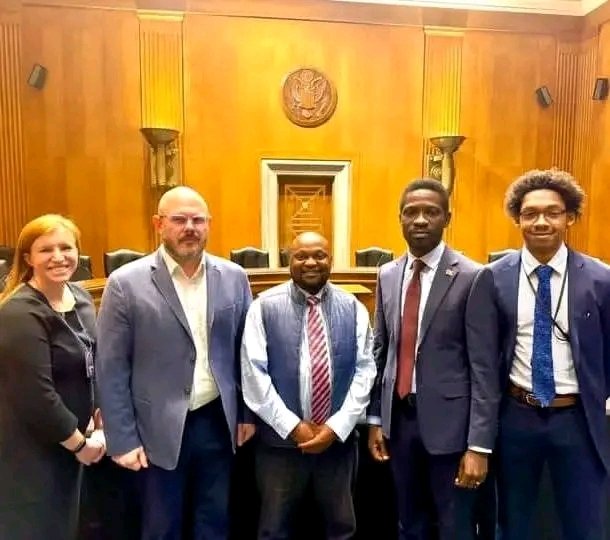
“Anyone Can Engage People at the Hill”
Ayebare, responding directly to Bobi Wine’s posts, characterized the opposition leader’s international engagements as lacking substance.
“This is a publicity stunt rather than a substantive engagement. Anyone can engage people at the Hill,” Ayebare wrote. Drawing a pointed comparison, he added: “Who gets an American Visa even if a bodaboda rider can go and stand in front of the Capitol Hill and engage people he finds there, so that wasn’t news.”
The diplomat further challenged the significance of any travel restrictions the Ugandan government might impose, stating: “If the Uganda government was interested in blocking your travels they would have issued an Interpol red notice. You’re free to return home as you have yourself stated publicly and address whatever grievances you have.”
Ayebare also suggested that Bobi Wine’s international supporters would face difficulties in their efforts, asserting that “Uganda stands out as a beacon of hope in the current geopolitical environment.”
Bobi Wine’s Fierce Response
The opposition leader, who maintains that Uganda’s 2021 elections were rigged by the Electoral Commission, the military, and long-serving President Yoweri Museveni, responded with a sharp historical analogy.
“Even Hitler had pseudo-intellectuals like yourself singing praises for him and justifying the crimes he committed against his people until he fell,” Bobi Wine posted. “I know you’re protecting your job, but there must be a limit to how low you can sink. You’re ashamed that I beat your paymaster at his game.”
Concluding with a prophetic tone, he added: “One day Uganda will be free, but history does not forget and is never kind to your kind.”
Context and Public Reaction
The exchange has generated significant attention, with Bobi Wine’s response garnering approximately 50,000 views and over 1,400 likes, while Ayebare’s initial remarks attracted nearly 100,000 views.
Many Ugandans had reportedly been excited and hopeful following images of Bobi Wine near Capitol Hill, with some believing that engagement with U.S. officials might help address longstanding grievances about the electoral process. However, Ayebare’s dismissal reflects the government’s position that such international engagements carry no substantive weight.
The Broader Implications
The war of words highlights the continuing political tensions between Uganda’s government and the opposition, with both sides using international platforms and social media to frame the narrative. Ayebare’s reference to Interpol notices suggests that despite the heated rhetoric, the government sees no immediate security threat requiring international intervention to restrict Bobi Wine’s movements.
Bobi Wine, for his part, continues to position himself as a freedom advocate facing an entrenched regime, drawing parallels to historical struggles against oppression. His reference to “your paymaster” appears directed at President Museveni, whom he has long accused of manipulating electoral processes to maintain power.
As the 2026 political landscape continues to evolve, this diplomatic-social media clash represents yet another chapter in Uganda’s ongoing political divisions, with both sides appealing to different audiences—the government emphasizing stability and sovereignty, while the opposition presses for what it terms “freedom” and electoral justice.
About The Author