UN Chief Warns of Dangerous Precedent as U.S. Defends Capture of Venezuelan President
NEW YORK, January 6, 2026 – The United Nations Security Council convened in an emergency session on Monday amid a sharply altered geopolitical landscape following a U.S. military operation that captured Venezuelan President Nicolás Maduro and transported him to New York to face criminal charges. The unprecedented action has triggered a fierce international debate, pitting the principle of national sovereignty against calls for accountability, and raising alarms about a return to unilateral force in international relations.
The Operation and the Capture
In the early hours of January 3, U.S. military forces were active across Caracas and several northern Venezuelan states. The operation resulted in the capture of President Nicolás Maduro and his wife, Cilia Flores. U.S. President Donald Trump announced a “large scale strike against Venezuela, and its leader,” stating that the U.S. would “run the country until such time that we can do a safe, proper and judicious transition”.
Maduro and Flores were swiftly brought to the United States. On January 5, Maduro appeared in a federal court in New York, pleading not guilty to charges including narco-terrorism conspiracy and cocaine importation conspiracy. During the hearing, he declared himself a “kidnapped president” and a “prisoner of war”.
Back in Venezuela, the Supreme Court directed Vice President Delcy Rodríguez to assume the powers of acting president. She was sworn in before the National Assembly, condemning the “illegitimate military aggression” and the “kidnapping” of Maduro.
The Security Council: A Clash of Fundamental Principles
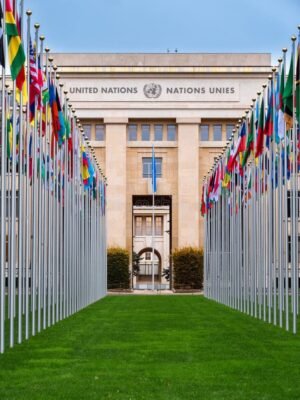
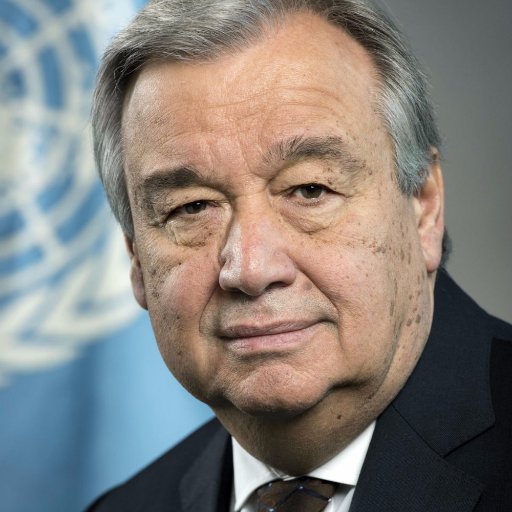
The UN Security Council meeting laid bare deep global divisions. In remarks delivered on his behalf, UN Secretary-General António Guterres expressed grave concern, stating the action risked intensifying instability in Venezuela and the region while setting a dangerous precedent for state-to-state relations.
⚠️ Core UN Charter Principles at Stake
The Secretary-General emphasized that the UN Charter “enshrines the prohibition of the threat or use of force against the territorial integrity or political independence of any state.” He stressed that international peace depends on all Member States adhering to this and other Charter provisions.
The debate crystallized around two opposing views:
· The U.S. Justification: A Law Enforcement Action. U.S. Ambassador to the UN, Mike Waltz, rejected the characterization of war or occupation. He framed the operation as a “surgical law enforcement operation” to apprehend indicted fugitives. He argued Maduro was not a legitimate head of state due to the “farce” of the 2024 elections and was instead a “narco-terrorist” responsible for flooding the U.S. with drugs and partnering with hostile actors. He drew a parallel to the 1989 arrest of Panama’s Manuel Noriega.
· Widespread Condemnation: A Violation of Sovereignty. A majority of Council members and other speaking nations condemned the action as a violation of international law.
· Venezuela’s Ambassador, Samuel Moncada, called it an “illegitimate armed attack” and warned that tolerating the “kidnapping of a Head of State” sends a message that “force is the true arbiter of international relations”.
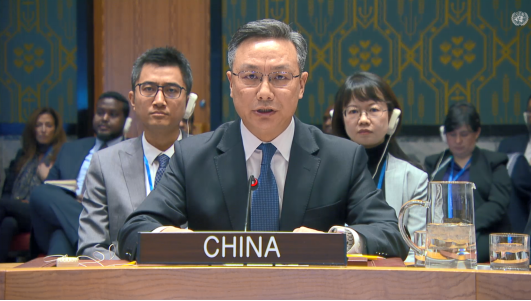
· China’s representative “deeply shocked by and strongly condemns the unilateral, illegal and bullying acts,” urging the U.S. to heed the “overwhelming voice of the international community”.
· Russia’s ambassador warned against allowing the U.S. to proclaim itself a “supreme judge” with the right to invade any country.
· Regional voices from Brazil, Mexico, and Colombia rejected unilateral force, with Brazil stating the bombing and seizure of a head of state crossed an “unacceptable line”.
A Nation in Crisis: The Humanitarian Backdrop
The political crisis unfolds against a backdrop of profound human suffering in Venezuela. The UN Office for the Coordination of Humanitarian Affairs (OCHA) reports that 7.9 million people—over a quarter of the population—need urgent support.
· Collapsed Economy: The country’s economy has contracted by roughly 80% over the past decade, the largest peacetime collapse in modern history.
· Failed Infrastructure: Basic services like electricity grids, water systems, and transportation networks are severely deteriorated.
· Mass Displacement: More than 8 million Venezuelans have fled the country, creating the world’s largest refugee crisis.
The UN’s humanitarian response plan for Venezuela remains critically underfunded, receiving only 17% of the needed $600 million last year.
What Comes Next? Uncertainty and Contradiction
The immediate future of Venezuela is shrouded in uncertainty, compounded by contradictory statements from U.S. leadership.
Conflicting U.S. Visions:
· President Trump painted a vision of the U.S. directly running Venezuela to rebuild its oil infrastructure, suggesting oil revenues would fund the effort.
· Secretary of State Marco Rubio presented a different view, stating the U.S. would have no direct governing role but would use economic pressure to shape policy.
Experts are skeptical of a quick oil-funded recovery. Venezuela’s oil industry is in a shambles, requiring years and billions of dollars in investment to restore.
The Path Forward:
The Secretary-General and many nations called for an inclusive, democratic dialogue led by Venezuelans themselves. Success hinges on several fragile elements:
· Political Legitimacy: Respecting the will of voters from the contested 2024 elections.
· Military Alignment: Unifying Venezuela’s fractured armed forces under civilian authority.
· Massive Economic Stabilization: Likely requiring a large-scale international financial package.
The UN stands ready to support peaceful solutions, but as the Security Council meeting concluded, the world is left to grapple with a fundamental question: whether this operation represents a singular exception or a precedent that begins to unravel the rules-based international order established after World War II.
About The Author