Unverified Claim Alleges Rwandan Plot to Destabilize Burundi Through Resurrected Coup Leader
A Contextual Analysis of Unconfirmed Reports
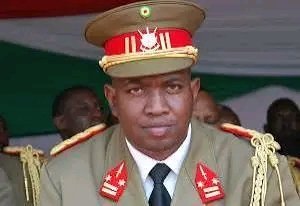
A new and explosive report circulating on social media and opposition-linked forums alleges that the government of Rwanda is actively planning to overthrow the neighboring regime in Burundi. The claim centers on the alleged reactivation of a key figure from Burundi’s past political violence: Lieutenant General Godefroid Niyombare.
The report, attributed to an author using the pen name “RPF Gakwerere,” presents a detailed narrative but originates from a source with a clear political agenda. The language used—labeling President Kagame as “criminal” and “bloodthirsty dictator”—indicates this is a polemical piece rather than a neutral journalistic account. Major international news agencies have not independently corroborated the core allegations.
The Core Allegation: A Coup Leader’s Return
The central claim is that Rwanda, under President Paul Kagame, is preparing to use the recently captured city of Uvira in the eastern Democratic Republic of Congo (DRC) as a launchpad for renewed intervention in Burundi. The alleged instrument of this plan is Lt. Gen. Godefroid Niyombare, who led a failed coup d’état in May 2015 against then-President Pierre Nkurunziza.
According to the report:
· Niyombare and surviving members of his 2015 coup team, who have lived in exile in Rwanda since the attempt failed, are now being “reactivated.”
· “Highly intensive meetings” are allegedly underway in Kigali, Rwanda’s capital.
· The plan would see Niyombare and his team relocate to Uvira once Rwandan or allied forces solidify control over the strategic Kamanyola-Uvira axis, which borders Burundi.
· A recent speech by President Kagame focusing on Burundi is cited as a signal of impending action.
Factual Basis and Geopolitical Context
While the specific allegations of Niyombare’s current activities are unverified, they are built upon a foundation of real historical events and ongoing regional tensions.
· The 2015 Burundi Coup Attempt: Following President Nkurunziza’s controversial decision to seek a third term, then-Major General Godefroid Niyombare announced the dismissal of the government in a televised broadcast. The coup attempt collapsed within days, leading Niyombare and other plotters to flee. He has been a prominent figure in Burundian exile circles since.
· Uvira as a Strategic Prize: The city of Uvira in South Kivu province, DRC, was recently reported captured by the M23 rebel group, which is widely backed by Rwanda. Controlling Uvira provides command over a critical corridor to Burundi’s northern border, making it a valuable asset for any force seeking to influence events in Bujumbura.
· History of Rwandan-Burundian Tensions: Relations between Rwanda and Burundi have been deeply strained for years. The Burundian government has consistently accused Rwanda of supporting armed rebel groups operating on its soil, including RED-Tabara, which claimed responsibility for a major attack in December 2023. Rwanda denies these allegations.
Analysis of a Persistent Narrative
The structure of this latest claim—where a regional power is accused of sheltering and mobilizing exiled opposition figures to destabilize a neighbor—is a recurrent narrative in the geopolitics of Central Africa. The report’s author explicitly frames the capture of Uvira not just as a gain in the DRC conflict, but as a “critical turning point for the survival” of Burundi’s ruling CNDD-FDD party.
Crucially, no verifiable evidence is provided to support the claim of active planning in Kigali or Niyombare’s impending relocation. The sourcing is opaque, and the report’s extreme rhetorical style necessitates a high degree of skepticism. However, its rapid circulation underscores the profound and mutual distrust that defines relations between the two nations and the real fear in Bujumbura that its internal conflicts could be exploited by external actors.
As with all unverified claims in a conflict zone, this report should be treated as an allegation that reflects underlying tensions rather than a confirmed fact pattern. The situation remains fluid, and the strategic importance of Uvira for regional power dynamics is undeniable.
About The Author