$28 Billion Hemp Industry Faces Extinction as Federal Spending Bill Closes “Loophole”
A thriving $28 billion industry, born from the 2018 Farm Bill, is facing a potential extinction-level event due to an amendment tucked inside the federal government spending bill signed into law this week.

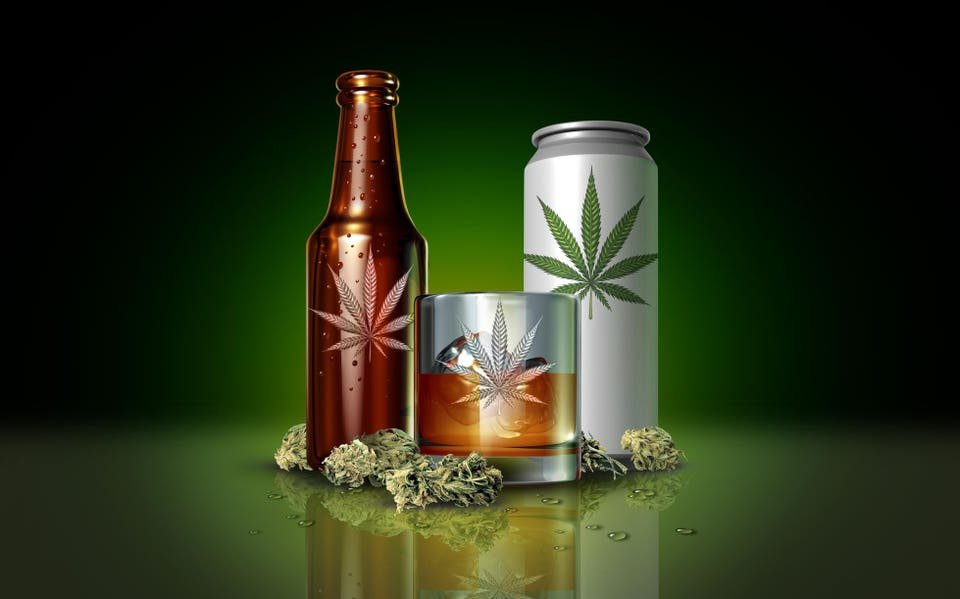
For seven years, the hemp industry has legally sold intoxicating THC products—including beverages, gummies, and vaporizers—online and in stores like Target, Circle K, and Total Wine. This was possible because the 2018 Farm Bill legalized hemp, defined as cannabis containing 0.3% or less of delta-9 THC, along with all its derivatives.
However, a new amendment fundamentally changes the rules. It effectively bans the synthetic manufacture of cannabinoids, which is the primary method of creating popular hemp-derived THC products. More critically, it sets a drastic limit on THC content, restricting products to a maximum of 0.4 milligrams of THC per package. For context, most current products contain at least 5 milligrams, with some containing up to 1,000 milligrams.
“This is an extinction level event for the CBD products industry, and the greater hemp and hemp beverage industry,” said Jim Higdon, cofounder of Cornbread Hemp, which projects $40 million in revenue this year. “If we can’t stop it, and we don’t pivot, it will destroy our business.”
The move is particularly ironic as the author of the original 2018 Farm Bill, Senator Mitch McConnell (R-Ky.), championed the provision to close what he calls a “loophole.” In a recent op-ed, McConnell cited a dramatic rise in calls to poison control centers related to cannabis products, many involving children under 12, stating, “We cannot let this go on any longer.”
While the ban is not immediate—it includes a 365-day grace period before taking effect—the industry is reacting with a mix of panic and determination.
· For hemp entrepreneurs in states where marijuana remains illegal, like Justin Journay of Indiana-based 3Chi, the new law could shutter their businesses. “The way it’s written right now, you can’t even process it legally. I think it completely kills that industry,” Journay said, noting he may be forced to pivot to state-legal marijuana markets.
· Major cannabis companies like Curaleaf, which have small hemp divisions, see less financial threat but acknowledge the need for regulation. Curaleaf CEO Boris Jordan noted the government’s poor track record on enforcement and suggested the ban was lobbied for by Big Alcohol to eliminate competition in the beverage space.
· Industry advocates are choosing to see the one-year window as an opportunity. “We see it as not one year to ban, it’s one year to regulate,” said Thomas Winstanley of Edibles.com. Lobbying efforts are already underway to convince lawmakers to pass more industry-friendly regulations before the grace period ends.
The coming year will determine the fate of countless businesses and a consumer market that has surged in popularity, setting the stage for a significant political and regulatory battle.
Source: Forbes – $28 Billion Hemp Industry Faces Extinction With Government Re-Opening
About The Author