

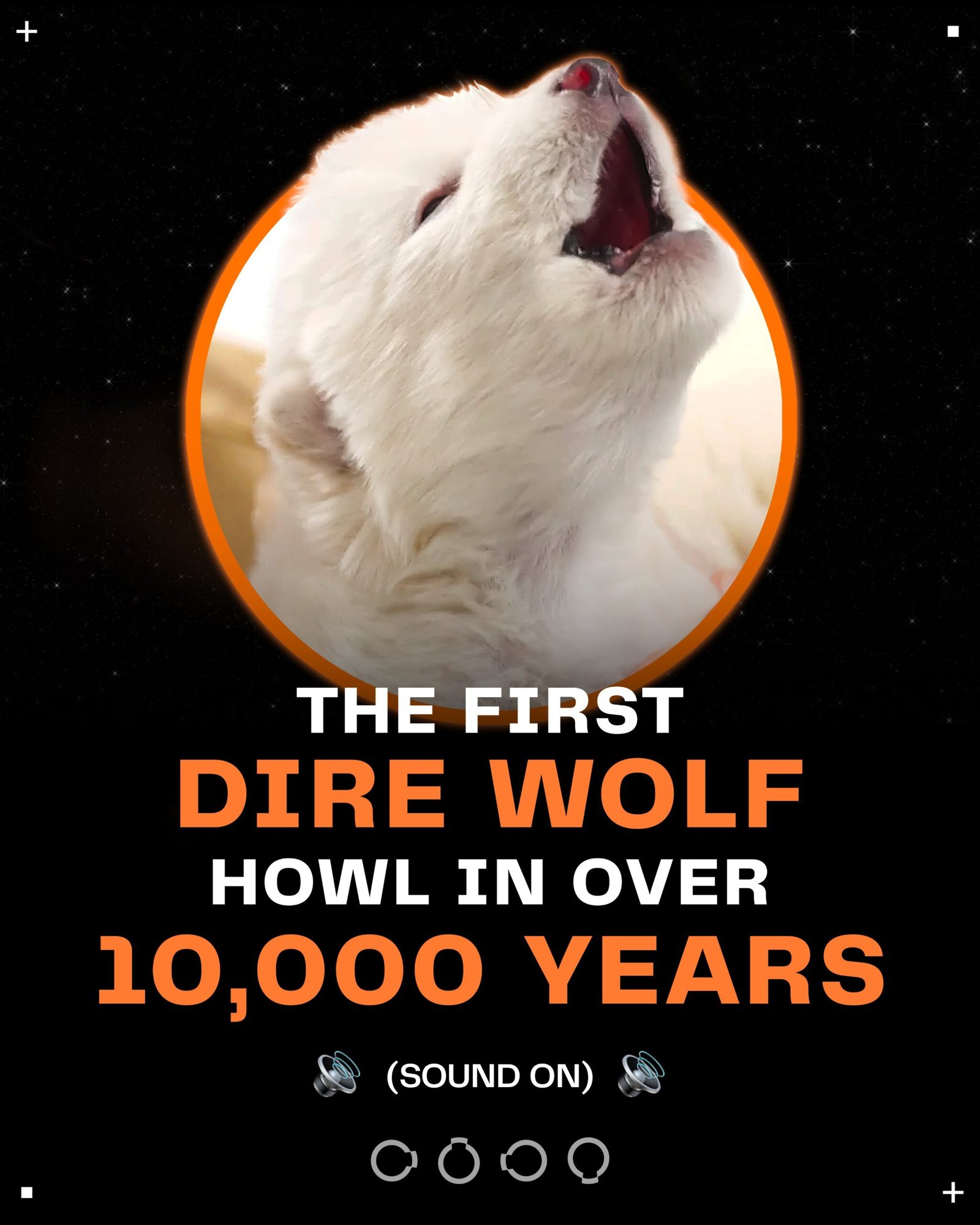
BREAKING: Science Howls Back to Life—Dire Wolves Born from Extinction
DALLAS, TEXAS – In a landmark achievement that reads like science fiction, the first de-extinct animals have been brought to life. Meet Romulus and Remus, two dire wolf pups born on October 1, 2024, whose howls echo from a distant past, silent for over ten millennia.
The pioneering biotech company Colossal has announced the successful birth of the pups, marking the world’s first de-extinction of a species. The project utilized CRISPR gene-editing technology to resurrect the dire wolf (Aenocyon dirus), an iconic Ice Age predator that vanished from Earth over 10,000 years ago.
The breakthrough was made possible by the recovery of ancient DNA. Scientists meticulously reconstructed a complete dire wolf genome using genetic material extracted from fossils dating back 11,500 and an astonishing 72,000 years. This ancient blueprint was then used to guide precise genetic edits, culminating in the birth of the healthy pups.
“This moment marks not only a milestone for us as a company but also a leap forward for science, conservation, and humanity,” a statement from Colossal read. The company’s stated goal has been “to revolutionize history and be the first company to use CRISPR technology successfully in the de-extinction of previously lost species.”
The arrival of Romulus and Remus is presented as more than a scientific triumph; it is framed as a critical step in a larger mission of ecological restoration. Colossal positions the work as “accepting humanity’s duty to restore Earth to a healthier state,” suggesting that de-extinction could be a powerful tool for conservation.
The public is invited to follow the journey of the newborn dire wolves as they grow, with Colossal also hinting at future announcements regarding the next species on their de-extinction list.
For now, the company asks the world to simply listen—to the first howl of a dire wolf in centuries, a sound that signals a new chapter in our relationship with the natural world.
About The Author