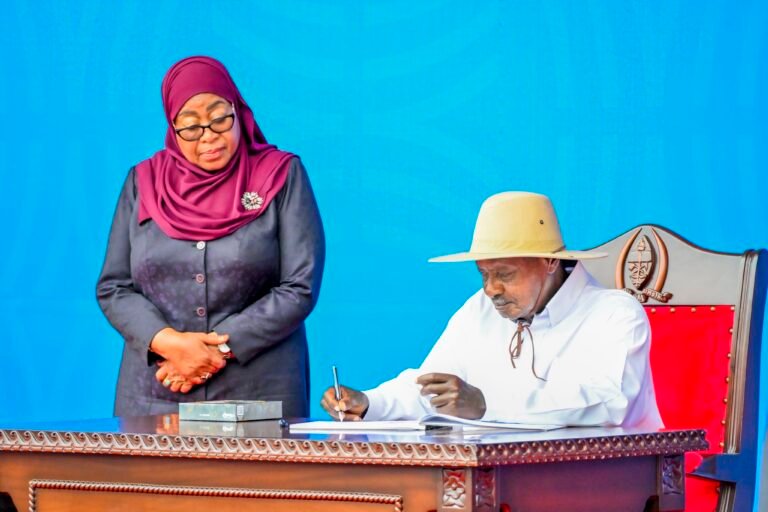


Historic TAZARA Railway Set for $1.4 Billion Revival in Landmark China-Zambia-Tanzania Deal

LUSAKA – In a significant move to bolster regional trade and infrastructure, China, Zambia, and Tanzania have inked a monumental $1.4 billion agreement to comprehensively revitalize the iconic Tanzania-Zambia Railway Authority (TAZARA) line.
The deal, signed in the Zambian capital of Lusaka, paves the way for a major overhaul of the 1,860-kilometer railway, which was originally constructed with Chinese assistance in the 1970s. The project aims to transform the aging line into a modern transport corridor, directly linking the port of Dar es Salaam in Tanzania to Zambia’s mineral-rich Copperbelt region.
The planned upgrades are extensive and include the rehabilitation of stations, the installation of new tracks, and the construction of new tunnels, bridges, and related infrastructure. The primary objective is to dramatically increase the line’s freight capacity, boosting it from the current 100,000 tons to an impressive 2.4 million tons annually.
Zambian President Hakainde Hichilema hailed the agreement as a pivotal development for the nation and the region. He emphasized that the revitalized TAZARA corridor is essential for transforming Zambia, Africa’s second-largest copper producer, into a key regional transport and logistics hub.
“This project is more than just a railway; it is a catalyst for growth,” President Hichilema stated. “It will drive trade, attract investment, and create much-needed jobs for our people, unlocking immense economic potential.”
The original TAZARA line, often called the “Great Uhuru Railway” or the “Freedom Railway,” was a flagship project of Sino-African cooperation during the Cold War era. It was built to provide landlocked Zambia with an alternative export route for its copper and a reliable path for fuel imports, reducing its dependence on routes through territories then under minority rule.
The new investment marks a renewed commitment to this historic infrastructure, aligning with contemporary economic ambitions. By significantly enhancing its capacity and efficiency, the upgraded railway is expected to reduce transport costs, ease congestion at other regional ports, and strengthen supply chain connectivity across Southern and Eastern Africa.
The signing of the $1.4 billion deal signals the start of a new chapter for TAZARA, positioning the decades-old railway as a central artery for future trade and economic integration on the continent.
About The Author