
Museveni Personally Pushed Me to Run for Parliament, Claims Minister Mao
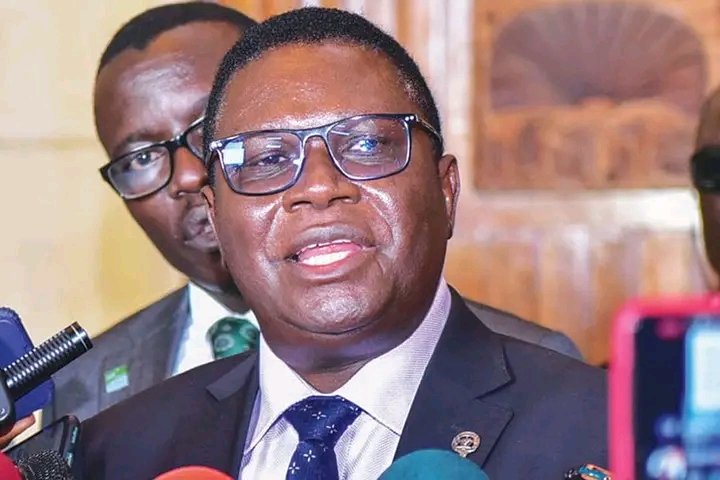
GULU, UGANDA – Norbert Mao, the President of Uganda’s Democratic Party (DP) and the country’s Minister of Justice, has publicly declared that his decision to run for Parliament was a direct result of personal encouragement from President Yoweri Museveni.
The stunning revelation was made during Mao’s first campaign rally in Gulu for the Laroo-Pece Division parliamentary seat. Mao told supporters that President Museveni, who also chairs the ruling National Resistance Movement (NRM), not only pushed him to contest but also directed the NRM’s Secretary General to facilitate his bid.
The President’s Directive and a “Created” Constituency
In his speech, Mao provided specific details of the presidential intervention he alleges took place. He stated that after President Museveni urged him to run, the President issued instructions to NRM Secretary General Richard Todwong.
“President Museveni… later directed NRM Secretary General Richard Todwong to prepare a constituency where he could stand,” Mao told the crowd, framing this as the primary reason for his return to constituency-level politics.
Mao projected extreme confidence in his chances, stating he already believes “victory is on his side.” He framed the upcoming election as a mere formality, saying he is only waiting to see the final vote tally from the Electoral Commission.
A Contested Cooperation Deal
Mao’s claims bring intense scrutiny to the political cooperation agreement between his Democratic Party and the ruling NRM. He has previously described the arrangement as “two vehicles moving in the same direction” to ensure political stability and a peaceful transition of power.
However, the reality on the ground appears fractured. Mao revealed that a key understanding of the deal—that the DP and NRM would not field candidates against each other in agreed constituencies—has broken down in Laroo-Pece. Despite the alleged high-level directive from Museveni, the NRM has officially fronted a candidate, Tony Kitara, to run against him.
Mao expressed a sense of betrayal over this, admitting that local NRM leaders did not follow the cooperative guidance and that President Museveni “did not want to impose it on them by force”.
The Political Field and a Strategic Narrowing
The race for the Laroo-Pece Division seat is crowded and competitive, featuring eight other candidates. The field includes:
· The incumbent MP, Rev. Fr. Charles Onen, running as an independent.
· Tony Kitara, the official flag bearer of the NRM.
· Candidates from the National Unity Platform (NUP), Uganda People’s Congress (UPC), and Forum for Democratic Change (FDC), as well as other independents.
A recent dramatic development has begun to reshape the contest. Caesar Lubangakene, an independent candidate, formally withdrew from the race following a meeting with Mao.
Mao had earlier hinted at this development during his rally, telling supporters that four candidates had decided to support him and “move together.” While he did not name them, he suggested they would make public declarations soon. Lubangakene’s withdrawal is seen as the first step in a strategic consolidation of support around Mao’s candidacy.
Broader Implications and a Play for Influence
Beyond the local election, Mao framed his bid in grand strategic terms for the Acholi people and the nation. He argued that Uganda is approaching a significant transition, with top leaders in the judiciary and army nearing retirement.
“Who will hold the knife for the Acholi during resource allocation in the next Uganda?” Mao asked the crowd, urging them to elect a leader capable of influencing national decisions.
This narrative positions his return to Parliament not just as a local contest, but as a necessary move to secure a powerful voice for his community during an impending period of national political change.
About The Author