
U.S. Escalates Standoff With International Criminal Court, Threatens Sanctions Over Trump, Israel Probes
WASHINGTON D.C. – The United States has dramatically intensified its confrontation with the International Criminal Court (ICC), issuing a series of uncompromising demands backed by the threat of severe sanctions. The ultimatum, delivered to the Hague-based court, centers on shielding U.S. and Israeli leadership from its jurisdiction.
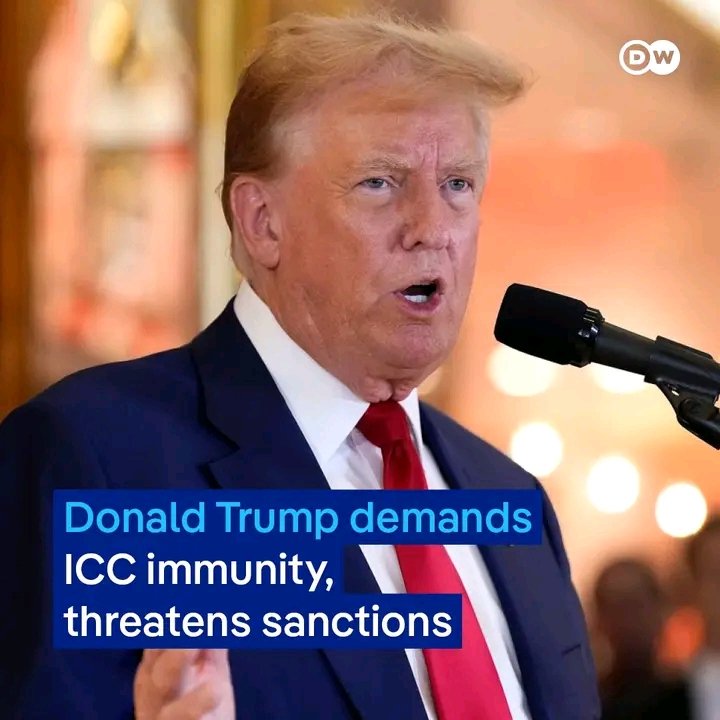
At the core of the U.S. position is an unprecedented request for the ICC to amend its founding treaty, the Rome Statute. Washington is demanding a change that would permanently bar the court from investigating or prosecuting former President Donald Trump or any senior U.S. official.
Furthermore, the U.S. has explicitly demanded the ICC immediately drop its ongoing investigation into the Gaza conflict, which includes arrest warrants issued in November for Israeli Prime Minister Benjamin Netanyahu and Defense Minister Yoav Gallant for alleged war crimes and crimes against humanity. A third demand calls for the formal and permanent termination of a past ICC probe into alleged war crimes committed by U.S. troops in Afghanistan.
U.S. officials argue that the ICC’s actions represent a fundamental violation of American sovereignty, asserting that the court has no legitimate jurisdiction over the United States, which is not a party to the Rome Statute, or its allies.
” The International Criminal Court is pursuing politically motivated investigations against our democratic allies and questioning the sovereignty of the United States,” a senior State Department official stated. “We will use all necessary means to protect our citizens and our partners from this overreach. Failure to comply with our legitimate demands will result in serious consequences, including sanctions targeting the court.”
The ICC, established to prosecute genocide, war crimes, and crimes against humanity, has not publicly responded to the specific demands. Legal experts note that amending the Rome Statute is a complex process requiring the support of a majority of the court’s member states, making the U.S. request highly improbable to fulfill.
The move marks a significant hardening of the longstanding U.S. opposition to the ICC. While the Trump administration previously imposed sanctions on ICC officials in 2020 over the Afghanistan investigation, which were later revoked by the Biden administration, the current threats are broader and tied to explicit preconditions.
The escalation has drawn sharp criticism from international human rights organizations. “This is a direct assault on the rule of law and the victims of atrocity crimes,” said a spokesperson for Human Rights Watch. “Threatening an international judicial body to drop cases and change its laws to suit political powers undermines global justice entirely.”
The situation creates a major diplomatic crisis for the ICC and its member states, forcing them to choose between upholding the court’s independent judicial mandate and facing potential economic and political retaliation from the United States. The standoff also signals robust and continuing U.S. bipartisan support for Israel amidst its war in Gaza and a proactive defense of former President Trump, who faces legal challenges on multiple domestic and international fronts.
About The Author