
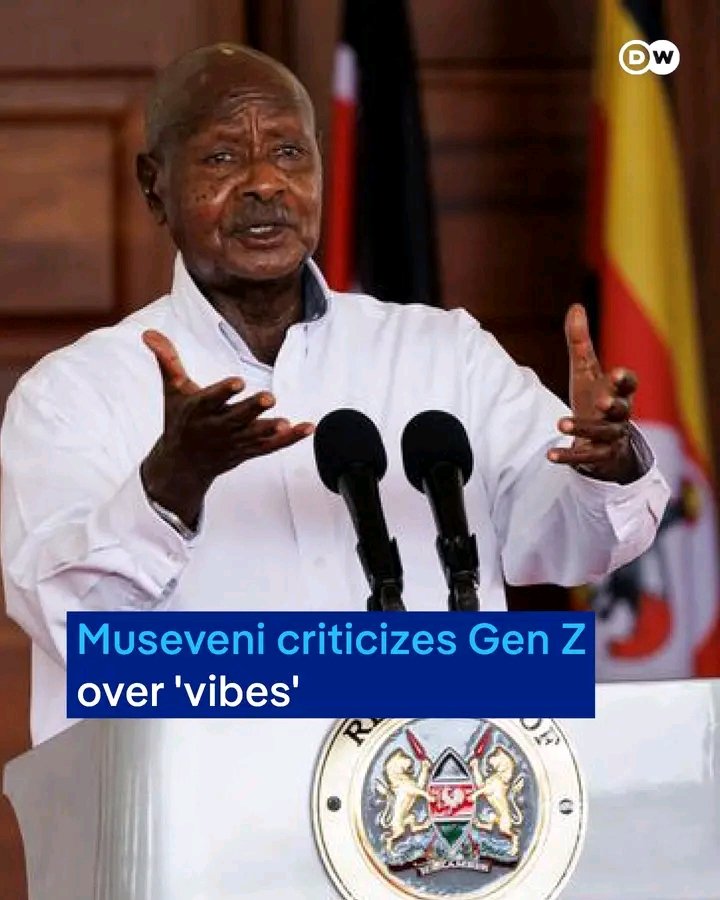
President Museveni Chides Gen Z, Questions Their Contribution to National Development
KAMPALA – President Yoweri Museveni has publicly criticized Uganda’s younger generation, specifically Generation Z, for what he described as a lack of substantive contribution to the country’s development. The remarks were made during a national radio talk show focused on issues of national importance.
Contrasting his own youthful experiences with the attitudes of today’s youth, the 78-year-old leader referenced his revolutionary past. “At the age of 26, I was helping to form the FRONASA movement to fight for the liberation of Uganda,” President Museveni stated, referring to the guerrilla force he co-founded in 1973 that contributed to the overthrow of Idi Amin’s regime.
He then turned his attention to contemporary youth culture, questioning its value to the nation. “I hear them talking about ‘vibes’ and other such things. What is that? How does that help the country?” he asked rhetorically, suggesting a disconnect between the pursuits of many young people and national development goals.
The president’s comments arrive at a politically sensitive moment, as Uganda gears up for its next general elections. Young voters are projected to constitute a significant portion of the electorate, making their engagement and political leanings a critical factor for all contenders.
Analysts suggest Museveni’s statements may be aimed at rallying his traditional base while challenging the youth to align more closely with his government’s long-term vision for national transformation. However, the remarks risk alienating a demographic that already faces high unemployment rates and has been at the forefront of calls for greater political and economic reforms.
There has been no immediate widespread reaction from youth groups or opposition figures to the President’s latest comments. Nonetheless, the dialogue highlights an ongoing generational tension in Ugandan politics, pitting the legacy of the liberation-era leaders against the aspirations and digital-age culture of a rapidly growing young population.
As the election season approaches, the role of Gen Z voters and their response to such critiques is likely to become an increasingly prominent theme in the national discourse.
About The Author