
President Kagame Declares Rwanda United Against External Divisions
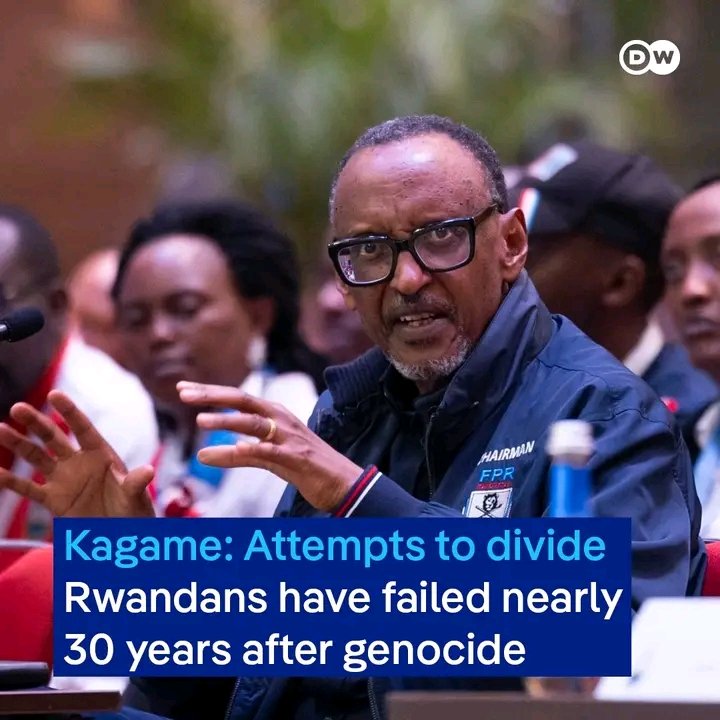
KIGALI — Rwandan President Paul Kagame has stated that attempts by external forces to exploit divisions within the country have failed, emphasizing that national unity remains the cornerstone of the nation nearly 30 years after the genocide against the Tutsi.
The President made these remarks while addressing thousands of members and supporters at the 17th National Congress of the ruling Rwanda Patriotic Front (RPF) in the capital, Kigali.
A Foundation of Unity
In his keynote speech, President Kagame credited Rwanda’s resilience and cohesion to a shared national history and the tangible progress achieved in the post-genocide era. He argued that efforts to create or amplify ethnic, political, or social fractures have been consistently rejected by the Rwandan people themselves.
“Attempts to divide us, to exploit old wounds for external agendas, have not found fertile ground,” President Kagame told the congress. “Our citizens have chosen a different path—one of unity and collective purpose. This is our strength and our shield.”
Legacy of the Past and Warnings for the Future
The President’s message was deeply framed by the shadow of the 1994 genocide, in which over 800,000 people, predominantly from the Tutsi minority, were killed in a span of 100 days. He described the genocide as a catastrophic failure of division and hate, a history the country is determined never to repeat.
Analysts view his pointed comments on “external forces” as a reflection of ongoing tensions in Rwanda’s foreign relations. The nation has faced intense international scrutiny and criticism over issues including human rights, political space, and its role in regional conflicts, particularly in the neighboring Democratic Republic of the Congo.
“The narrative of national unity is central to the RPF’s legitimacy and governance model,” said Dr. Léonard Muganwa, a Kigali-based political analyst. “By framing external criticism as an attempt to sow division, the leadership consolidates domestic support and presents a unified front to the world.”
The RPF’s Political Landscape
The congress, a major gathering for the country’s dominant political party, served as a platform to set the agenda for the coming years. The RPF, which has been in power since ending the genocide in 1994, continues to maintain overwhelming political control. President Kagame, its chairman, secured a fourth seven-year term in the July 2024 elections with more than 99% of the vote—a result contested by some Western governments and observers but celebrated domestically as a mandate for stability and continuity.
Discussions at the congress reportedly focused on national development targets, economic self-reliance, and youth empowerment, alongside the themes of sovereignty and unity.
International Reaction and Domestic Sentiment
The international community often holds a dual view of Rwanda: as a remarkable success story of economic growth and social cohesion, and as an authoritarian state with a constrained civil society. President Kagame’s latest speech is likely to reinforce these divergent perspectives.
Within Rwanda, however, the message of unity resonates powerfully with a population that experienced profound trauma. For many, stability and security are paramount, and the government’s focus on a unified national identity transcends political debate.
As the country continues its journey of reconciliation and development, the leadership’s commitment to resisting perceived external interference appears absolute. The RPF congress has made it clear that the principle of “Rwandan solutions for Rwandan problems” will remain the guiding doctrine for the foreseeable future.
About The Author