
HEADLINE: U.S. Suspends New Visa Issuance for Nigerians Effective New Year’s Day, Amidst Security Policy Shift
DATELINE: ABUJA/LAGOS, December [Date], 2025
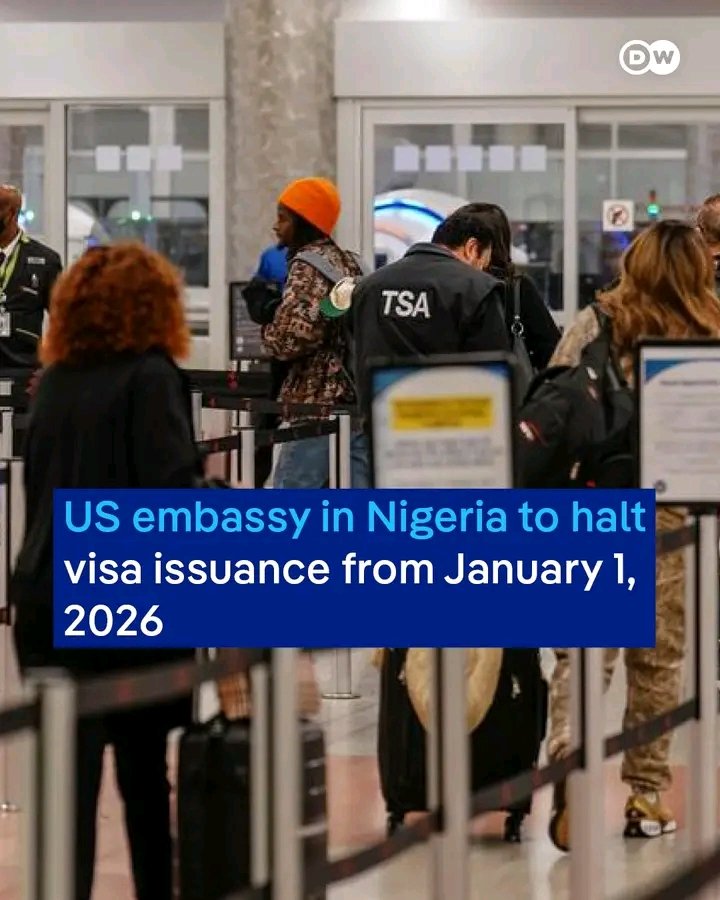
The United States Embassy in Abuja and its Consulate in Lagos will cease issuing all new visas to Nigerian nationals starting January 1, 2026, according to an official policy notice. The move implements the stringent measures of Presidential Proclamation 10998, which cites U.S. national security as the basis for limiting entry from specific countries.
The policy, a significant escalation in travel restrictions, places Nigeria among a group of 19 nations now facing a partial visa ban, a list that includes several other African countries. U.S. authorities were quick to clarify that the ban applies only to new visa applications. Visas issued prior to the effective date will remain valid, and individuals already in possession of a valid U.S. visa as of January 1 are exempt from the changes and may still travel.
The announcement coincides with a notable diplomatic development: the recall of the U.S. Ambassador to Nigeria, Richard Mills. While not explicitly linked by officials, the timing has fueled speculation regarding the state of bilateral relations. It also comes as the Nigerian government is in the process of appointing its own ambassadors for postings abroad, potentially complicating diplomatic engagements.
The immediate practical impact is profound, particularly for Nigeria’s large diaspora community. Many Nigerian students studying in the United States, who would typically return home for the Christmas and New Year holidays, have chosen to remain abroad. Widespread concerns over the uncertainty of securing a visa for re-entry to the U.S. have stranded families and disrupted traditional celebrations.
“I can’t risk not being able to return to my university program,” said Chika Obi, a graduate student in Boston, via a messaging app. “My family understands, but it’s heartbreaking to spend the holidays alone because of this uncertainty.”
The U.S. proclamation frames the restrictions as a necessary measure to address identified security deficiencies in certain nations’ information-sharing and identity-management protocols. Nigerian officials have yet to issue a formal, comprehensive response, but the move is expected to strain economic, educational, and familial ties between the two nations.
For now, the consular sections in Abuja and Lagos will process applications received before the year-end deadline. Starting New Year’s Day, however, the doors for new Nigerian applicants seeking to travel to the United States will be officially closed, pending any future review or policy reversal.
About The Author