
HEADLINE: Faith Healing HIV Claims Met with Government Scrutiny and Scientific Skepticism
A religious ministry in Kenya is making historic claims of miraculously curing HIV/AIDS through prayer, pointing to a 2010 government letter as early evidence of official interest. However, a closer look reveals a story of scientific caution and a ongoing debate between faith and medicine.
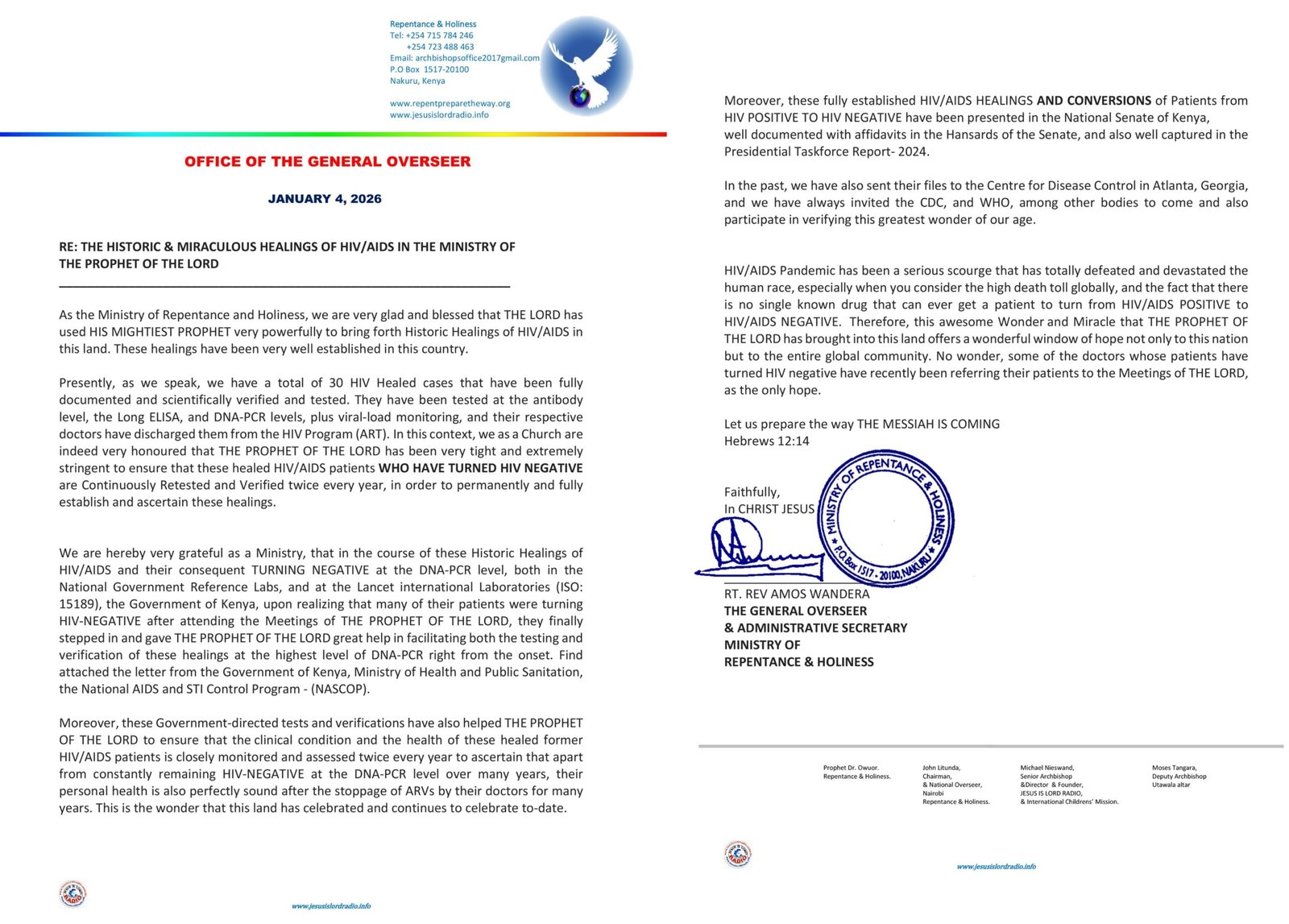
The Ministry of Repentance and Holiness, in a statement dated January 2026, announces it has “fully documented and scientifically verified” 30 cases where individuals have turned from HIV-positive to HIV-negative. The ministry claims these healings, attributed to “The Prophet of the Lord,” have been confirmed through advanced testing including DNA-PCR and viral load monitoring, leading to patients being discharged from antiretroviral therapy (ART) programs.
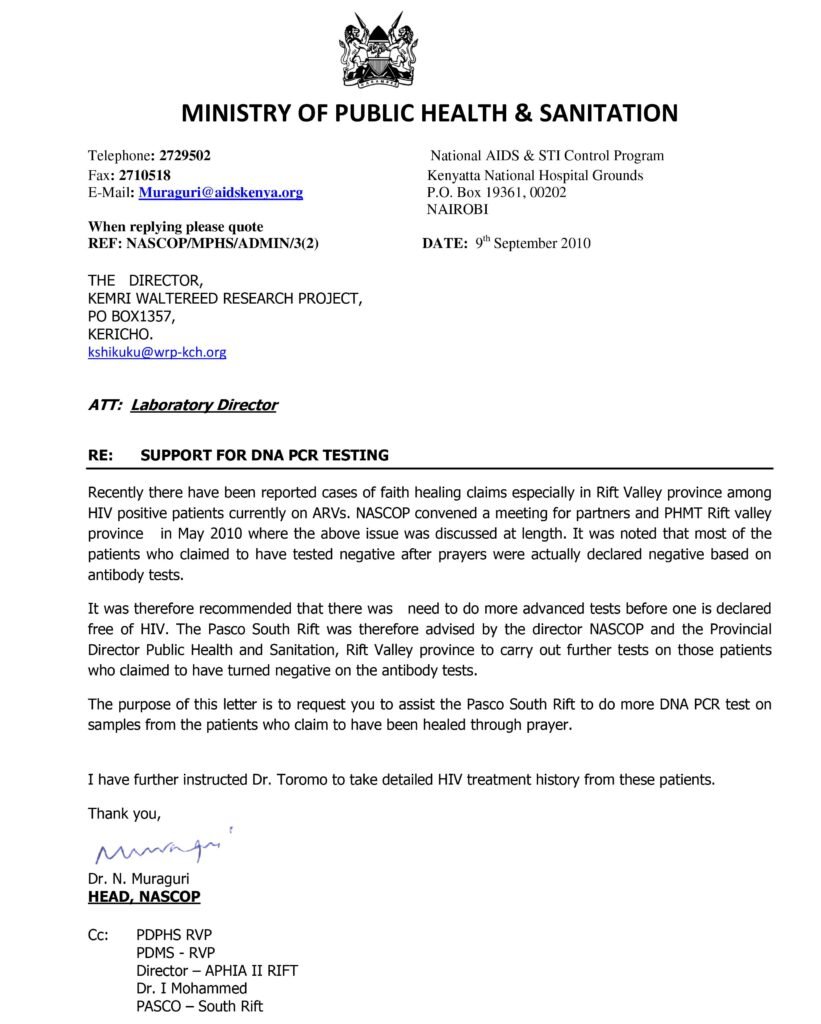
To bolster its claims, the ministry references an official 2010 letter from Kenya’s National AIDS & STI Control Program (NASCOP). The letter, addressed to a research institute director, acknowledges reports of “faith healing claims” in the Rift Valley, where HIV-positive patients on ARVs were claiming to have tested negative.
Crucially, the government’s response was one of methodological scrutiny, not endorsement. The NASCOP letter states that meetings found most such claims were based solely on antibody tests, which can be unreliable for patients on treatment. It therefore requested support for more advanced DNA PCR testing to investigate the claims, instructing a doctor to take detailed treatment histories.
“The purpose of this letter is to request you to assist… to do more DNA PCR test on samples from the patients who claim to have been healed through prayer,” wrote Dr. N. Muraguri, then head of NASCOP.
The ministry frames this letter as the government “stepping in” to “give great help” in verifying healings. However, the letter’s content shows a public health body initiating controlled investigation into anomalous reports, a standard protocol.
The 2026 ministry statement says the healed cases have been presented in Kenya’s Senate and a 2024 Presidential Taskforce Report, and that files have been sent to the U.S. Centers for Disease Control and Prevention (CDC) and the World Health Organization (WHO).
Medical Context and Skepticism
The global medical consensus holds that while HIV infection can be managed to undetectable levels with ART, the virus integrates into the host’s DNA and cannot be fully eradicated by current treatments or naturally. Seroreversion—moving from a confirmed positive to a confirmed negative HIV status—is considered medically implausible. False-negative results, especially with certain tests or in very early infection, are known to occur, but true eradication of the integrated virus has not been scientifically documented.
Public health experts caution that claims of cure can be extremely dangerous, potentially leading individuals to abandon life-saving medication based on unverified tests, with severe health consequences and risk of transmitting the virus.
The Ministry of Repentance and Holiness states it continues to retest the individuals twice yearly. The story highlights the enduring tension between profound faith-based beliefs and the rigorous, evidence-based protocols of modern medicine, with the Kenyan government’s 2010 letter representing an early attempt to navigate that complex intersection.
About The Author