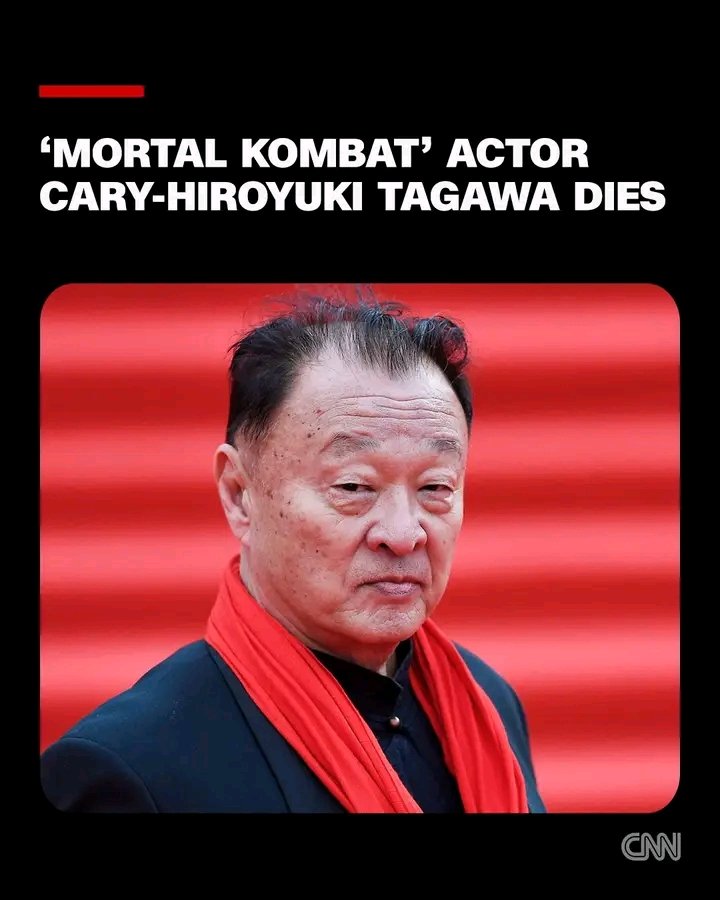
Cary-Hiroyuki Tagawa, Actor Known for ‘Mortal Kombat’ and ‘The Man in the High Castle,’ Dies at 75
Cary-Hiroyuki Tagawa, the charismatic actor who brought memorable characters to life in projects ranging from “Mortal Kombat” to “The Man in the High Castle,” has died. He was 75.
Tagawa passed away on Thursday in Santa Barbara, California, surrounded by his family. His manager, Margie Weiner, confirmed his death was due to complications from a stroke.
“Cary was a rare soul: generous, thoughtful, and endlessly committed to his craft,” Weiner said in a statement. “His loss is immeasurable. My heart is with his family, friends, and all who loved him.”
Born in Tokyo, Tagawa was the son of a Japanese stage actress and a Hawaiian-born father of Japanese descent who served in the U.S. Army. He was raised primarily in the American South on various military bases. Tagawa once revealed his parents named him after Hollywood legend Cary Grant.
Despite his mother’s caution about the limited roles for Asian actors at the time, Tagawa pursued acting after a varied career that included work as a celery farmer, limo driver, and photojournalist. His breakthrough came at age 36 with a role in Bernardo Bertolucci’s Oscar-winning epic “The Last Emperor” (1987).
He went on to build a prolific career across film and television, often portraying formidable and elegant figures. He is perhaps best known globally for his performance as the villainous Shang Tsung in the 1995 film adaptation of the video game “Mortal Kombat.” Other notable film credits include “License to Kill,” “Pearl Harbor,” and “Planet of the Apes.” Later, he earned acclaim for his role as the ruthless Trade Minister Tagomi in the television series “The Man in the High Castle.”
Tagawa was also a vocal observer of Hollywood’s representation of Asian actors. In a 2005 interview, he noted, “The good news for Asian actors and Hollywood is that it’s better than it’s ever been, but the bad news is that it hasn’t changed that much.”
His role in 2005’s “Memoirs of a Geisha” sparked debate about cultural authenticity. Tagawa defended the film, telling The Associated Press in 2006, “What did they expect? It wasn’t a documentary… Unless the Japanese did the movie, it’s all interpretation.”
Beyond acting, he was a martial artist who developed a training system called Ninjah Sportz, which he used to work with professional athletes.
In 2008, Tagawa pleaded guilty to a petty misdemeanor charge of harassing a girlfriend in Honolulu. His attorney stated he took full responsibility for his actions.
Cary-Hiroyuki Tagawa’s career spanned nearly four decades, leaving a legacy of iconic performances that cemented his status as a distinctive and respected figure in the entertainment industry.
About The Author