ECOWAS Vows United Front Against Coups and Terrorism in Strategic Pivot
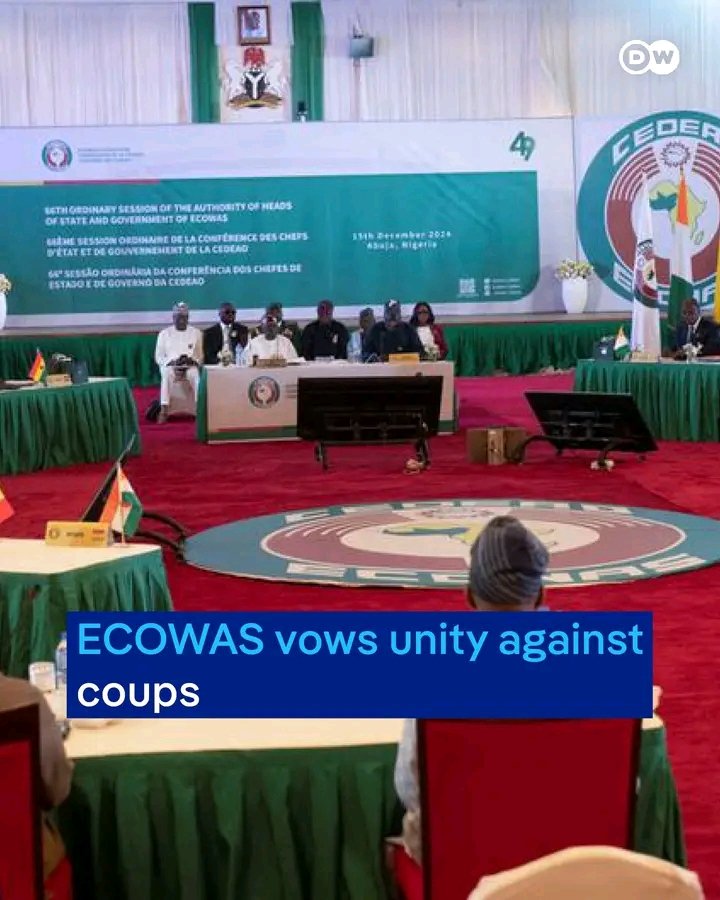
ABUJA, Nigeria – In a decisive response to the escalating political and security crises across West Africa, leaders of the Economic Community of West African States (ECOWAS) have pledged a unified regional strategy to combat military coups, terrorism, and pervasive insecurity. The commitment was made during the bloc’s 68th Ordinary Session of the Authority of Heads of State and Government, held in Nigeria’s capital.
Faced with a wave of military takeovers that has destabilized several member states, the regional body announced a significant strategic shift from imposing reactive sanctions to implementing proactive diplomatic and military measures designed to prevent governmental collapses before they occur.
A Region Under Siege
The high-stakes meeting in Abuja convened against a backdrop of intensifying regional turmoil. In recent years, successful coups in Mali, Burkina Faso, Guinea, and Niger have eroded democratic norms, while violent extremist groups continue to expand their control over vast territories in the Sahel. This dual threat has created a cycle of instability that undermines development and endangers the lives of millions.
The resurgence of military interventions in politics has presented an existential challenge to ECOWAS, an organization founded on principles of democracy and regional integration. Past measures, including diplomatic isolation and severe economic sanctions, have yielded mixed results, at times hardening the resolve of junta leaders while inflicting hardship on civilian populations.
A New Proactive Stance
Central to the new pledge is a fundamental change in approach. ECOWAS Chairman and Nigerian President, speaking after the session, outlined the bloc’s renewed focus.
“Our community can no longer afford to be a firefighter, arriving after the house is already ablaze,” he stated. “We are adopting a new doctrine of proactive engagement. This involves enhanced intelligence-sharing to detect early signs of instability, pre-emptive diplomatic missions, and the readiness of our standby military force to deploy not just to restore order, but to prevent a breakdown of constitutional order.”
The details of the strategy include:
· Strengthened Governance Monitoring: Implementing a more robust early-warning system to identify political and social tensions before they escalate into crises.
· Rapid Diplomatic Response Teams: Deploying teams of elder statesmen and senior diplomats for mediation at the first sign of potential military discontent or unconstitutional political maneuvers.
· Security Sector Support: Increasing assistance to member states to improve military professionalism and welfare, addressing a frequent grievance cited by coup plotters.
· Coordinated Counter-Terrorism: Deepening joint military and intelligence operations to combat jihadist groups whose violence often creates the chaos that juntas use to justify seizing power.
The Path to Stability
Regional leaders emphasized that security and democracy are inextricably linked. They argue that only legitimate, democratically elected governments can muster the broad public support needed to effectively combat insurgencies.
“Terrorism thrives in the vacuum left by weak and illegitimate governance,” noted the President of Ghana. “Our united front is not just about condemning coups. It is about creating an environment where democracy delivers for our citizens, thereby removing the very conditions that give rise to terrorism and military adventurism.”
The success of this ambitious strategy faces significant hurdles. The region is marked by varying levels of military capability and political will, and the recent formation of a “Alliance of Sahel States” by the juntas in Mali, Burkina Faso, and Niger poses a new challenge to ECOWAS unity. Furthermore, the bloc must navigate complex relations with external powers like Russia, France, and the United States, all of whom have strategic interests in the region.
Nevertheless, the declaration from Abuja marks a clear intent by West Africa’s remaining democratic leaders to take control of the region’s destiny. The coming months will test whether this coordinated regional strategy can stem the tide of instability and safeguard the foundations of democracy in West Africa.
About The Author