
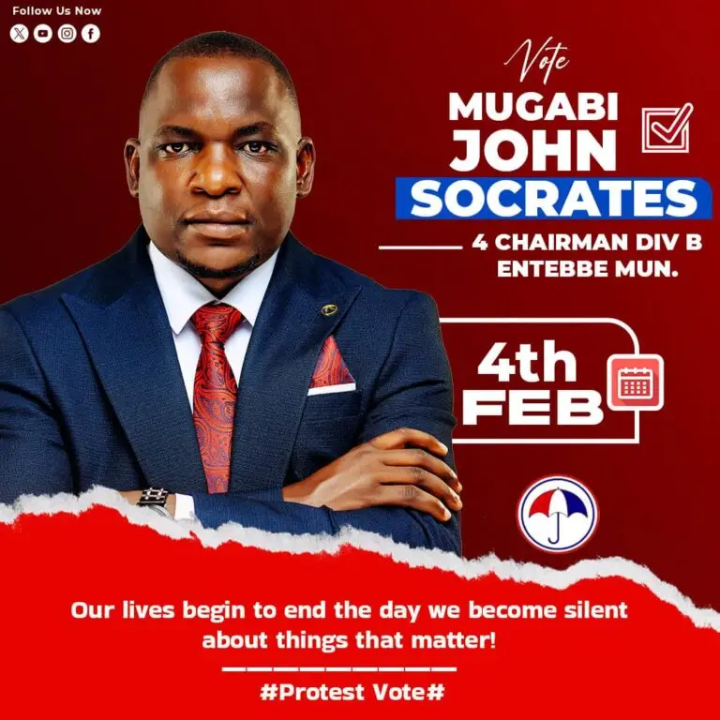
ENTEBBE DIVISION B CHAIRMANSHIP RACE DESCENDS INTO FEAR AND ALLEGATIONS OF INTIMIDATION
The campaign for the Entebbe Division B chairmanship has transformed from a political contest into a stark drama of alleged threats, military deployment, and a candidate fleeing for his safety, casting a dark shadow over the upcoming election.
At the center of the storm is candidate Mugabi John, who has publicly declared he is no longer merely campaigning for votes, but fighting for his life and the safety of his family. The situation escalated dramatically when Mugabi alleged that military and security forces were deployed at his family home, accompanied by direct death threats he attributes to political opponents.
The crisis gained a human face through a widely circulated online video featuring Mugabi’s wife. Visibly distressed, she described the siege-like deployment at their residence and revealed her husband was in hiding, fearing for his safety. While Mugabi later acknowledged the security presence was withdrawn following community pressure, he insists the threat has only moved underground.
“The danger did not end there,” Mugabi asserts, claiming that behind-the-scenes threats have persisted. These alleged pressures have pushed him to consider a withdrawal from the race entirely. His reason: a purported plan by rivals within the NRM to orchestrate the arrest of him and his campaign agents on politically motivated charges.
Opponents of Mugabi have categorically denied all accusations, labeling them as “false and alarmist” tactics designed to garner sympathy and manipulate public sentiment.
However, on the streets of Division B, a narrative of defiance is taking root. Residents have reportedly rallied around Mugabi, urging him not to step down. They express a hardened resolve, telling him that even if the election is rigged—a practice they claim has precedent—they will still turn out in numbers to cast their vote for him. To these supporters, Mugabi has transcended the role of a mere candidate; he has become a symbol of resistance and their democratic choice.
With the election drawing near, the fundamental question haunting the division is whether Mugabi John is a victim of coordinated political intimidation, or if this constituency is witnessing the most volatile and explosive chairman battle in its history.
One conclusion is increasingly evident to all observers: this is no longer just an election. It has become a tense referendum on power, pressure, and the price of political ambition in Entebbe Division B.
About The Author