
UGAASM Digest: A Comprehensive Look at Uganda’s Artisanal and Small-Scale Mining Sector

Foreword: A Journey from Eviction to Empowerment
Artisanal and small-scale mining (ASM) is a crucial source of livelihood for millions of Ugandans and is evolving fast as countries embrace its significance in socioeconomic transformation. In Uganda, the sub-sector has made notable progress, from government recognition and legal reforms to its evident contribution in transforming local communities and the national economy. The recent performance of the local currency against the USD is largely attributed to an increase in gold exports, much of which comes from ASM.
A pivotal moment was the eviction of artisanal and small-scale gold miners from the Mubende gold mines on August 4, 2017. This event triggered the birth of a national association, the Uganda Association of Artisanal and Small-scale Miners (UGAASM), as a platform to advocate for miners’ rights. A landmark milestone was reached on June 26th, 2025, when the Mubende United Miners’ Assembly (MUMA) became the first licensed artisanal and small-scale miners’ group to acquire a Small-scale Mining License (SML 00575). MUMA is the flagship association of UGAASM, which now boasts over 150 associations.
This arduous journey has seen many hurdles overcome, though challenges remain, particularly bureaucratic red tape in the licensing process and the costly requirement for environmental and social impact assessments. UGAASM acknowledges the support of the Government of Uganda, various civil society organisations, the Parliamentary Committee, district local governments, and its dedicated members in this journey.
— John Bosco Bukya, Chairperson, UGAASM and MUMA
MUMA – The Flagship Miners’ Association
Mubende United Miners’ Assembly (MUMA) has a membership of 22 active associations, including an all-women association. Its efforts to get organized and licensed were intentional, focused, and strategic, benchmarked on robust miners’ movements in South Africa.

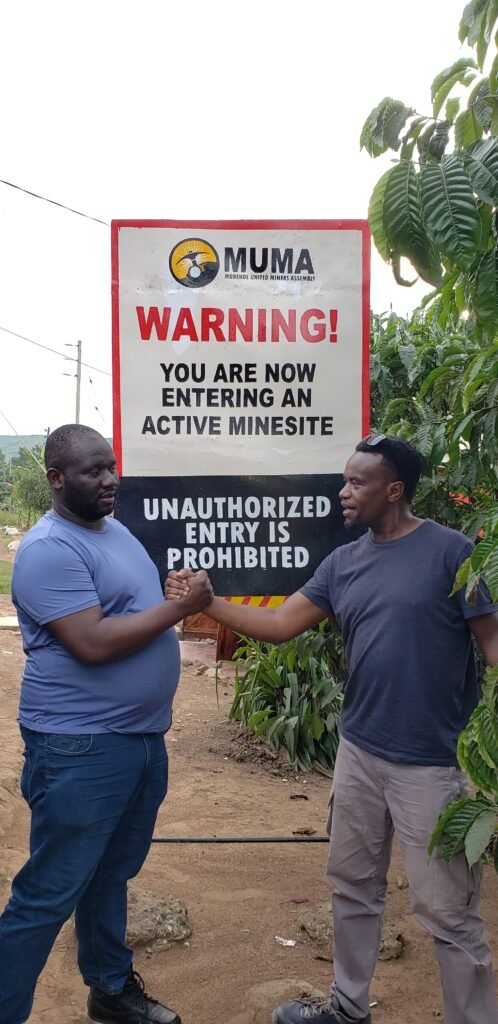
MUMA’s journey to legitimacy began with a presidential directive in 2018 that granted them access to 30% of a mining area. Three years later, through further negotiations via UGAASM, they acquired one square kilometer at Kagaba Hill. MUMA has created opportunities for over 3000 people, operating 25 pits and 4 processing centers.
The Small-scale Mining License and Future Plans
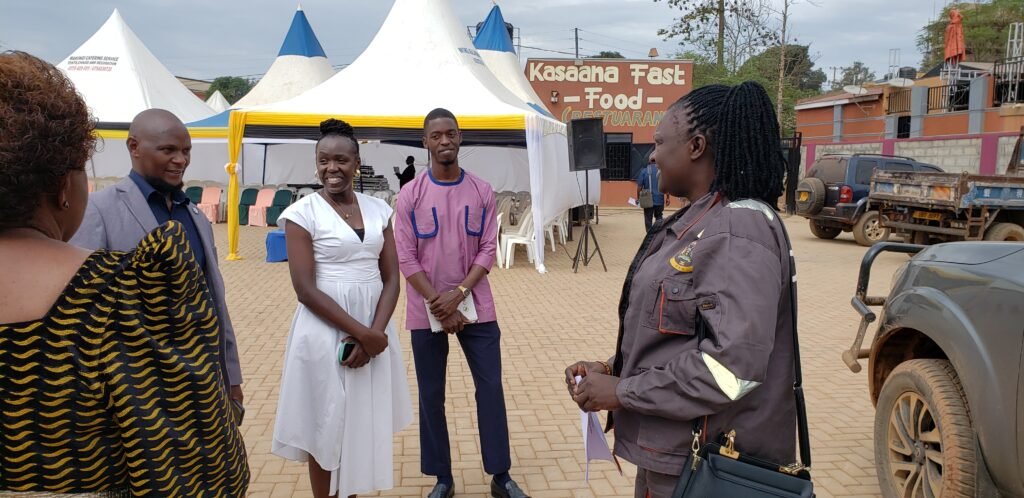
MUMA’s acquisition of SML 00575 for 100.87 Hectares in Kassanda marks a historic shift.Under the license, operations are formalizing, requiring tax payments, payroll management, and NSSF contributions. Future plans are ambitious: ramping up production, attracting investment, and extending hydroelectric power to the site. There are also plans for a two-megawatt solar energy plant to cut production costs by 50%. MUMA has also partnered with Fargo Commodities Limited to ensure fair, internationally benchmarked gold pricing.

Community Development
MUMA has significantly invested in its community.It has supported at least 60 pupils with educational needs, rehabilitated roads, built teachers’ quarters, and developed a football pitch. Its soccer academy and Happy Boys FC Kagaba have produced talented players, with exports to the Middle East and representation in the Masaza Cup. MUMA also mentors young women in ore trading and provides vocational training.
Personal Journeys and Sector Transformation
My Journey in Mining: The Story of Chair Mark
Mark Asaph Jjombwe,or ‘Chair Mark’, entered mining in 2010 after losing his savings to a scam. Starting with just UGX 250,000, he learned the trade through observation and hard work. A natural leader, he was elected chairman at his mining site, overseeing order and management. After a year of struggle, he struck a profitable vein, rebuilding his life. However, the threat of illegality loomed, culminating in the devastating eviction of August 4, 2017, where he estimates losses of USD 100,000.
Transformative Journey of ASM in Uganda
The story of MUMA showcases the power of collective action.Following the 2017 evictions, miners came together to advocate for their rights. With support from Solidaridad through the RECLAIM Sustainability! Gold Project, which focused on advocacy, policy engagement, and capacity building, MUMA achieved formalization. This success offers clear lessons: collective action works, partnerships are crucial, capacity building is essential, and this model can be replicated across Uganda.

Breaking Barriers: Women Redefining Mining in Uganda
Despite making up a significant portion of the ASM workforce, women often languish at the lower end of the value chain. UGAASM profiles several women leaders who are breaking these barriers:
· Josephine Agutu: UGAASM coordinator for the eastern region, advocating for gender inclusion from local villages to global stages.
· Jaila Namatovu: Chairperson of the women-only Mubende Women Gold Miners Association, a vocal advocate for licensing evicted miners.
· Phyllis Nankoma: Owner of the “Eagle Eye” pit and a vocal gender champion.
· Joweria Nafunka: A prominent mobilizer in western Uganda, she champions financial literacy and started Village Savings and Loan Associations (VSLAs).
· Nuur Kalumba: A businesswoman who owns a pit and processing center, and serves as treasurer for a women’s cooperative.
· Rose Kyakuhaire: A nurse who provides healthcare services and leads a miners’ cooperative.
· Mutesi Afua & Esther Nabwire: Founders and leaders of women miners’ associations in Namayingo District.
· Comfort Akello: Championed the formation of VSLAs and formalized quarry associations.
· Kampaire Moirrah: A UGAASM mobilizer dealing in black sand in Kisoro for over a decade.
Artisanal Mining and Community Resilience
ASM activities do not always translate into community development. Without formalization, mining can become a vulnerability, leading to environmental degradation, illicit markets, and child exploitation. The Resilience Dialogue in Busia in May 2025 identified building community resilience to illegal mining and ensuring ASM contributes to local development as key priorities.
Formalizing ASM is a resilience strategy. It aligns mining with national laws and ensures benefits contribute to long-term community well-being. However, challenges persist, such as children dropping out of school for mining work, which offers short-term relief but creates long-term vulnerability. Mining also brings social changes, disrupting family structures and local values. Responsible mining must, therefore, connect to the long-term development aspirations of local communities.
Policy, Formalization, and Challenges
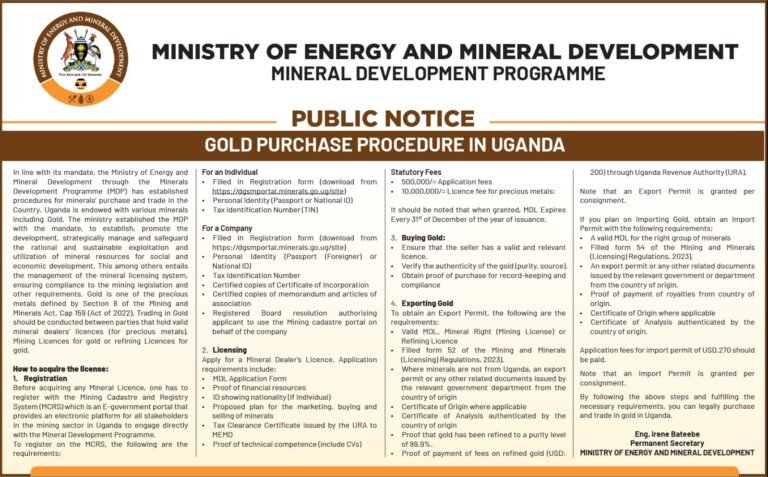
Government Designates Artisanal Mining Zones Countrywide
The government has designated ASM zones under the Mining and Minerals(Artisanal Mining) Regulations 2025. UGAASM, with support from the Directorate of Geological Survey and Mines, is sensitizing miners about these new regulations in workshops across the country.
Over 6,800 Artisanal Gold Miners Registered Under BRASM Project
The government has registered 6,884 gold miners(4,877 male, 2,007 female) in Kassanda, Buhweju, Busia, and Namayingo under the Biometric Registration of Artisanal Miners’ Project (BRASM). This registration is a key part of the formalization strategy under the Mining and Minerals Act 2022.
ASMs Frustrated by Licensing Delays
Despite progress,licensing remains a major bottleneck. There are only two associations with Small-scale Licenses and not a single Artisanal Mining License under the new regime. Miners cite costly delays and stringent requirements, particularly the Environmental and Social Impact Assessment (ESIA), which consultants charge up to USD 25,000 to prepare. The circular requirement of a bank account for a license and a license for a bank account also stifles new applicants. Continuous sensitization and stakeholder engagement are needed to find common ground.
Mineral Markets to Benefit ASMs
The government plans to establish mineral markets to regulate trade,increase transparency, and boost investor confidence. These markets will create a secure environment for trading, increase government revenue, and improve miner livelihoods. Pilot locations will be in Karamoja, Kampala, Entebbe, and Kassanda. However, a key challenge is that the vast majority of miners who should benefit are not yet licensed.
Environmental and Health Concerns
How Government Can Tackle Environmental Crime in Karamoja
Illegal gold mining in Karamoja threatens pastoralist livelihoods.The Ocean One Social Research Centre advocates using AI drone technology to gather data for law enforcement. This technology can track criminals, identify trafficking routes, and provide evidence for prosecution, complementing the Mining and Minerals Act, 2022, and the National Environment Act of 2019.
Echoes of Gold: The People, Earth, and Price of Prosperity
Behind Uganda’s$4 billion annual gold exports lies a harsh reality. In processing towns like Bukuya, workers are exposed to toxic fumes from cyanide and acids without protective gear, leading to chronic health issues. Mercury use remains a persistent threat, contaminating water and soil. A multi-dimensional approach is needed, including centralized refining centers, health and environmental education, and stricter enforcement of safety regulations to ensure gold extraction does not come at the cost of human life and environmental integrity.
PlanetGOLD Uganda Empowers Miners Toward a Mercury-Free Future
The planetGOLD Uganda project is driving a nationwide movement toward responsible,mercury-free gold mining. It has established miners’ cooperatives, supported policy awareness, trained the police’s Minerals Protection Unit, and championed gender inclusion. The project promotes mercury-free technologies, aligning with Uganda’s commitments under the Minamata Convention.
Partnerships for a Sustainable Future
Sustainable Development of the Mining Sector in Uganda (SDMU) Project
Co-financed by Germany and the European Union and implemented by GIZ,the SDMU project (2025-2027) aims to transform Uganda’s mineral sector. It focuses on improving digitalization, the investment climate, regulatory frameworks, ASM formalization, and value addition to create a professional, transparent, and competitive industry.
FARGO: Building the Future of Uganda’s Gold Industry
Fargo Commodities Trading(U) Ltd., a government-registered refinery in Entebbe, partners with UGAASM to integrate local miners into a transparent and sustainable gold ecosystem. Part of the international Fargo Group, it brings European expertise and technology to Uganda, aiming to make the country a leading hub for ethical gold refining.
aCuratio Gold: Transforming Artisanal Gold Production
aCuratio Gold Uganda Limited partners with local ASMs,who mine the ore, while aCuratio processes it in a central, mercury-free plant. This partnership can increase gold recovery by 2-3 times, substantially boosting miners’ incomes. Pilot projects are planned with MUMA in Kassanda and Tiira miners in Busia, starting in the first half of 2026.
UGAASM’s Vision and Celebration
UGAASM’s Vision for a Sustainable Mining Industry
UGAASM was founded in 2019 to nationally represent ASMs across all minerals.Don Binyina, Executive Director of the Africa Center for Energy and Mineral Policy (a founding partner), notes positive progress but highlights licensing as a major bottleneck. He advocates for a zoning approach with government-provided extension services instead of impractical licensing terms for individual artisanal miners. He also calls for law reforms to ensure mining communities benefit from mineral wealth through royalties, pointing to global gold price increases that have not trickled down.
The vision for UGAASM is to be a robust platform—a ‘KACITA’ for mining communities—that bridges miners, policymakers, and developers to promote growth, governance, and equitable sharing of mineral wealth.
UGAASM Celebrates Licensing of Its Associations
UGAASM hosted a cocktail celebration on October 16th,2025, at Serena Hotel in Kampala to mark the acquisition of Small-scale Licenses for MUMA and the Buhweju District Miners Cooperative Society (BUDIMCS). The event was attended by a host of stakeholders, including ministry representatives, civil society, development partners, the private sector, and miners. The Guest of Honour, Amb. Jan Sadek, head of the EU Delegation to Uganda, urged for further regulation of the sector to benefit from development partners.
This UGAASM Journal has been produced with support from Solidaridad East and Central Africa. Contributors include Robert Mwesigye, Arthur Natukunda, Ismael Ocen, Jacques Muhindo, Solidaridad, GIZ, and planetGOLD Uganda.
Copyright Uganda Association of Artisanal and Small-scale Miners
“Nothing for us Without Us”
About The Author