Historic Verdict in Paris: Ex-Congolese Warlord Sentenced to 30 Years for War Crimes
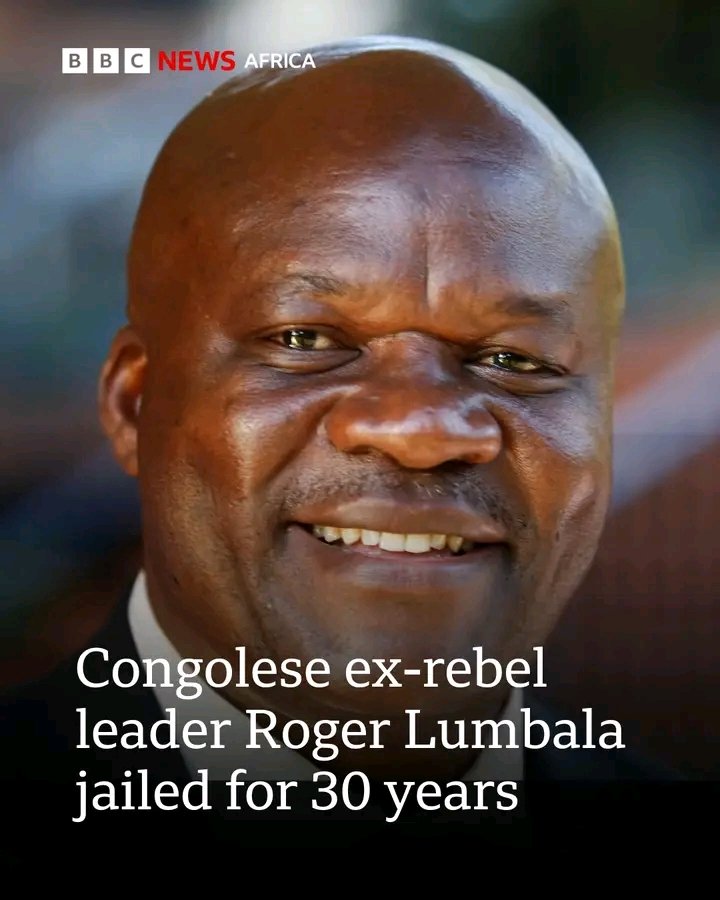
A French court has sentenced former Congolese rebel leader and politician Roger Lumbala to 30 years in prison for complicity in crimes against humanity, marking an unprecedented application of international justice for atrocities committed during Congo’s brutal civil war.
The Paris Criminal Court found the 67-year-old guilty on Monday for his role in a campaign of terror in eastern Democratic Republic of Congo (DRC) between 2002 and 2003. The verdict represents the first time a national court outside Congo has convicted someone for crimes committed during the Second Congo War under the principle of universal jurisdiction.
⚖️ The Charges and the Crimes
The court convicted Lumbala of ordering, aiding, and abetting a series of horrific crimes, including:
· Torture and inhumane acts
· Summary executions
· Rape used as torture and sexual slavery
· Forced labor, theft, and pillage
These atrocities were part of a military campaign known as “Erase the Slate” (Effacer le Tableau), which targeted civilians from the Nande and Bambuti ethnic groups in the provinces of Ituri and North Kivu. A United Nations investigation characterized the operation by its use of “looting, rape and summary execution as tools of warfare”.
📜 The Defendant and His Defiance
Roger Lumbala led the Ugandan-backed Rally of Congolese Democrats and Nationalists (RCD-N) during the war. Following the conflict, he transitioned to politics, serving as a minister in Congo’s transitional government from 2003 to 2005 and later as a member of parliament.
· Arrest: He was arrested in Paris in December 2020 after fleeing an arrest warrant issued by Congolese authorities.
· Defiance in Court: Lumbala vehemently rejected the court’s authority, dismissing his lawyers and boycotting almost the entire trial after its first days. He was compelled to attend only the reading of the verdict.
👥 Survivors Break Decades of Silence
The trial was driven by the courage of over 60 survivors and witnesses who testified, many traveling from remote parts of Congo at great personal risk.
· David Karamay Kasereka (41) described how his father and neighbors were tortured and killed by Lumbala’s troops.
· Pisco Sirikivuya Paluku (50), a nurse, testified that rebels robbed and injured him, killed his uncle, and raped his friend’s wife.
In a joint statement, two survivors said: “We were scared but came all the way here because the truth matters. For years, no one heard us… This verdict marks a first step toward reclaiming pieces of ourselves that were taken from us”.
⚖️ A New Legal Precedent: Universal Jurisdiction
This landmark case was prosecuted under universal jurisdiction, a legal principle that allows a country to prosecute individuals for severe international crimes—like crimes against humanity—regardless of where they were committed or the nationality of those involved.
· Filling a Justice Gap: While three other Congolese warlords have been convicted by the International Criminal Court (ICC), Lumbala’s trial is the first of its kind by a foreign national court for crimes in eastern DRC.
· Tightening the Net: Yasmine Chubin, Legal Director at the Clooney Foundation for Justice, explained that using national courts “tighten[s] the net” for perpetrators, creating more avenues for justice beyond the limited number of cases the ICC can pursue.
🔍 Context and Reactions
The Second Congo War (1998-2003) involved nine African nations and numerous armed groups, leading to an estimated 2 to 5 million deaths, primarily from disease and starvation. Eastern DRC remains plagued by violence today, making accountability for past crimes a pressing issue.
Human rights organizations hailed the verdict as a watershed moment:
· Trial International called it historic, proving “that justice can break through even after decades of impunity”.
· Amnesty International stated the trial sends a clear signal that suspects “are mistaken if they think they can hide in other countries to escape scrutiny”.
· The Clooney Foundation for Justice emphasized that the central role of victims, especially women who survived sexual violence, was a defining feature of the trial.
A Complicated Path Forward
The trial faced challenges,including a lack of cooperation from the Congolese government, which failed to facilitate testimony from two key witnesses Lumbala named: current Deputy Prime Minister Jean-Pierre Bemba and General Constant Ndima. The question of reparations for victims will be addressed in a separate phase of the proceedings.
Lumbala’s legal team has ten days to file an appeal, having already described the 30-year sentence as excessive. Prosecutors had sought a life sentence.
About The Author