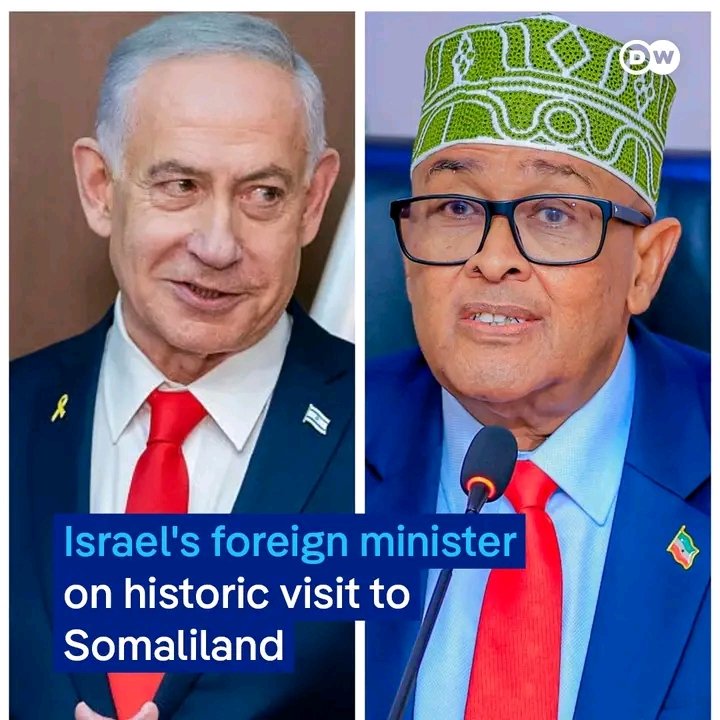
Israel’s Foreign Minister Makes Historic Visit to Somaliland Amid Diplomatic Storm
HARGEISA, Somaliland – In a move solidifying a controversial new alliance, Israeli Foreign Minister Gideon Saar arrived in Hargeisa on Tuesday, marking the first high-level diplomatic trip since Israel recognized the breakaway region of Somaliland as an independent state just ten days ago.
Saar met with Somaliland President Abdirahman Mohamed Abdullahi, with local officials heralding the engagement as a milestone. The visit comes on the heels of a dramatic policy shift by Israel, which on July 1st became the first United Nations member state to formally recognize Somaliland’s sovereignty.
“This is a historic decision and a historic visit,” a spokesperson for the Somaliland government stated, praising Israel’s move as a bold affirmation of their three-decade quest for international recognition. Somaliland, a former British protectorate, declared independence from Somalia in 1991 and has maintained a stable, democratic government despite lacking widespread international recognition.
The recognition, personally backed by Israeli Prime Minister Benjamin Netanyahu on the grounds of supporting the right to self-determination, has ignited a fierce diplomatic confrontation. The Federal Government of Somalia in Mogadishu immediately and forcefully rejected the move, asserting that Somaliland remains an integral part of its territory.
“Somalia categorically rejects this illegitimate and destabilizing action,” read a statement from the Somali Ministry of Foreign Affairs, which has called for international support to uphold its sovereignty and territorial integrity.
The rift has spilled onto the global stage, triggering an emergency closed-door meeting of the United Nations Security Council. The move has drawn condemnation from several key powers. China and Turkey, both influential players in the Horn of Africa, joined the African Union in criticizing Israel’s decision, with the AU reiterating its commitment to the “unity, territorial integrity and sovereignty” of Somalia.
In contrast, the United States has come to Israel’s defense. A State Department spokesman, while noting the U.S. position of recognizing Somalia’s sovereignty within its 1960 borders, stated that Israel had the right to make its own foreign policy decisions and urged all parties to engage in dialogue.
Analysts suggest Israel’s recognition is strategically motivated, seeking a geopolitical foothold in the strategic Horn of Africa and access to the Red Sea and Gulf of Aden. Somaliland’s port of Berbera is seen as a key asset.
Minister Saar’s trip, therefore, is more than a ceremonial gesture; it is a tangible step toward building bilateral relations in trade, security, and development, directly challenging the long-held international consensus on Somali unity. The visit ensures that the question of Somaliland’s status will remain a volatile and central issue in regional diplomacy for the foreseeable future.
About The Author