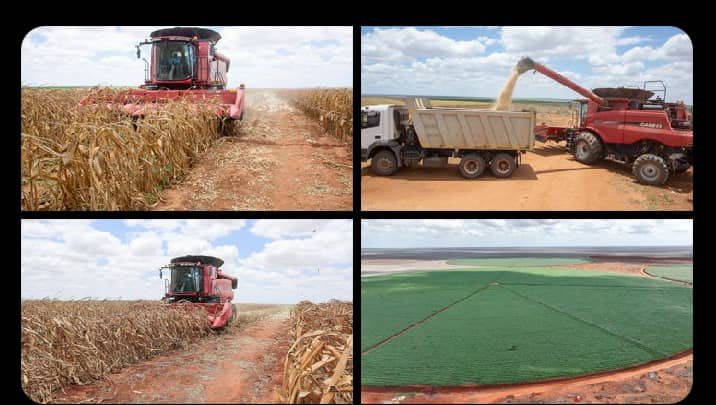
NAIROBI, Kenya – In a significant milestone for the country’s agricultural sector, the Kenyan government has announced the first major maize harvest from the revitalized Galana Kulalu Food Security Project, marking a tangible result of its push towards national food security.
President William Ruto announced the commencement of the harvest on 330 acres of land within the project, which spans Kilifi and Tana River counties. The initial yield is expected to be robust, with projections of 28 to 30 90-kilogram bags of maize per acre.
“Our investment in the Galana Kulalu Food Security Project in Kilifi and Tana River Counties is now bearing fruit,” President Ruto stated in an online post.
The progress extends beyond the initial harvest. Officials confirmed that an additional 1,500 acres have already been planted with crops. The government plans to aggressively expand the project, with a further 1,700 acres slated for cultivation by the end of the year. This expansion will bring the total cultivated area under the project to 5,400 acres.
The Galana Kulalu initiative, initially launched in 2013, is a flagship irrigation project intended to transform over one million acres of land. However, it had been plagued for years by funding shortfalls and technical challenges, stalling its progress.
The project’s revival through public-private partnerships has injected new life into the ambitious scheme. Currently, 3,000 acres within the project are under cultivation for maize, cassava, and onions.
This success at Galana Kulalu is a cornerstone of the government’s broader agricultural reforms. Officials project that these efforts will help propel Kenya’s maize production to a record 70 million bags in 2025. Achieving this target is critical for bolstering the nation’s food reserves and reducing the hefty budget spent on importing staple foods.
President Ruto framed the harvest as a key step toward self-sufficiency and future economic opportunity, stating that the progress is “driving Kenya towards food security and enabling us to produce surplus for export.” The development is particularly crucial as Kenya seeks to build resilience against climate change, which has negatively impacted rain-fed agriculture.
About The Author