
Museveni Declares NRM Dominance, Cites BVV Success and Reconciliation Call After 2026 Campaign
President reflects on 143 rallies, accuses opposition of cheating, and urges principled reconciliation as Uganda’s electoral cycle concludes
KAMPALA, Uganda — President Yoweri Kaguta Museveni has declared that the National Resistance Movement commands 88 percent popular support nationwide, asserting that “there is practically no opposition in Uganda” following the just-concluded 2025-2026 general elections.
In a sweeping personal statement addressed to “Fellow Ugandans and especially the Bazzukulu,” the President reflected on a campaign that saw him address 143 rallies across 153 districts, describing the atmosphere as “celebratory and consultative” with whole community turnouts.
Drawing on decades of political memory stretching to the 1979 liberation war, Museveni presented a detailed account of NRM’s governance record since 1986 while acknowledging persistent challenges in poverty eradication, education, and corruption.
‘No Credible Opposition Can Thrive’
Museveni claimed NRM registered membership stands at 21 million, with 18.5 million eligible voters — representing 88 percent of Uganda’s 21 million registered voters. “If all NRM turned up to vote, our vote would be 18.5 million and the opposition would remain with 2.5 million,” he wrote.
“This means 88 percent support for the NRM. That is the real balance of forces in the country as per now,” he said, adding that once outstanding issues around UPE, corruption, feeder roads, and drug shortages are addressed according to his guidance, “there will be no opposition in Uganda.”
BVV Machines: ‘Death Knell’ to Opposition Cheating
The President credited Biometric Voter Verification machines with ending what he described as the opposition’s “life-line of cheating,” though he conceded some operators failed to use them properly, allowing “cheating here and there.”
Citing results from Nebbi, Bulambuli, and Namisindwa, Museveni insisted “the BVV machines work if they are manned by people who know how to use them.”
However, he repeated allegations that the National Unity Platform infiltrated 2.7 million votes in Buganda and Busoga during the 2021 elections — claims NUP has previously dismissed. He further accused opposition supporters of plotting insurrection and terrorism, referencing the 2021 Masaka attacks on 28 elders and alleging ongoing schemes with “criminal foreign mercenaries.”
“We shall crush them,” Museveni warned.
Historical Reflection and Unfinished Business
The 80-page reflection traversed six decades of Ugandan political history, from his teenage years as a Democratic Party supporter in 1962, through the liberation war, to NRM’s decade’s in power.
Museveni detailed NRM’s early achievements: ending extra-judicial killings, professionalising the army, restoring industrial production, repairing infrastructure, defeating rebel groups, and launching universal child immunisation in 1987 with Dr. Ruhakana Rugunda.
But he acknowledged emerging “emikyeno” (problems) — poverty, school fees, corruption, land grabbing, and judicial injustices — that prompted three major policy interventions: Entandikwa interest-free capital, Universal Primary Education, and land policy reforms.
“Had these three been implemented seriously, we would not have had challenges that became more prominent later,” Museveni wrote, blaming “careerist leaders” and “Najja-kulya” (I came to eat) politicians for poor supervision and implementation failures.
OWC, PDM and Economic Transformation
The President defended his agricultural programmes, asserting that Operation Wealth Creation reduced subsistence households from 68 percent in 2013 to 39 percent by 2019. Coffee production rose from 3 million bags in 1986 to 9 million bags, milk from 200 million litres to 5.3 billion litres, and cattle from 3 million to 16 million head.
He acknowledged criticisms that OWC benefited only “friends and relatives,” leading to the Parish Development Model, which places SACCOs under community-elected committees.
“Where it has been done well, the people are very happy. The stories of ‘sikwatanga ku kakadde’ (I have never held a million shillings) are everywhere,” he said.
Lining System and Electoral Integrity
Defending NRM’s historical practice of voting by lining behind candidates, Museveni claimed the secret ballot was “abused by multiple voting, ballot stuffing, under-age voting” — alleging his late colleague Eriya Kategaya voted eight times as an under-age in 1962.
“Our method of open lining behind candidates removed that cheating and rendered elections credible,” he said.
Reconciliation Call
Despite the combative tone toward opposition, Museveni closed with an appeal for national reconciliation.
“All said and done, I call upon Ugandans to abandon any bad behaviour and act fairly to all, even opposition,” he wrote. “You should work for principled reconciliation — not just opportunistic patching up. Talk about the mistakes observed and resolve them for a better future.”
Personal Note: Kagyera Crossing
In a final reflection dated February 12 — marking 47 years since his 1979 crossing of the Kagyera River with 200 FRONASA fighters — Museveni recalled sleeping on a plastic mattress on the road at Nshungyezi and building a force of 9,000 fighters within two months.
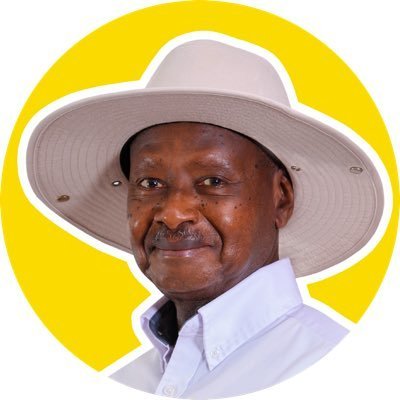
“Salutations to all and God bless all of you,” he concluded, signing as “The Old Man with a hat. Ssabalwanyi.”
About The Author