Surge in Private Jet Demand Out of Middle East Drives Charter Prices to Record Highs
As commercial airlines cancel flights and airspace closures disrupt travel across the Middle East following the outbreak of the US-Israeli conflict with Iran, the world’s wealthiest travelers are turning to private aviation to escape the region—sending charter prices soaring to astronomical levels.
Industry executives report a massive spike in demand since the conflict began on February 28, with ultra-high-net-worth individuals, multinational corporations, and large groups scrambling to secure aircraft as commercial options become “limited or unreliable.”
“We are seeing requests from ultra-high-net-worth families, multinational corporations relocating senior executives and larger groups such as sports teams and touring productions that still need to move together,” John Matthews, chairman and founder of private jet company AirX, told CNN.
Prices Skyrocket
The cost of chartering a private jet has more than doubled in some cases. Bernardus Vorster, CEO of private charter firm SHY Aviation, cited one example where a group of 12 people and their dog flew from Muscat, Oman, to Istanbul, Turkey—a five-hour journey—for $145,000.
That same flight would have cost approximately $60,000 before the conflict, representing a staggering 142% increase.
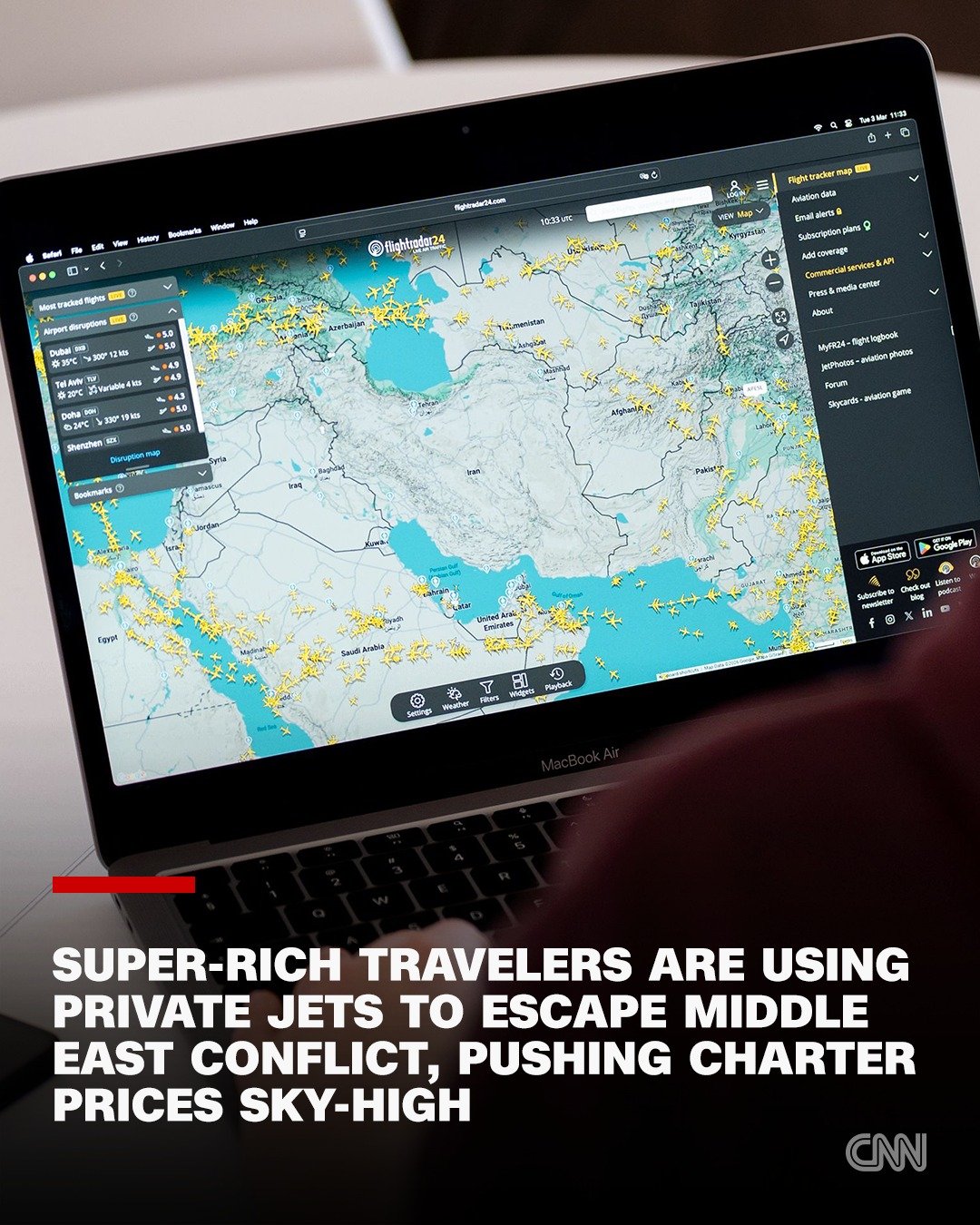
Vorster explained that normally there are around 10 to 15 private jet flights daily from key hubs like Muscat, Dubai, and Riyadh. However, that number spiked to 98 on Wednesday of last week alone.
Several factors are driving the price surge: increased demand, a limited number of available aircraft, higher insurance costs, and the fact that planes often must return to the region empty, forcing clients to pay for both legs of the journey.
Popular Routes and Destinations
At the start of the crisis, Muscat and Riyadh were the preferred departure points due to more predictable airspace and flight corridors. Dubai has since gained popularity as many of its residents seek to leave the region.
Istanbul has emerged as the top destination “because of its proximity to the region,” Vorster said, with Athens and Mumbai also seeing significant demand.
Limited Impact on Wider Crisis
Despite the surge in private charters, industry leaders acknowledge that these flights cannot meaningfully alleviate the broader travel disruption affecting tens of thousands of stranded passengers. The primary obstacles are prohibitive costs and limited capacity.
“Private charter cannot replace the scale of commercial airline networks, but it can provide controlled mobility for organisations and groups that need to move quickly when scheduled services become disrupted,” Matthews said.
He noted that AirX had secured a charter worth approximately €1 million ($1.16 million) last week for a plane equipped with 100 lie-flat seats.
Vorster emphasized the scale discrepancy: “The average private jet takes 12 people, and while the available aircraft in the region remains around 40-50 jets, the numbers (of people traveling) are relatively low.” SHY Aviation has facilitated the departure of around 120 people in the past week.
By contrast, tens of thousands remain stranded, and governments worldwide are working to organize repatriation flights. The US State Department reported Monday that it has facilitated more than two dozen charter flights and evacuated thousands of Americans, adding that “commercial flight availability across the region continues to improve.”
About The Author