September 3, 2025
1 Health Speculation and White House Response
Recent speculation about Donald Trump’s health has circulated widely after the 79-year-old president spent an uncharacteristic six days without public appearances over the Labor Day weekend. The rumors gained traction on social media platforms, with hashtags like #TrumpIsDead and #WhereIsTrump trending extensively . In response, Trump addressed these concerns directly during an Oval Office appearance on September 2, dismissing them as “fake news” and stating he was “very active over the weekend” giving media interviews and visiting his Virginia golf course .
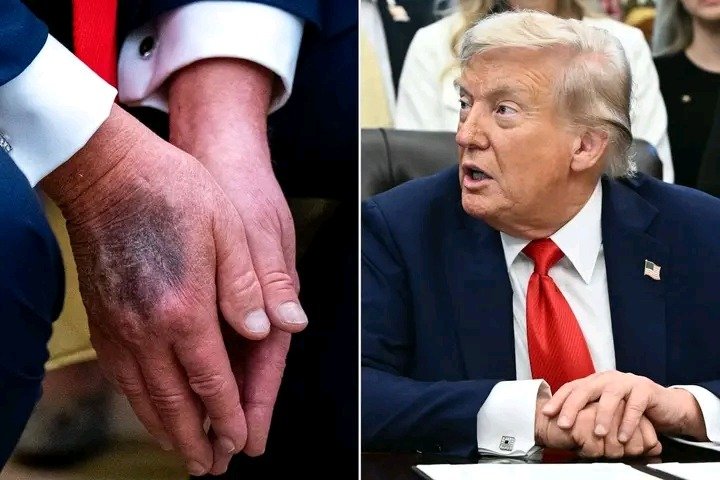
The White House has acknowledged Trump’s diagnosis with chronic venous insufficiency (CVI), a common circulatory condition in older adults that causes swelling and bruising in the legs, but emphasized that it is not life-threatening . Press Secretary Karoline Leavitt attributed bruising on Trump’s hands to “frequent handshaking and the use of aspirin” . Trump himself took to Truth Social to assert that he has “NEVER FELT BETTER IN MY LIFE” .
2 Viral ‘Simpsons Prediction’ and Online Debunking
Amid health speculation, a viral video claiming The Simpsons predicted Trump’s death in August 2025 resurfaced online, amassing over 2.5 million views on Instagram . The clip features a character resembling Trump collapsing during a broadcast while clutching his chest, accompanied by narration stating “The President is expected to die in August 2025 after a severe chest illness” .
However, multiple media outlets including Variety and Euronews have reported that no such episode exists, and the circulating clip is likely a fan-made mash-up with added narration . The Simpsons has previously gained attention for accurately predicting various events, including Trump’s 2016 election victory, but this specific prediction appears to be a digital fabrication that coincidentally emerged alongside genuine health disclosures .
3 Trump’s Comments on Heaven and Afterlife
Adding another dimension to the speculation, Trump recently made notable comments about afterlife and mortality during a Fox & Friends interview. When discussing efforts to broker peace between Russia and Ukraine, he stated: “I want to try and get to heaven, if possible. I’m hearing I’m not doing well. I am really at the bottom of the totem pole. But if I can get to heaven, this will be one of the reasons” .
White House Press Secretary Karoline Leavitt addressed these remarks, stating: “I think the President was serious… I think the President wants to get to heaven—as I hope we all do in this room as well” . This is not the first time Trump has publicly contemplated the afterlife; in 2015, he joked to evangelical pastors that the presidency was “probably maybe the only way I’m going to get to heaven” .
4 Political Context and Historical Patterns
The health rumors emerged partially from comments by Vice President JD Vance, who told USA Today on August 27 that he was “ready to step in if there was a terrible tragedy,” while quickly clarifying that Trump remained “fit, vibrant, and in incredibly good health” . This statement, though supportive, inadvertently fueled online chatter about Trump’s mortality .
This situation reflects broader patterns of health-related speculation surrounding public figures. According to University of Michigan professor Cliff Lampe, rumors about leaders’ deaths have historically circulated around figures like Joseph Stalin, Fidel Castro, and Kim Jong Un, often fueled by constrained press access or political opposition .
5 Conclusion: Reality Versus Speculation
Based on available evidence, the consensus from medical professionals and official sources is that while Trump experiences common age-related health conditions, there is no indication of serious immediate health threats . The viral Simpsons “prediction” appears to be a digital fabrication that gained traction due to coincidental timing rather than genuine prescience .
However, the episode reveals significant insights about contemporary political communication, digital misinformation ecosystems, and the challenges of maintaining transparent governance in an era of relentless speculation . As the administration continues to address these issues, the convergence of genuine health disclosures, viral popular culture references, and political opposition creates a complex information environment where citizens must navigate competing claims with critical discernment.
About The Author