Uganda Advances Green Aviation Goals with Landmark Sustainable Fuel Study
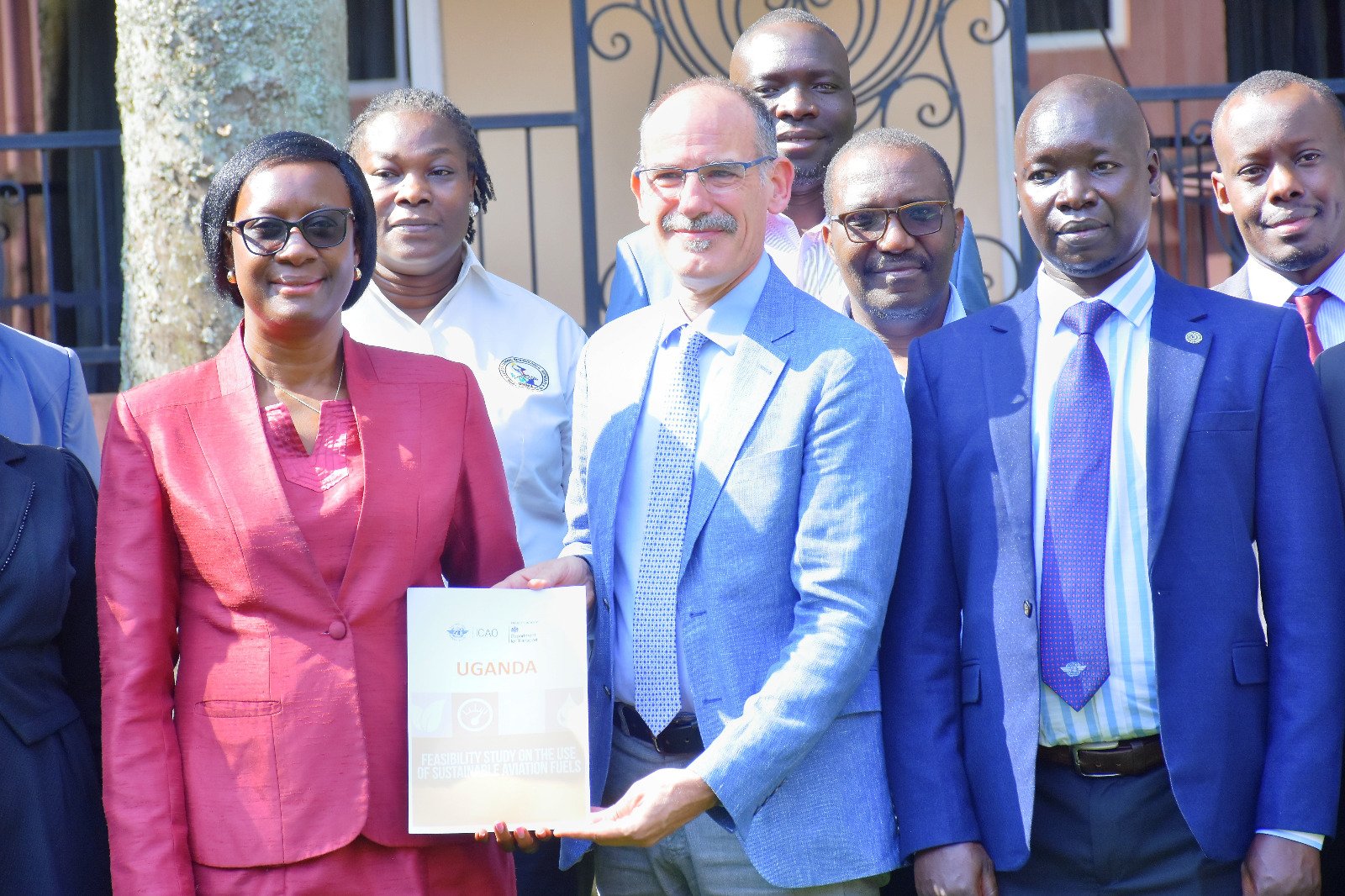
ENTEBBE – Uganda has taken a significant step toward cleaner air travel with the completion of a major feasibility study on Sustainable Aviation Fuel (SAF). The Uganda Civil Aviation Authority (UCAA), in partnership with the International Civil Aviation Organization (ICAO) and the United Kingdom government, unveiled the final draft report at the Imperial Golf View Hotel in Entebbe.
The study confirms Uganda’s strong potential to produce SAF using its abundant biomass resources, positioning the country to tap into environmental protection, energy security, and new economic opportunities.
A Commitment to Cleaner Skies
Presenting the report, Ms. Olive Birungi Lumonya, Deputy Director General of the UCAA, expressed gratitude for the international support that made the study possible. She reaffirmed Uganda’s commitment to adopting cleaner energy for aviation.
“Uganda is committed to embracing cleaner aviation energy sources,” stated Ms. Lumonya, “in line with ICAO’s global goal of reducing aviation CO₂ emissions by 5% by 2030 through SAF, Lower Carbon Aviation Fuels (LCAF), and other cleaner energies.”
This initiative aligns with Uganda’s proactive stance on green aviation. Ms. Irene Atto, UCAA’s Acting Director for Safety, Security, and Economic Regulation, highlighted that Uganda was among the first African nations to voluntarily join ICAO’s Carbon Offsetting and Reduction Scheme for International Aviation (CORSIA) in 2019.
From Study to Strategy: The Path Forward
The feasibility study marks the end of the initial assessment phase. The program now enters a critical new stage: developing a comprehensive national Business Case Study.
This next phase will involve detailed planning and collaboration with key government ministries, the Uganda National Oil Company (UNOC), and other stakeholders in the aviation sector. The business case will create a roadmap for the full-scale implementation of SAF production and use within Uganda.
The completion of this study solidifies Uganda’s intent to be a regional leader in sustainable aviation. By leveraging its natural resources to produce alternative jet fuel, the country aims to contribute meaningfully to global aviation decarbonization while fostering domestic economic growth and environmental resilience.
About The Author