

Uganda’s 2025 Primary Leaving Examinations Commence Amid Gratitude and Heightened Security

KAMPALA – October 31, 2025 – The Uganda National Examinations Board (UNEB) has officially commenced the 2025 Primary Leaving Examination (PLE), which began today with the briefing of candidates at various school premises and examination centres across the country.
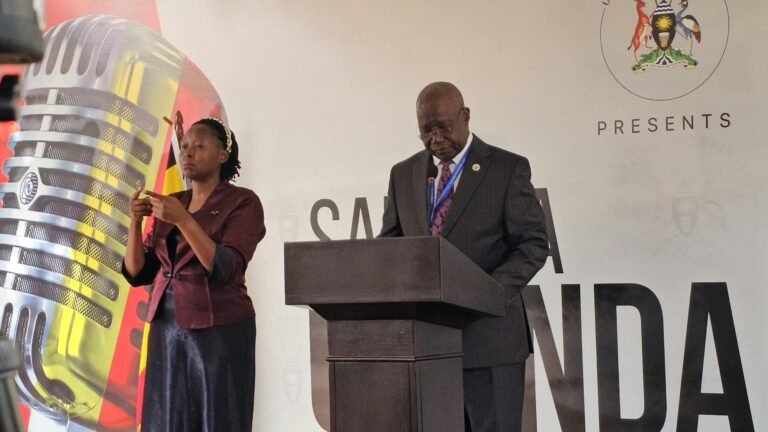
In a press statement released by the Executive Director, Mr. Dan Odongo, the 2025 PLE is being conducted under the theme: “Embracing security and holistic assessment of learners in a dynamic environment,” a theme it shares with the ongoing Uganda Certificate of Education (UCE) examinations.
Mr. Odongo expressed “profound gratitude” to the Uganda National Teachers Union (UNATU) for calling off its industrial action, ensuring teachers are available to participate in the critical task of invigilation. He emphasized that the professionalism of teachers is imperative to guarantee the fairness and validity of the examination process, which plays a pivotal role in determining the educational future of the children.
Record Candidature and Special Needs Support
This year has seen a significant increase in candidate registration, with a total of 817,885 pupils sitting for the exams, compared to 797,444 in 2024—a 2.5% increase. The candidates are drawn from 16,140 examination centres. Of these, 52% (428,356) are female, while 48% (389,529) are male. The majority, 64%, are funded by the government under the Universal Primary Education (UPE) programme.
UNEB has also made extensive arrangements for 3,644 candidates with special needs. Support includes braille papers for 33 blind candidates, large print papers for 620 with low vision, and sign language interpreters for 300 deaf candidates. Additionally, 1,318 learners with dyslexia or severe physical impairments will be assisted by transcribers. All special needs education candidates will be granted an extra 45 minutes per paper, with 1,505 support personnel deployed to aid them.
Massive Deployment and Call for Local Government Support
To ensure the smooth running of the exams, UNEB has deployed 59,890 field personnel nationwide. This team includes 160 District Monitors, 13,841 scouts, 12,260 Chief Invigilators, 33,105 invigilators, and 524 security personnel.
The Board has called upon Local Governments, specifically Chief Administrative Officers (CAOs), to provide necessary support. This includes promptly processing funds, overseeing the distribution of exam papers, ensuring prompt payment of invigilators, and clamping down on malpractice. District Education Officers (DEOs) and District Inspectors of Schools (DISs) were urged to work together to post invigilators in accordance with UNEB regulations.
Strong Warning Against Malpractice
UNEB issued a stern warning to anyone contemplating involvement in examination malpractice, highlighting ongoing efforts by security agencies to crack down on fraudulent social media platforms claiming to sell PLE papers. The Board reminded the public that the UNEB Act prescribes severe penalties, including a maximum sentence of ten years imprisonment, a fine of forty million shillings, or both.
Invigilators and scouts who negligently allow malpractice will also face consequences, including a possible five-year jail term or a fine of twenty million shillings. The public is encouraged to report any suspected malpractice via the toll-free lines: 0800-111-427 and 0800-211-077, with assurances of protection under the Board’s Whistle Blower’s policy.
Impersonation Crackdown and Candidate Briefing
The Board revealed a disturbing trend of registering secondary school students to sit for PLE for impersonation or to falsely boost school performance. Security teams have already arrested head teachers and directors from schools such as Salama Education Centre Primary School in Kagadi and Kasasa Primary School in Hoima.
Heads of centres were implored to personally brief candidates, warning them of actions that could lead to disqualification, such as smuggling unauthorized materials, copying, impersonation, and latecoming. Candidates were instructed to use blue or black ink pens for their answers, with pencils reserved only for drawings. They are also expected to arrive at least 30 minutes before the exam starts, with a grace period of no more than 15 minutes after the exam has begun.
In his concluding remarks, Mr. Odongo encouraged candidates to remain calm and confident, assuring them that the questions are based on what they have studied over the years. He called upon parents, religious leaders, and well-wishers to continue praying for the candidates, ending with a blessing: “For God and my Country.”
The nation now watches as over 800,000 young learners embark on this critical milestone in their academic journey.
About The Author