

Opposition Leader Accuses Tanzanian Government of Democratic Backslide and Political Repression
DAR ES SALAAM, Tanzania — In a stark statement smuggled from his prison cell, Tanzanian opposition leader Tundu Lissu has accused President Samia Suluhu Hassan’s government of steering the country into an “outright dictatorship,” marked by systematic repression, electoral manipulation, and violence against critics.
Lissu, the national chairman of the opposition party CHADEMA and Executive Vice Chairman of the International Democracy Union (IDU), penned the statement from Ukonga Central Prison in Dar es Salaam. He addressed it to the IDU’s Washington Summit, which concludes on December 4—a day that will mark his 240th day of what he calls “utterly unlawful and unjust imprisonment.”
From Prison: A Story of Isolation and Resilience
In his detailed account, Lissu describes being held for months alongside convicted murderers on death row before being moved to a high-surveillance solitary block. He states this transfer occurred after authorities realized his proximity to other inmates was granting him “insights into the inner workings of our criminal justice system that they would rather I did not have.”
His current imprisonment stems from an arrest on April 9, 2025, after police violently dispersed a public rally he was addressing in the southern town of Mbinga. He was charged with treason and the publication of false information under cybercrime laws.
A Historical Pattern of Authoritarianism
Lissu’s statement provides a sweeping indictment of Tanzania’s political trajectory. He argues that the nation’s founding party, TANU (Tanganyika African National Union), exported an authoritarian, one-party state model across Eastern and Southern Africa. This legacy, he claims, persists today in the ruling Chama Cha Mapinduzi (CCM), which has been in power since independence in 1961.
While the return to a multi-party system in 1992 offered hope, Lissu contends that an “Imperial Presidency” and controlled institutions stifled genuine democracy. He details CHADEMA’s rise as the leading opposition party by 2010 and the severe crackdown it faced, particularly after the 2015 elections. Lissu, a survivor of a 2017 assassination attempt where he was shot 16 times, frames his current imprisonment as the latest episode in a long history of state persecution.
The “Short-Lived Lie” of Reform
A central pillar of Lissu’s accusation is that President Samia Suluhu Hassan’s initial rhetoric of reconciliation and “Maridhiano” (consensus) talks was a facade. He describes her tenure as a “short-lived lie,” beneath which she consolidated power, rehabilitated hardliners from her predecessor John Magufuli’s era, and rejected meaningful constitutional and electoral reforms.
Following the collapse of talks with CHADEMA in May 2023, Lissu alleges a “reign of terror and political repression far worse than Magufuli’s” returned. This included abductions, disappearances, extrajudicial killings, and arbitrary arrests.
The Systematic Dismantling of CHADEMA
Lissu’s statement outlines a coordinated legal and financial assault on his party following his imprisonment and his election as chairman in January 2025:
- Funding Strangled: The Registrar of Political Parties, a presidential appointee, derecognized CHADEMA’s new secretariat and cut off its statutory government subvention.
- Electoral Ban: The Electoral Commission declared CHADEMA ineligible to field candidates in the October 2025 general elections after the party refused to endorse a flawed “electoral ethics code.” The ban is set to last until the 2030 elections.
- Activity Frozen: A High Court judge issued a restraining order prohibiting the party from all political activities nationwide.
Violence Against a Spectrum of Critics
The crackdown, according to Lissu, extended far beyond CHADEMA:
· Religious Leaders: Reverend Dr. Charles Kitima, Secretary-General of the Tanzania Episcopal Conference (Catholic Church), was brutally attacked inside church headquarters in May 2025.
· Activists: Mdude Nyagali, a persistent critic, was abducted from his home in Mbeya and is feared murdered.
· Internal CCM Critics: Bishop Josephat Gwajima, a CCM legislator and former Magufuli supporter, was forced into exile after his church was suppressed. Ambassador Humphrey Polepole, a former CCM chief propagandist turned whistleblower, was abducted from his Dar es Salaam home in October 2025 and disappeared.
The 2025 Elections and a “Democratic Uprising”
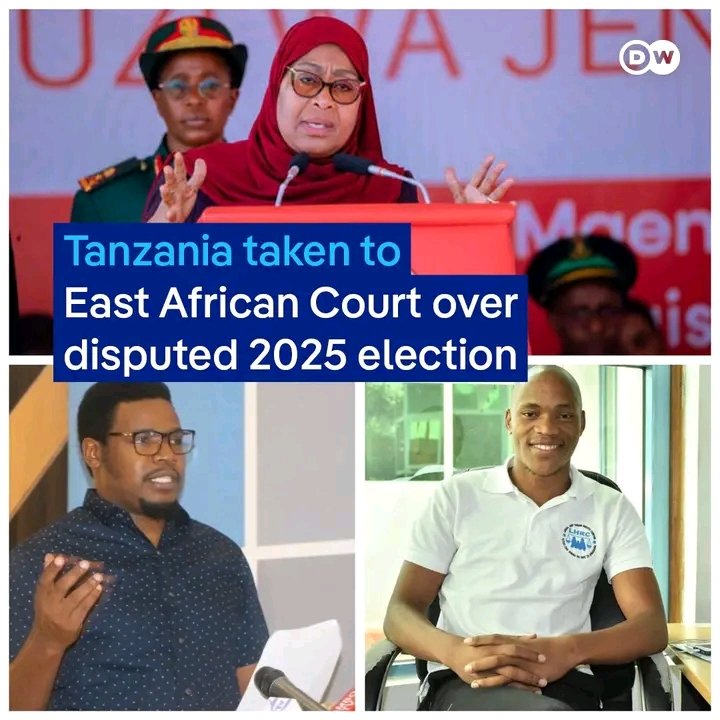
Lissu condemns the October 2025 general elections as a sham, held under a nationwide internet blackout and marred by state-sanctioned violence against peaceful citizens. He asserts that African Union (AU), Southern African Development Community (SADC), and other international observers found the elections lacked basic credibility.
Despite the repression, Lissu strikes a defiant note, claiming a “democratic uprising is underway.” He states that Tanzanians, particularly the youth, “have crossed the Rubicon—and they will not be intimidated back into silence.”
Call for International Attention
The statement concludes by urging the International Democracy Union and the world to focus on events in Tanzania, given its historical influence on the politics of Eastern and Southern Africa. Lissu frames the struggle as pivotal not just for Tanzania, but for the democratic trajectory of the region.
The Tanzanian government has consistently denied allegations of political repression, framing legal actions against opposition figures as matters of upholding the law. However, Lissu’s testimony from prison presents a direct and detailed challenge to that narrative, portraying a nation in the grip of a deepening authoritarian crisis.
FreeTunduLissu | @idualliance
About The Author