
Iran at the Crossroads: Economic Collapse and Protests Force a Reckoning
Faced with its most severe economic crisis in modern history and a brutal crackdown on nationwide protests, Iran’s leadership stands at a pivotal juncture. Experts warn the regime must choose between making significant political and economic concessions to secure sanctions relief or face inevitable further upheaval.
📉 The Engine of Crisis: A Collapsed Economy
The protests that erupted in late 2025 were directly fueled by an economic collapse, marked by a currency in freefall and soaring prices. The situation has shattered the livelihoods of ordinary Iranians.
· Currency Implosion: The Iranian rial has become one of the world’s least valuable currencies, plummeting from approximately 42,000 to over 1.1 million against the US dollar since the 2015 nuclear deal. In early January 2026, it hit a record low of 1.42 million rials to the dollar.
· Soaring Inflation & Poverty: Inflation peaked at over 48% in late 2025. Purchasing power has fallen by more than 90% in eight years, with food prices rising 72% in one year alone. An estimated 22% to 50% of Iranians now live below the poverty line.
· Systemic Failures: Decades of international sanctions, economic mismanagement, and corruption are root causes. The crisis is deepened by chronic electricity outages, severe water shortages, and a “mercantile” economic mentality that prioritizes short-term trade over long-term industrial development.
✊🏽 From Shopkeepers to Nationwide Revolt
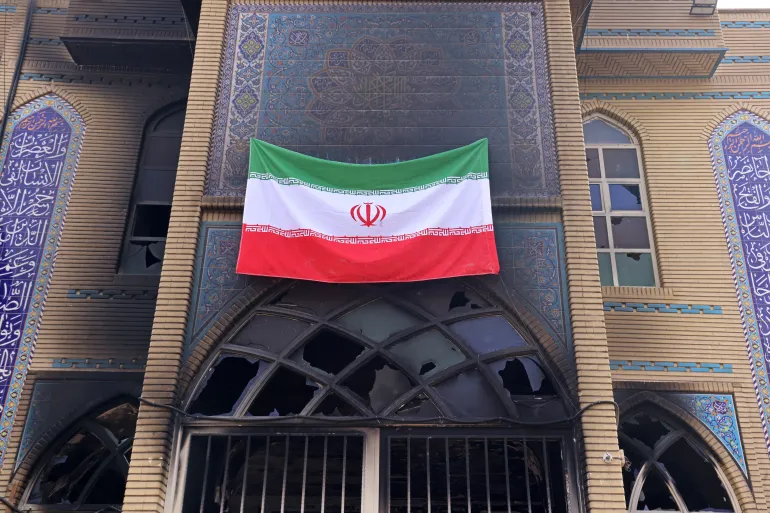
The unrest began with shopkeepers in Tehran’s Grand Bazaar closing their stores in late December 2025 after the rial’s collapse destroyed their ability to trade. It quickly evolved into the largest anti-government demonstrations since the 2022 “Woman, Life, Freedom” protests, with chants calling for the end of the Islamic Republic.
State Response & Casualties
The government responded with a massive and violent crackdown:
· Internet Blackout: Authorities imposed a near-total internet shutdown for weeks, severely crippling economic activity and the flow of information.
· Mass Arrests and Deaths: Tens of thousands have been arrested. While official figures are scarce, human rights groups estimate thousands of protesters have been killed. The U.S.-based HRANA put the death toll at over 2,600 in mid-January, while other estimates range higher.
🌐 Mounting International Pressure
Iran faces converging pressures from abroad that limit its options.
· U.S. “Maximum Pressure” 2.0: The Trump administration has expanded sanctions, targeting Iran’s oil “shadow fleet” and maritime networks. President Trump has simultaneously threatened military action and stated “Iran does want to talk, and we’ll talk”.
· European Condemnation: The European Parliament has debated the crackdown, with its president announcing a ban on Iranian diplomatic staff from its premises and calling for expanded sanctions.
· A Weakened Regional Position: The “Twelve-Day War” with Israel in June 2025 severely damaged Iran’s nuclear program and degraded its network of regional allies, known as the “axis of resistance”. This has shattered the regime’s long-standing claim to be the guarantor of national security, a key pillar of its legitimacy.
🔮 The Inevitability of Change
Analysts agree the status quo is untenable. The regime’s traditional playbook of using brute force to quell dissent and then offering minor subsidies is ineffective against this scale of systemic failure. Two potential paths forward are debated:
- Negotiation and Concession: To avert collapse, Iran might seek a deal with the U.S. to lift sanctions. This would require supreme leader Ali Khamenei to make concessions on core strategic pillars: the nuclear program, ballistic missiles, and support for regional proxies. This path is fraught, as concessions could be seen as a capitulation that further undermines the regime’s authority.
- Internal Transformation or Collapse: If the regime refuses meaningful change, further unrest is predicted. Some experts foresee a deeper transformation of the state itself, with the security apparatus, particularly the Islamic Revolutionary Guard Corps (IRGC), consolidating power, especially as the question of succession for the 86-year-old Khamenei looms. The continued erosion of the social contract between state and society makes the system’s long-term stability uncertain.
“The social contract between state and society in Iran has withered,” said analyst Mohammad Ali Shabani, highlighting the regime’s central challenge: “having to explain to the public what it can provide, and why it must continue to exist.
Iran’s current economic collapse is not a sudden event, but the result of deep-seated, centuries-old structural problems within its political economy. These historical patterns created a system that was highly vulnerable to the external shocks of sanctions and war.Here are the key historical economic structures that set the stage for today’s crisis, and how they manifest in the current moment.🔍 Historical Roots of Economic Vulnerability1. The Persistent “Mercantile Mentality”· Historical Pattern: Iran’s economy has long been dominated by a “mercantile mentality,” focused on short-term trade profits from the exchange of goods (like luxury imports for raw materials) rather than long-term industrial production and investment. This system eschews transparency and strong legal institutions, prioritizing personal networks.· Modern Manifestation: This is reflected in an economy vulnerable to speculation and capital flight. The state’s approach to wealth is often described as “extractive,” prioritizing resource extraction over building a diverse, productive industrial base. This makes the economy overly dependent on oil revenues and imports, crippling it when sanctions hit.2. State Control, Corruption & The Revolutionary Guards· Historical Pattern: Since the 1979 Revolution, the state’s role in the economy has expanded, often crowding out the private sector. A pivotal shift occurred from the late 1980s, as the Islamic Revolutionary Guard Corps (IRGC) grew into an economic powerhouse.· Modern Manifestation: The IRGC now controls vast sectors like energy, construction, and finance, operating with little transparency. This “state within a state” siphons public funds, smuggles oil, and directs massive resources toward its military and regional proxies (reportedly over $1 billion to Hezbollah in 10 months in 2025). This drains capital from productive domestic investment and social welfare.3. The Political-Economic Role of the Bazaar· Historical Pattern: The traditional marketplace, or “bazaar,” has been Iran’s commercial heart and a key political actor for centuries. Its alliance with Shiite clergy was crucial to the success of the 1979 Revolution.· Modern Manifestation: The bazaar remains economically vital but is now squeezed. Shopkeepers face import bans, high taxes, and competition from IRGC-backed conglomerates. Their recent leading role in protests—as the group that first shut down the Grand Bazaar in December 2025—signals a dangerous erosion of support from a once-loyal pillar of the regime.4. Oil Dependence & Chronic International Isolation· Historical Pattern: Iran’s modern budget has been heavily reliant on oil revenues since the early 20th century, making it perpetually vulnerable to global market swings and international pressure.· Modern Manifestation: Decades of sanctions over Iran’s nuclear program and regional activities have culminated in “maximum pressure.” The U.S. withdrawal from the nuclear deal in 2018 and the UN reimposing sanctions in September 2025 have been catastrophic. This has cut Iran off from the global financial system, frozen oil revenues, and sparked a cycle of currency panic and inflation.💥 How History Fuels the Current CollapseThese historical weaknesses have directly converged to create the 2025-2026 crisis:· Currency Collapse: The rial has lost over 90% of its value since 2018, trading at a historic low of ~1.4 million to the dollar in January 2026. This is driven by sanctions cutting oil income, panic-driven dollarization, and government money-printing to cover massive deficits.· Hyperinflation & Social Crisis: Annual inflation exceeds 40%, with food prices rising over 70% in a year. An estimated 22-50% of Iranians live below the poverty line, and 57% face some level of malnourishment.· Protests & Repression: The economic freefall sparked nationwide protests in late 2025, which were met with a brutal crackdown, an internet blackout, and thousands of reported deaths and arrests.In essence, Iran’s historical economic structures—characterized by mercantile short-termism, corrupt state control, and oil dependence—created a fragile system. When combined with intense modern sanctions and the financial drain of regional conflicts, this fragility turned into a full-scale collapse, eroding the regime’s base of support and pushing society to a breaking point.I hope this detailed historical context helps deepen your understanding of the situation.
Iran’s foreign policy and regional network are undergoing significant adaptation due to immense pressure from three main sources: direct military strikes, crippling economic sanctions, and widespread domestic protests. The regime is responding by trying to maintain strategic depth while managing severe resource constraints and a damaged security posture.
🎯 Key Pressure Points Forcing Adaptation
· Direct Military Attack: In June 2025, Israel and the U.S. conducted major strikes, destroying key nuclear sites at Natanz, Fordow, and Isfahan. This set Iran’s nuclear program back “decades” and shattered its claim to be an untouchable security guarantor.
· Maximum Sanctions Pressure: Comprehensive UN sanctions were reimposed in September 2025. The U.S. maintains an extensive sanctions regime targeting Iran’s energy, financial, and military sectors, severely limiting resources.
· Domestic Unrest: Nationwide protests since December 2025 over economic collapse challenge the regime’s legitimacy and demand resources be redirected inward.
🔄 Evolution of Foreign Policy & Proxy Network
Facing these pressures, Iran’s strategy has shifted from expansion to consolidation and tighter control.
- Lebanon & Hezbollah: From Blank Check to Tight Purse Strings
Iran’s relationship with its most powerful ally, Hezbollah, has fundamentally changed due to financial strain.
· Tightened Financial Control: Iran has moved from being an “open financier” to a strict “crisis manager.” Funding is now contingent on detailed accounting, cost-cutting within Hezbollah (especially on welfare), and alignment with Iran’s priorities.
· Reduced Funding Scope: Estimates suggest current assistance ($900 million-$1 billion) is below Hezbollah’s requests, leaving gaps in the group’s rehabilitation and compensation needs.
· Increased Operational Oversight: Iranian involvement in Hezbollah’s resource allocation and organizational structures has deepened.
- Syria: Leverage Diminished and Forced Pragmatism
Iran’s influence in Syria has waned, allowing the Damascus government to pursue greater independence.
· Reduced Military Entrenchment: Analysts note Iran has “already retreated significantly from Syria compared to previous years”.
· Residual Leverage: Remaining influence is now largely indirect, based on unresolved financial debts from the Assad regime era and attempts to influence through political remnants.
· Syria’s Diversification: This retreat enables Syria to diversify partnerships, normalize ties with Arab states, and act more as a sovereign actor rather than an Iranian proxy.
- Iraq & Yemen: Covert Coordination and Defiant Posturing
· Iraq: Iran maintains influence through covert diplomacy and militia ties. The commander of the IRGC’s Qods Force, Esmail Qaani, made a secret visit to Baghdad in early January 2026 to meet with senior pro-Iranian militia figures.
· Yemen (Houthis): The relationship focuses on military coordination against perceived common foes. In early January 2026, Qods Force officers and Houthi officials reportedly held talks to coordinate responses in the event of a new U.S.-Israeli attack on Iran. The Houthis also continue aggressive posturing, such as declaring an Israeli diplomatic visit to Somaliland a “military target”.
🤔 What Drives These Strategic Shifts?
Iran’s foreign policy evolution is not a choice but a necessity driven by two core imperatives:
- Resource Survival: The primary driver is economic. With its currency collapsing and domestic subsidies cut, the state can no longer afford unconditional foreign patronage. Every dollar sent to a proxy is weighed against domestic instability.
- Security After Humiliation: The direct attacks on its homeland and nuclear program were a profound strategic shock. The regime’s legitimacy was built on providing “forward defence” and security. This pillar crumbled in June 2025. The new focus is on ensuring proxies can act as retaliatory deterrents to prevent future attacks on Iranian soil, while also trying to rebuild its own damaged military and nuclear capabilities.
💎 Outlook: A More Cautious but Unpredictable Iran
Iran is not abandoning its regional network but is managing it more frugally and centrally. The era of expansive ideological patronage is over, replaced by a more transactional, cost-benefit approach focused on core security dividends.
This constrained Iran may be less able to project power but could also be more unpredictable, as it relies on asymmetric responses from its proxies to compensate for its own vulnerabilities.
Iran’s foreign policy setbacks and a weakened regional network are having a profound impact on its internal politics, acting as a catalyst for change and accelerating certain existing trends.
🔍 Summary of Key Domestic Impacts
Here are the primary ways foreign policy is reshaping Iran’s domestic political landscape:· Legitimacy Crisis: Foreign failures (e.g., military strikes) have shattered the regime’s claim to be a security guarantor, undermining a core pillar of its legitimacy.·
Consolidation of Hardline Control:
External threats are used to justify harsh repression and silence internal dissent, eroding the political space for reform.· Empowerment of the IRGC: The Revolutionary Guard Corps is increasingly central to regime survival, potentially shifting the state’s future towards military-nationalist rule.·
Erosion of Ideological Authority: Inability to project power abroad weakens the regime’s ideological narrative at home, exposing a gap between its revolutionary promises and results.
📉 How Foreign Policy Failures Drive Domestic Change·
Shattered “Forward Defence” and Regime Legitimacy The core social contract in Iran has long promised security and sovereignty in exchange for limited freedoms. The direct U.S.-Israeli strikes in June 2025, which severely damaged Iran’s nuclear facilities, broke this promise. Analysts note the regime now faces a “crisis of legitimacy” because it failed in its fundamental duty to protect the nation.·
Political Consolidation and the End of Reform Facing an existential threat from abroad, the regime has closed ranks internally. Figures like President Masoud Pezeshkian, initially seen as reform-leaning, have fully aligned with the hardline crackdown on protesters, blaming the unrest on foreign agents.
This demonstrates that in a crisis, the entire political elite prioritizes regime survival over any internal political debate.· The Rising Power of the Security Apparatus With its conventional and proxy deterrence weakened, the regime relies more than ever on its domestic security organs—the Islamic Revolutionary Guard Corps (IRGC) and the Basij militia—for survival.
This trajectory suggests a possible future where power shifts decisively from clerical leadership to a military-security establishment.·
Absence of a Coherent Opposition Despite widespread anger, there is no organized political alternative inside Iran. Exiled figures like Reza Pahlavi lack a base within the country and cannot offer a practical governing plan. This vacuum means protests, though massive, do not automatically translate into a viable revolution.·
A Strategy of Repression and Selective Concessions The regime’s survival playbook involves a “repression-concession mix”. While violently crushing protests with internet blackouts and mass arrests, it also offers limited economic palliatives like new subsidy systems. The goal is to manage the crisis through attrition rather than resolve it.·
Manipulating Legitimacy: From Ideology to “Resistance” As the state’s Islamic ideology loses its grip on a connected, young population, it increasingly frames itself as a sovereign bastion resisting American and Israeli pressure. This nationalist “resistance” narrative becomes a new tool to justify its rule and crush dissent as foreign-inspired treachery.In short, foreign policy pressures are acting like a crucible, hardening the regime’s repressive core, eliminating internal political debate, and forcing a reliance on raw security power. The most likely outcome is not imminent collapse but the gradual transformation of the Islamic Republic into a more purely security-dominated state.
Following our analysis of Iran’s internal shifts, here is how key regional powers—Israel, Saudi Arabia, and Turkey—view and are responding to Iran’s internal crisis and weakened foreign policy position. Their reactions range from military opportunism to diplomatic pragmatism.
🗺️ Regional Powers’ Perspectives & Strategies
Country Core Concern / View of Iran’s Weakness Primary Strategy Key Recent Actions / Statements
Israel Opportunity & Escalation Risk – Sees a chance to degrade Iran’s capabilities but fears desperate retaliation from Tehran or its proxies. Coercive Diplomacy & Military Pressure – Use threat of force to extract concessions and prepare for potential conflict. Increased readiness for a “significant” Iran war; demanded Iran halt uranium enrichment as a condition for not attacking; maintains high alert against Hezbollah.
Saudi Arabia Stability & Managed Rivalry – Views chaos as a greater threat; seeks to avoid war and secure its economic transformation. Engagement & Hedging – Pursue direct diplomacy with Iran while strengthening U.S. security guarantees. Reopened Tehran embassy; engaged in direct talks; sought explicit U.S. defense treaty; diversified dialogue with other actors.
Turkey Pragmatic Balancing – Prioritizes its own economic and security interests, acting as neither a firm ally nor a determined foe of Iran. Compartmentalization – Cooperate on shared interests (trade, Kurdish issue) while competing in other arenas (Syria, Azerbaijan). Continued energy imports and trade; mediated regional talks; maintained military presence in Syria against Iranian-backed groups.
🔍 Deeper Analysis of Each Regional Strategy
· Israel’s Aggressive Calculus 🎯
Israel perceives Iran’s internal strife and damaged nuclear program as a unique, but possibly fleeting, “window of opportunity.” The goal is to permanently cripple Iran’s ability to become a nuclear threshold state. However, Israeli officials openly worry that cornering the regime could trigger a major war, either through direct Iranian retaliation or a massive Hezbollah rocket barrage from Lebanon. This creates a tense paradox: Israel feels compelled to act but fears the consequences of acting too forcefully.
· Saudi Arabia’s Risk-Averse Pragmatism ⚖️
Driven by Crown Prince Mohammed bin Salman’s Vision 2030, Saudi Arabia’s paramount interest is economic transformation, which requires regional stability.
The Saudi leadership fears that a U.S.-Iran war or a collapsed Iranian state would unleash catastrophic turmoil. Therefore, Riyadh has pivoted from confrontation to direct diplomacy with Tehran, aiming to manage tensions and establish “rules of the game.”
This outreach is firmly backed by a simultaneous drive to lock in ironclad U.S. security guarantees, often seeking a formal defense treaty to deter Iran.
· Turkey’s Transactional Approach 🤝
Turkey’s policy is the most nuanced, driven by pure pragmatism. On one hand, it remains a major trading partner with Iran, relies on its gas, and cooperates against Kurdish separatist groups. On the other, they are rivals in Syria, the Caucasus, and for Sunni Islamic leadership.
Ankara compartmentalizes these issues, choosing not to align with U.S. “maximum pressure” campaigns. Instead, it positions itself as an independent mediator (e.g., between Russia and Ukraine) and a necessary channel for dialogue, all while advancing its own security and energy interests.
💎 Conclusion: A Region Preparing for All Scenarios
The regional response is defined by contradiction. While all actors seek to avoid a major war, their parallel preparations are making the region more militarized. Israel’s military readiness, Saudi Arabia’s pursuit of a U.S. treaty, and the continued arming of proxies all feed a security dilemma.
Ultimately, regional powers are not just passive observers but active players trying to shape Iran’s trajectory. Their strategies of coercion, engagement, and hedging will significantly influence whether Iran’s internal crisis leads to further isolation, a managed detente, or a dangerous escalation.
About The Author