
UGX46.9 Trillion: Six Years of Interest Payments Expose Uganda’s ‘Reckless Borrowing’ – Ssemujju
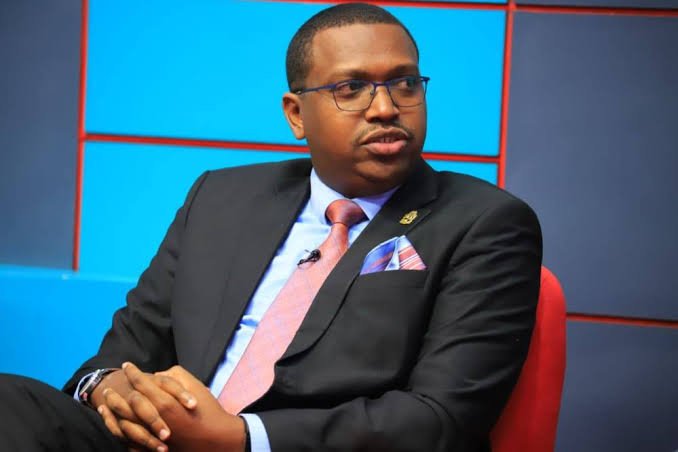
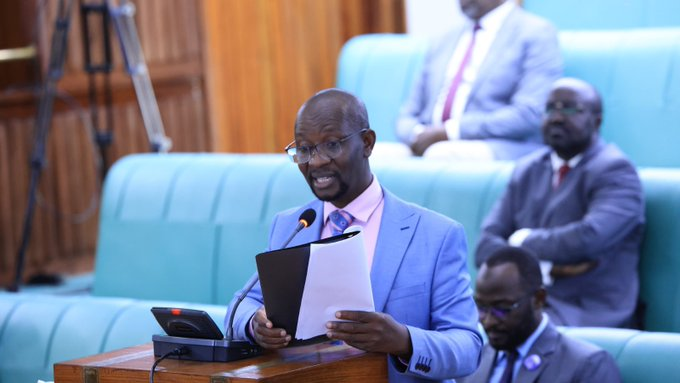
KAMPALA – Kira Municipality MP Ibrahim Ssemujju Nganda has revealed that by June 2027, the Government of Uganda will have spent a staggering UGX46.9 trillion on interest payments for loans accumulated over six years, warning that reckless borrowing has placed the national budget under unprecedented strain.
Presenting the Minority Report on the Annual Budget Estimates for Financial Year 2026/27, Ssemujju broke down the mounting interest burden. “Because of reckless borrowing, we have paid UGX21.6 trillion in interest on money mainly borrowed from commercial banks and pension funds in the last four years,” he told Parliament.
He added that in the current financial year 2025/26, government is paying UGX11.4 trillion in interest, while UGX13.8 trillion has been budgeted for next financial year. “This brings total interest payment to UGX46.9 trillion in six years,” Ssemujju said.
According to the 2026/27 National Budget, government has earmarked UGX33.184 trillion towards paying its debts — an increase from UGX27.552 trillion spent on debt repayment in the current 2025/26 financial year.
Debt servicing consumes 40% of budget
The Shadow Minister of Finance revealed that the lion’s share of the UGX84.391 trillion 2026/27 national budget will go towards public debt payment, with government projecting to spend UGX33.6 trillion — representing 40% of the entire budget.
Public debt has risen to UGX126.18 trillion, according to the Budget Committee Report, with domestic debt posing increasing pressure on the national budget.
Ssemujju also warned that government is planning to borrow directly from ordinary Ugandans through mobile money. He said the government is in the final stages of developing an app that will allow borrowing via mobile money platforms, with mobile money operators being asked to support a system where ordinary people can buy government securities by phone.
Wage bill and ‘luxury expenses’ under fire
The MP raised concerns over what he termed excessive spending on public servants’ perks. “There are also other direct expenses by public servants such as vehicles, fuel, special meals and newspapers which will cost UGX8.2 trillion, representing 9.7% of total budget,” he said.
He further noted that classified expenditure stands at UGX2.6 trillion, or 3.1% of the budget. “These four items alone will consume 70% of the entire budget. What remains for you to debate is UGX25.7 trillion, which is 30% of the budget,” Ssemujju added.
The proposed salary increments of about UGX1.2 trillion to various public servants, including teachers, will raise the country’s wage bill from UGX8.5 trillion to UGX9.7 trillion. The wage bill and other allowances have hit UGX14.1 trillion, representing 16.7% of total budget, for approximately 400,000 public servants.
Ssemujju questions major private-sector allocations
The Kira Municipality MP criticised specific allocations including UGX305 billion for Lubowa Hospital, UGX254 billion for Ntungamo Coffee, and UGX1.5 trillion requested by Dei BioPharma, describing the projects as a waste of taxpayers’ money.
Budget execution remains weak
The Budget Committee Report highlighted weak budget execution, with overall absorption at only 62.8% by mid-year, largely due to poor performance of externally financed projects. Tax revenue missed its target by UGX1.08 trillion, despite growing by 8.2% compared to the previous year.
Government is running a fiscal deficit of UGX6.526 trillion in the first half of FY2025/26, driven by higher expenditure and lower-than-expected revenue.
AFCON 2027 infrastructure behind schedule
The Committee report also noted that sports infrastructure for AFCON 2027 is behind schedule, with Mandela National Stadium renovation not yet contracted, and Akii-Bua Stadium and training facilities still incomplete.
Economic growth and inflation
Despite fiscal challenges, Uganda’s economy grew by 6.7% in the first half of FY2025/26, driven by strong performance in agriculture, industry and services. Inflation averaged 3.5% during the same period, remaining below the 5% medium-term target.
‘Highly constrained budget needs real surgery’
Ssemujju concluded by urging Parliament to recognise the severity of the situation. “I therefore want Parliament to note that you are presented with a highly constrained budget that needs real surgery if it is to make meaning to the population.”
Parliament is currently considering the motion for approval of the proposed annual budget for Financial Year 2026/27, following its presentation by the Minister of Finance, Planning and Economic Development on 15 April 2026. The motion is being handled under Section 13(1) of the Public Finance Management Act, 2015.
About The Author