
Government Minister Faces Past Arrest Claims Amidst Current Political Tensions
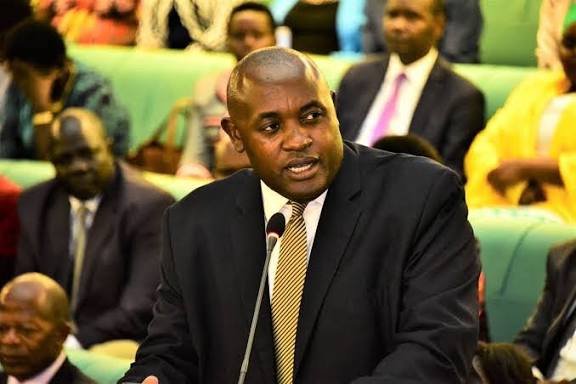
In a tense parliamentary session, the Minister of Information, Communications Technology and National Guidance, Dr. Chris Baryomunsi, found himself at the center of a storm involving his past and his current defense of government actions.
The controversy erupted when opposition MP Ibrahim Ssemujju Nganda (Kira Municipality) castigated Minister Baryomunsi for what he termed as ingratitude. Ssemujju recounted a 2012 incident where he visited Baryomunsi at Jinja Road Police Station after the latter’s arrest. The arrest was in connection with the highly charged case of the stolen body parts of the late Butaleja Woman MP, Cerinah Nebanda. Ssemujju claimed that during this detention, Baryomunsi was even denied basic comforts like sandals, and lamented that the Minister has never formally thanked him for the visit.
In a swift and contrasting response, Dr. Baryomunsi vehemently denied the narrative of abduction. He acknowledged being arrested in 2012 but insisted it was a legal process where he was duly produced in court. The Minister stated he had since forgiven the government, noting that the former Inspector General of Police, Gen. Kale Kayihura, had formally apologized to him. He urged the opposition to stop using the decade-old saga as a political “gotcha” moment.
The exchange highlights the long-standing political tensions and the often-revisited historical grievances between Uganda’s ruling National Resistance Movement (NRM) and the opposition.
Separately, Minister Baryomunsi also addressed the ongoing situation surrounding former presidential candidate Robert Kyagulanyi, popularly known as Bobi Wine. He told Parliament that there are currently no charges being preferred against Kyagulanyi. Instead, the Minister claimed that the opposition leader had “voluntarily chosen to go into hiding.”
Baryomunsi defended the significant security deployment around Kyagulanyi’s home, stating it was a preventive measure. He argued that the security presence was intended to stop the residence from being used as a hub for activities that could lead to public disorder.
The twin statements from the Minister underscore his dual role: both as a political figure confronting his own controversial past with the state, and as the government’s chief spokesperson tasked with defending its current security and political decisions.
About The Author