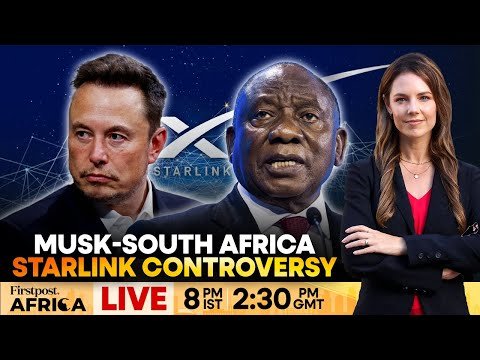
Elon Musk Claims Racial Bias Blocking Starlink in South Africa
JOHANNESBURG – Tech billionaire Elon Musk has ignited a global controversy with a social media post alleging that his satellite internet company, Starlink, is being denied an operating license in South Africa due to his race.
The claim was made on the social media platform X (formerly Twitter) on January 8, 2026, in a post that has since garnered over 21 million views.
“Starlink is not allowed to have an Internet provider license in South Africa for the sole reason that I am not Black,” Musk wrote. “This is not ok.”
The post was echoed by an account associated with Musk’s companies, @cb_doge, which quoted him stating, “There are 140 laws in South Africa that basically give strong preference to if you are a black South African and not otherwise. Starlink is not allowed to operate in South Africa, because I’m not black.”
The allegation directly references South Africa’s Black Economic Empowerment (B-BBEE) policies, a legislative framework enacted to redress the inequalities of apartheid by promoting economic participation and ownership for historically disadvantaged groups.
The post has triggered massive online engagement, with 40.6K reposts, 3,747 quotes, and 281K likes, reflecting its widespread circulation and debate.
As of this reporting, neither the South African government nor the Independent Communications Authority of South Africa (ICASA) has issued a public response to Musk’s specific allegation. Regulatory decisions on licensing typically involve complex assessments of technical compliance, local partnership structures, and adherence to broader national policy.
The incident places a renewed international spotlight on South Africa’s empowerment policies and the challenges global tech giants face in navigating local regulatory environments. It also highlights the potent influence of social media statements by high-profile business leaders in shaping public perception of geopolitical and regulatory issues.
ElonMusk | #Starlink | #SouthAfrica | #BEE | #ICASA
About The Author