
Uganda Police Takes Over Training of Private Security Guards
First cohort of 7,085 trainees to complete on 24th April 2026 as taxpayers foot the bill
The Uganda Police Force has assumed responsibility for training guards employed by Private Security Organisations (PSOs), a move aimed at ensuring the country has well-trained security personnel who do not pose a risk to national security.
The first cohort of 7,085 trainees is expected to complete their training on 24th April 2026, with the exercise being fully funded by Ugandan taxpayers.
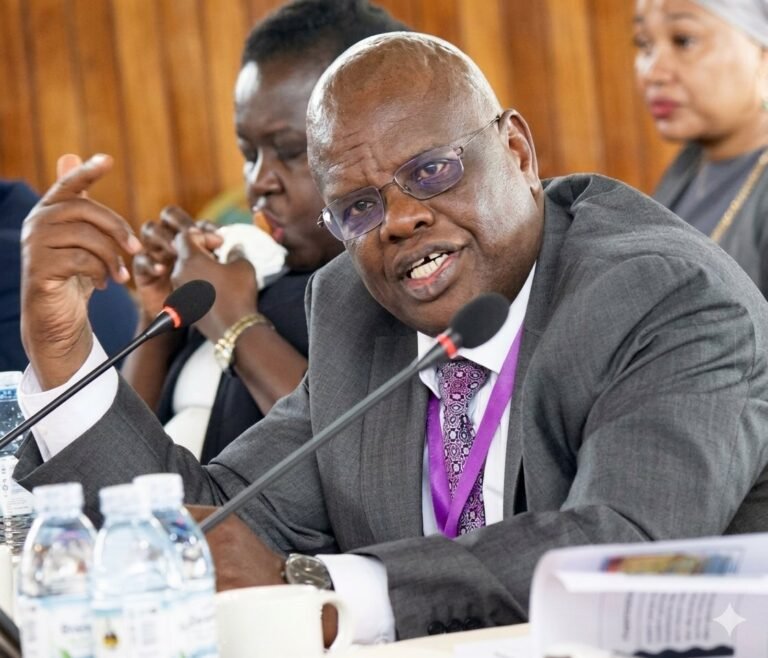
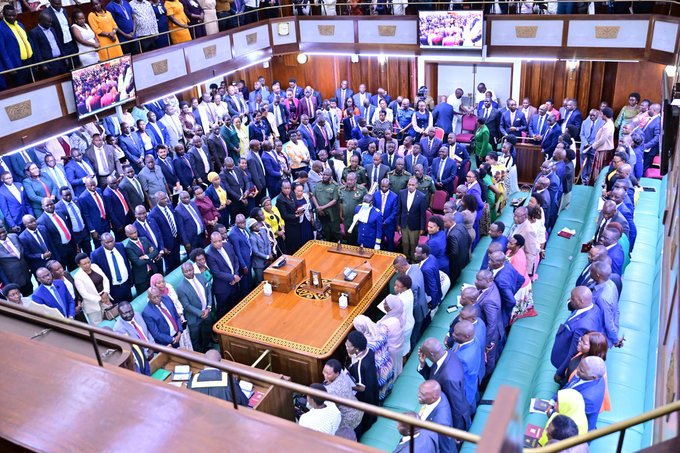
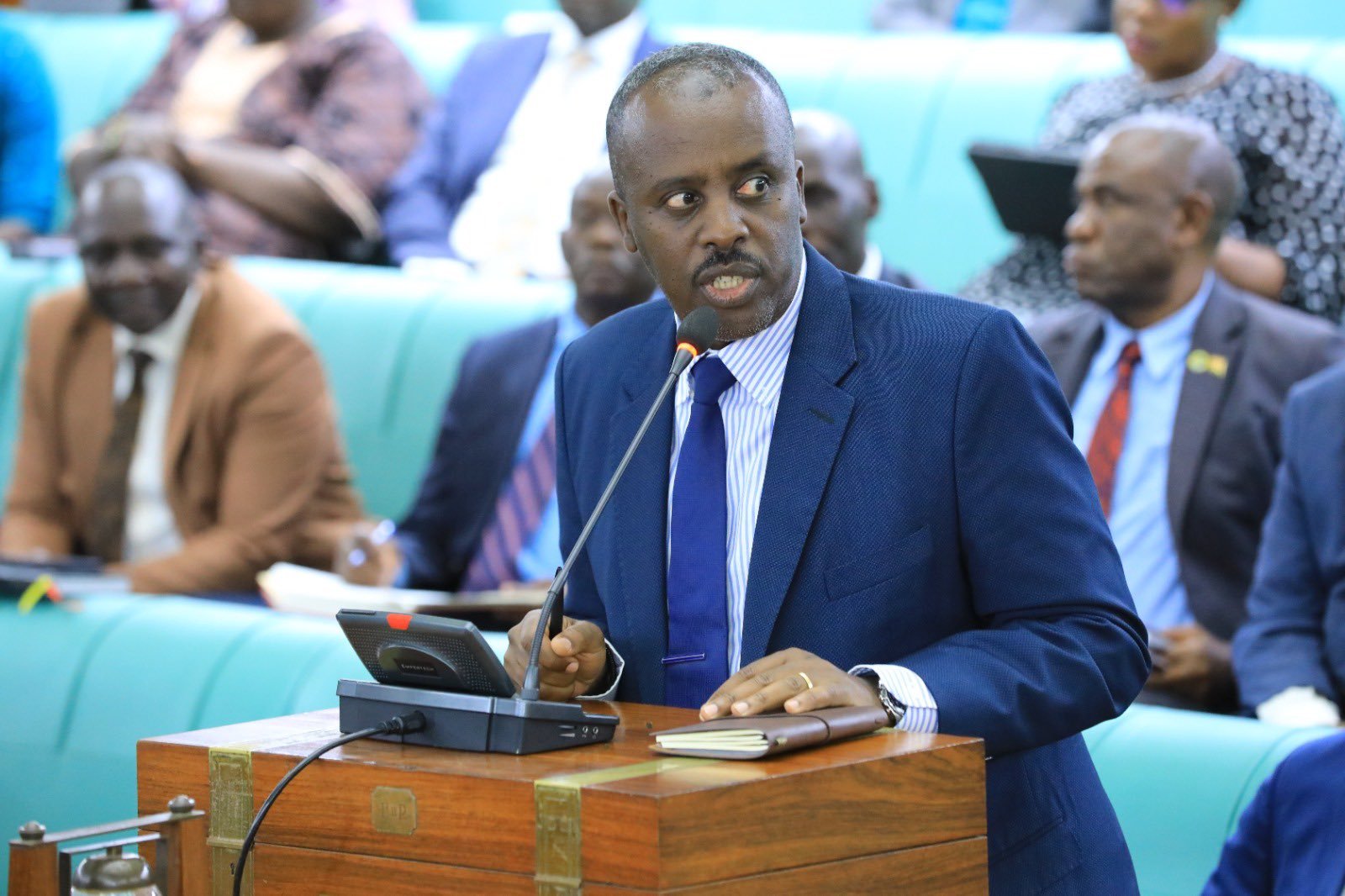
The revelation was made by David Muhoozi, Minister of State for Internal Affairs, while appearing before Parliament’s Committee on Defence and Internal Affairs. The Minister was appearing during the consideration of a petition submitted by Private Security Organisations.
“In the proposed review of the regulations, we propose that the private security guards will be either trained from police training schools or police trainers are deployed to accredited Private Security Organisations at a subsidised cost to ensure quality standardised training,” Minister Muhoozi noted.
He added: “Actually, as we speak now, we have something like 7,085 undergoing training by the police free of charge in some of our schools for private security organisations and these belong to different agencies or security, private security organisations.”
Call for independent law
While backing the government’s proposal to regulate training of private security guards, Wilson Kajwengye (Nyabushozi County) called for an independent law to regulate the private security sector. Currently, regulation is being done under the Police Act.
“Regulating them is absolutely in order. However, the regulations that you so elaborately caught stem from the Police Act and the Constitution. Is it not about time, that the Ministry comes up with a Bill to regulate private security organisations establishment and regulation bill?” Kajwengye said.
He further argued that trade in security, particularly involving firearms, should not be equated to ordinary commerce.
“Trade in security especially with a gun, is not like trading in chapati or mandazi,” he remarked.
Drawing from international experience, Kajwengye noted that Uganda would not be the first nation to enact such legislation. He cited South Africa, which has over 500,000 private security guards and operates under a dedicated Act to regulate the sector.
“I remember, for them, they even have a private security practitioner’s authority. Because while for them, I think they are close to half a million employees in private security,” he said.
He cautioned that regulating a sector whose workforce outnumbers the police force itself could present challenges if not properly structured.
“In my view, if you are going to regulate an organisation whose strength outnumbers yours, it is highly likely that it will distract you or you will use more resources than you would ordinarily have used,” Kajwengye warned.
Standardised curriculum
The Minister also revealed that a standard training curriculum has recently been developed, which will be essential for enhancing professionalism and ensuring consistent high-quality services.
The new curriculum is designed to address critical security challenges, improve public perception and confidence, ensure compliance with legal requirements, and equip guards with necessary skills in conflict resolution, surveillance, and emergency response.
The development signals a significant shift in how private security personnel are trained in Uganda, with the government moving to assert greater control over an industry that plays an increasingly vital role in the country’s security architecture.
About The Author