
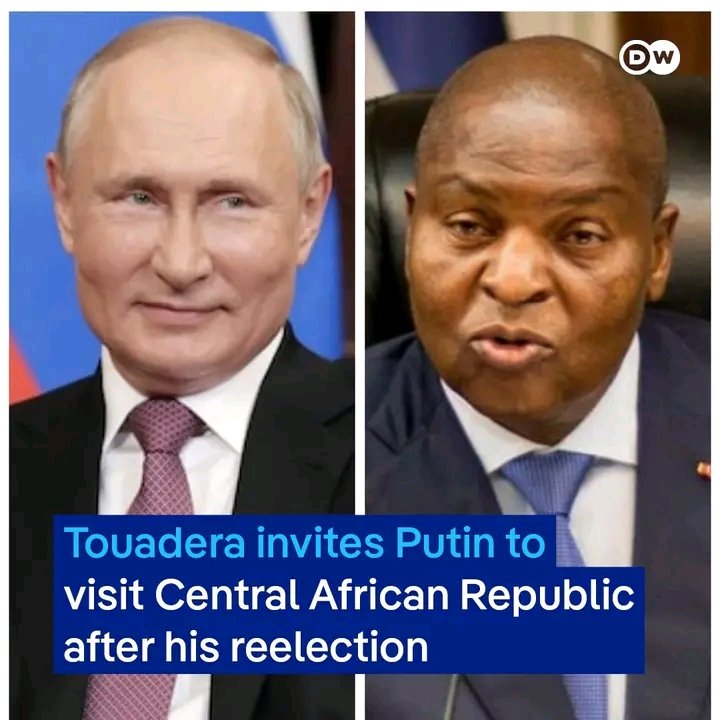
Central African Republic President Invites Putin for State Visit, Cementing Russian Alliance
BANGUI, Central African Republic — In a move signaling a deepening of strategic ties, the newly reelected president of the Central African Republic (CAR), Faustin Archange Touadera, has extended a formal invitation to Russian President Vladimir Putin to visit the country.
The invitation was announced during an interview with the Russian state news agency TASS, in which President Touadera lauded Putin as a “great leader.” This public gesture underscores the increasingly close partnership between Bangui and Moscow, a relationship that has become a cornerstone of CAR’s security and political landscape since 2018.
Russia solidified its role as a key ally six years ago when the CAR government, struggling with long-running civil conflicts, engaged the Russian private military company Wagner Group to assist its national army in combating rebel factions. This partnership has proven decisive for Touadera’s government, helping to secure key territories.
Touadera, who has held power since 2016, secured a third term in elections held on December 28. Analysts anticipate his continued presidency will further entrench and expand Russia’s influence in the mineral-rich nation. Beyond security, Russian entities, often linked to the Wagner network, have secured significant stakes in the country’s lucrative gold and diamond mining sectors, granting Moscow substantial economic leverage.
The growing bond, however, has drawn sharp condemnation from Western governments and international human rights organizations. Critics have repeatedly raised alarms over alleged human rights abuses and atrocities committed by Wagner fighters on CAR soil, accusations that both the Russian and CAR governments have consistently denied.
President Touadera’s invitation to President Putin marks a clear affirmation of CAR’s foreign policy direction, positioning Russia as its principal external partner while distancing itself from former colonial power France and other Western nations. The potential state visit, if realized, would represent a powerful symbolic affirmation of Russia’s expanding diplomatic and economic footprint in Central Africa.
About The Author