

Uganda Police Faces Looming Crisis as Wage Arrears Hit UGX 86 Billion, Thousands of New Recruits at Risk of Going Unpaid
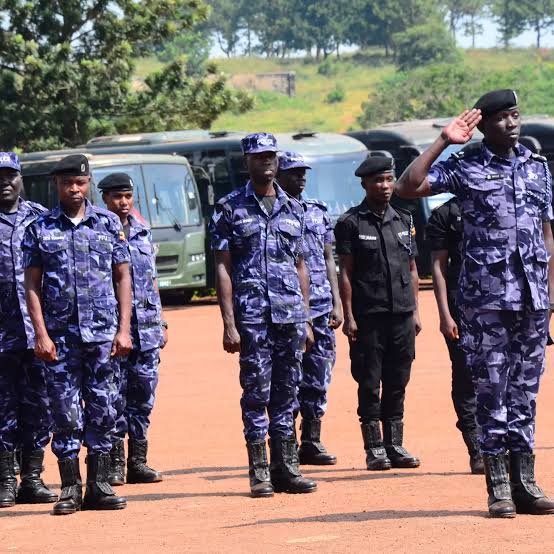
Kampala, Uganda – The Uganda Police Force (UPF) is staring at a deepening financial crisis, with wage arrears reaching a staggering UGX 86 billion and thousands of newly trained officers facing the prospect of never receiving a paycheck, raising urgent concerns about national security and operational discipline.
Officials from the UPF have made an urgent appeal to Parliament to approve an additional UGX 58.4 billion to cover salaries for 10,000 recruits enlisted ahead of the January 2026 general elections. Testifying before Parliament’s Committee on Defence and Internal Affairs on April 1, 2026, Undersecretary Aggrey Wunyi warned that the current budget can only cover a fraction of the new force.
“Our wage bill is projected to increase from UGX 522 billion to UGX 533 billion, but even with that increment, it remains inadequate,” Mr. Wunyi told lawmakers. He revealed that 8,140 recruits risk going without pay in the 2026/27 financial year, despite having completed their training and being scheduled for deployment. “If all the 10,000 recruits are onboarded, we still face a significant shortfall. As it stands, we cannot pay over 8,000 officers starting July 2026.”
The revelation has sparked sharp criticism from legislators, who question the government’s fiscal planning under the Public Finance Management Act, 2015, which requires all recurrent expenditures, including wages, to be budgeted for before recruitment is undertaken.
“You Cannot Arm Them and Fail to Pay Them”
Security analysts and lawmakers warn that deploying armed officers without pay is a recipe for disaster, potentially undermining discipline and exposing the country to severe internal security vulnerabilities.
Mukono North MP Abdallah Kiwanuka voiced the committee’s deepest fears. “You cannot recruit people, arm them, and fail to pay them,” Mr. Kiwanuka said. “Government must urgently reallocate funds or return to Parliament with a supplementary request.”
Lwemiyaga County MP Theodore Ssekikubo added that Parliament was “shocked” by the scale of the deficit, which he said compounds other critical funding shortfalls. He noted that beyond salaries, the police also face a UGX 55 billion shortfall for water and UGX 23 billion for electricity. “If utilities are cut off, police stations will effectively shut down,” Mr. Ssekikubo warned.
AFCON 2027 Security Funding Also Missing
Compounding the crisis, the committee raised alarm over the complete absence of funding for policing the 2027 Africa Cup of Nations (AFCON), which Uganda will co-host with Kenya and Tanzania. Despite the Police requesting UGX 21.159 billion for tournament security, no funds have been allocated in the upcoming budget.
Minister of State for Internal Affairs David Muhoozi acknowledged the gap, explaining that the submissions for AFCON-related expenditures were submitted after the budget framework had been finalized. However, Mr. Ssekikubo warned that failure to finance security could undermine Uganda’s ability to safely host the continental tournament. “You cannot host AFCON without guaranteeing security,” he said.
Mounting Arrears and Pay Disparities
The wage crisis is further exacerbated by mounting domestic arrears. While the Police is grappling with an estimated UGX 86 billion in outstanding obligations, the government has allocated only UGX 3.3 billion for arrears clearance in the coming financial year. Undersecretary Wunyi appealed to Parliament to prioritize settling these obligations, warning that continued accumulation could disrupt service delivery and strain relations with suppliers.
Lawmakers also criticized the government’s phased salary enhancement policy, arguing it disproportionately benefits senior officers while leaving junior personnel underpaid. “Top-ranking officers already have vehicles, housing, and allowances. Meanwhile, junior officers, who form the backbone of policing, remain underpaid and overlooked,” Mr. Ssekikubo noted.
As Uganda’s national budget expands due to major infrastructure projects like the Standard Gauge Railway and AFCON preparations, analysts warn that the growing imbalance between capital investments and recurrent expenditures in the security sector risks weakening institutional effectiveness at a critical political moment.
About The Author