
World Leaders Condemn Iranian Aggression in Strait of Hormuz, Pledge to Defend Global Shipping
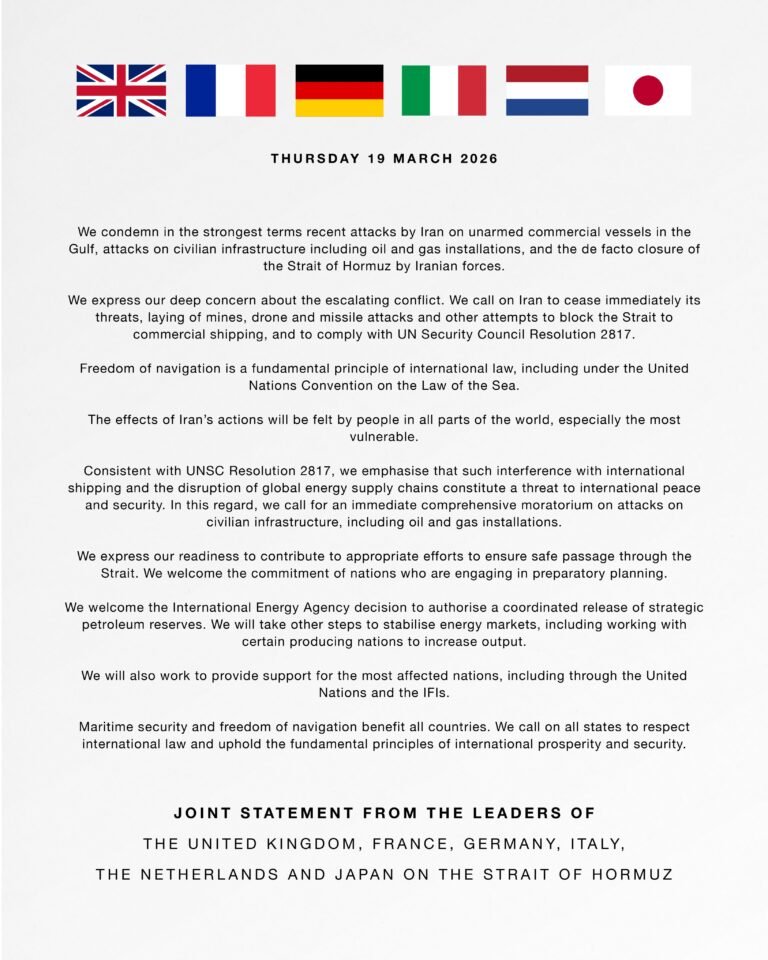
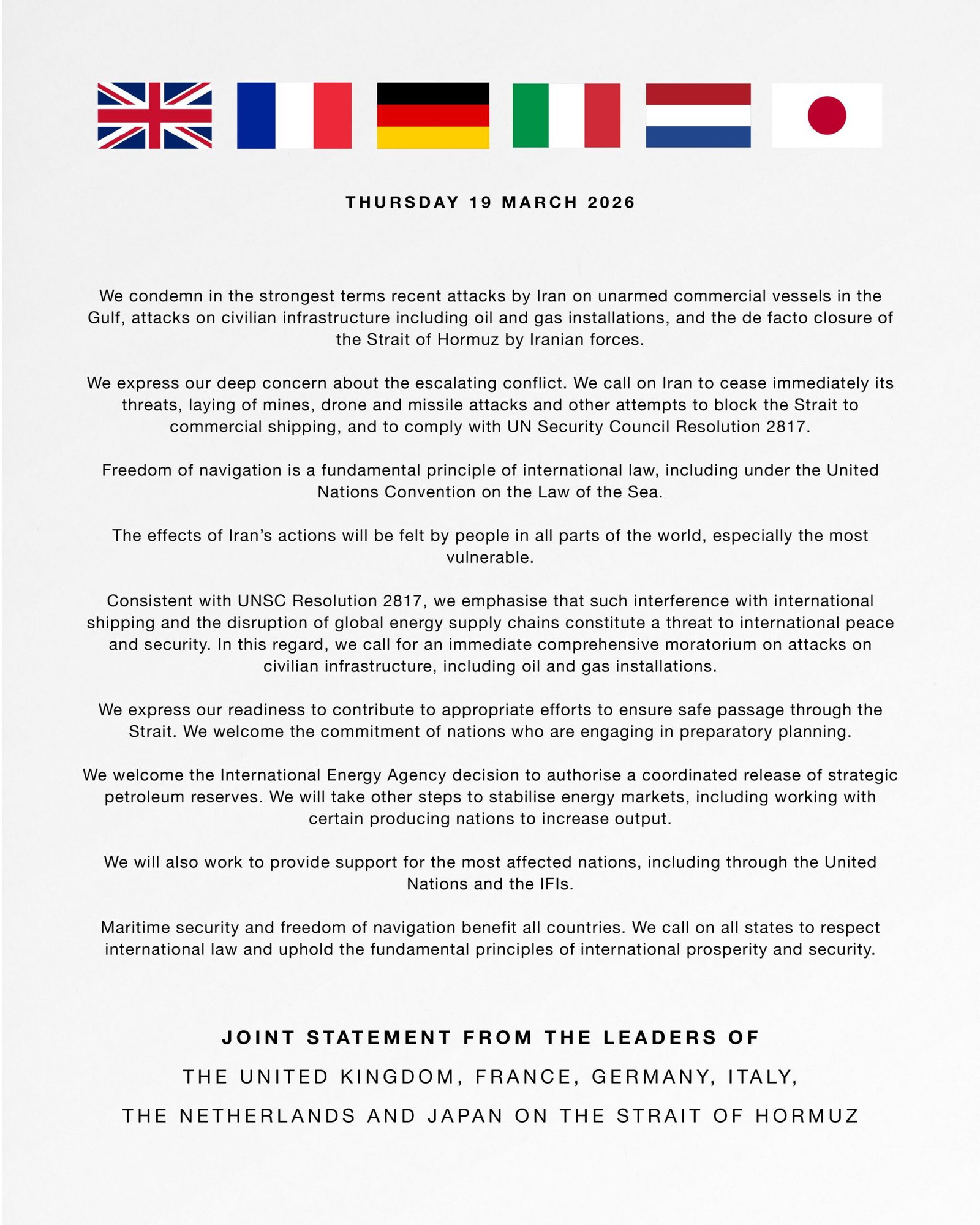
LONDON — In a unified show of force, the leaders of six major nations have issued a joint statement condemning a series of aggressive actions by Iran in the vital Strait of Hormuz and pledging to take immediate steps to stabilize global energy markets and ensure the safety of international shipping.
The statement, signed by the leaders of the United Kingdom, France, Germany, Italy, the Netherlands, and Japan, denounces “in the strongest terms” recent Iranian attacks on unarmed commercial vessels and civilian infrastructure, including oil and gas installations. It also accuses Tehran of orchestrating a “de facto closure” of the strategic waterway.
The Strait of Hormuz, a narrow passage between the Persian Gulf and the Gulf of Oman, is a critical artery for global energy supplies, through which a significant portion of the world’s crude oil passes. The leaders emphasized that “freedom of navigation is a fundamental principle of international law,” citing the United Nations Convention on the Law of the Sea.
The joint statement specifically calls on Iran to “cease immediately its threats, laying of mines, drone and missile attacks and other attempts to block the Strait to commercial shipping.” It demands that Tehran comply with UN Security Council Resolution 2817, which the leaders stress identifies such interference as a threat to international peace and security.
“The effects of Iran’s actions will be felt by people in all parts of the world, especially the most vulnerable,” the statement reads, highlighting the risk of global economic disruption and energy price shocks.
In response to the escalating crisis, the coalition of nations has outlined a series of concrete measures:
· Ensuring Safe Passage: The nations expressed their “readiness to contribute to appropriate efforts to ensure safe passage through the Strait” and welcomed the commitment of nations already engaged in preparatory planning for a potential naval mission.
· Stabilizing Energy Markets: The leaders welcomed a decision by the International Energy Agency to authorize a coordinated release of strategic petroleum reserves. They further pledged to take other steps to stabilize markets, including working with certain oil-producing nations to increase output.
· Supporting Affected Nations: The group committed to working with the United Nations and International Financial Institutions (IFIs) to provide support for countries most affected by the disruption and potential price hikes.
The joint statement concludes with a call for all states to respect international law, asserting that “maritime security and freedom of navigation benefit all countries.” The strong and coordinated response from these major world powers signals a significant escalation in international efforts to counter Iran’s actions and protect one of the world’s most crucial maritime routes.
About The Author