
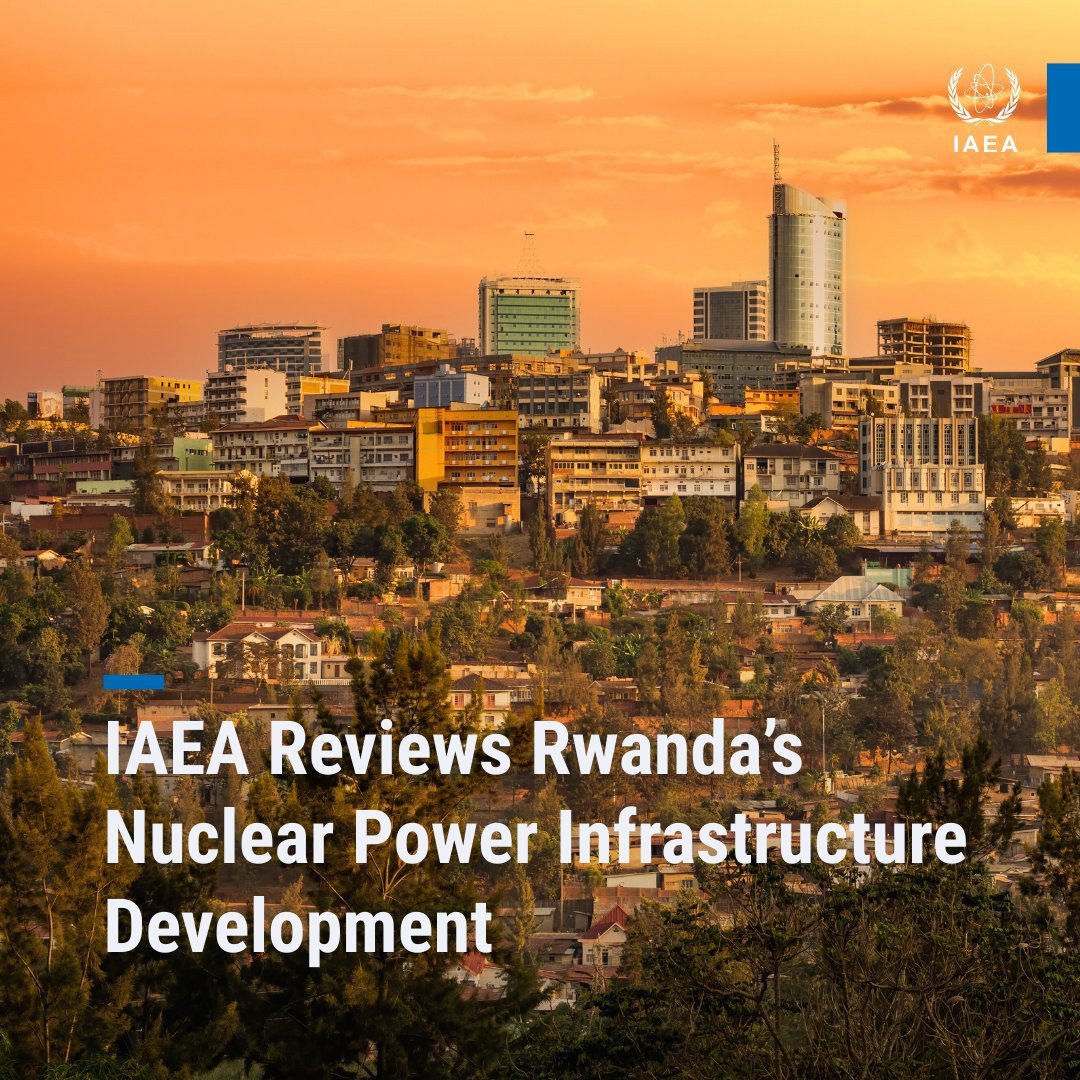
IAEA Reviews Rwanda’s Nuclear Power Infrastructure Development
Rwanda is making significant progress toward integrating nuclear power into its national energy grid, with the country aiming for nuclear to supply 60 to 70 percent of its energy mix by the early 2030s, according to a recent review by the International Atomic Energy Agency (IAEA).
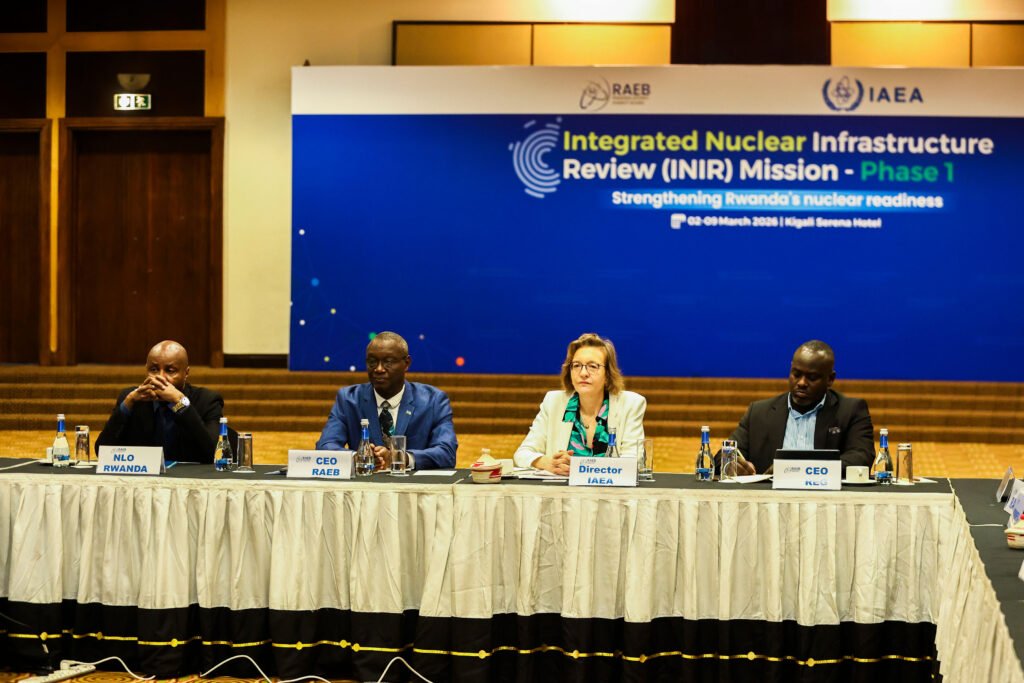
An Integrated Nuclear Infrastructure Review (INIR) mission, conducted at the request of the Rwandan government, concluded an eight-day visit on 9 March 2026. The team of four international experts from Egypt, Estonia, Kenya, and Pakistan, alongside six IAEA staff, assessed the country’s development of the infrastructure required for a safe, secure, and sustainable nuclear power programme.
The mission focused on reviewing a self-evaluation report prepared by Rwanda, which covered all 19 infrastructure issues outlined in the IAEA Milestones Approach. The review found that Rwanda has made notable progress, particularly in securing strong government commitment, proactive stakeholder engagement, and early preparation for emergency response.
Rwanda expects its first Small Modular Reactor (SMR) to be operational by the early 2030s. The nuclear programme is being developed under a 2020 Presidential Order that established the Rwanda Atomic Energy Board and is embedded in the national energy policy to reduce reliance on electricity imports and fossil fuels.
“The level of preparation and involvement from all participating organizations and teams during the mission reflected a deep commitment to the programme,” said Mehmet Ceyhan, Team Leader for the mission and Technical Lead of the IAEA Nuclear Infrastructure Development Section.
The INIR team identified several good practices that could benefit other countries developing nuclear power, including strong government coordination and comprehensive preparation for emergency preparedness. However, the mission also provided recommendations to help Rwanda further strengthen its infrastructure. Key areas for further action include finalizing a comprehensive report to support the national decision to introduce nuclear power, completing the review of national legislation, and further developing policies to support the programme.
Jimmy Gasore, Minister of Infrastructure of Rwanda, reaffirmed the country’s commitment to the process. “Rwanda remains firmly committed to the responsible, safe and transparent development of nuclear power infrastructure. The IAEA’s review provides us with invaluable guidance to ensure that our national framework aligns with international safety standards and global best practices,” he said.
Following the mission, the IAEA and Rwanda will develop an integrated workplan to continue providing coordinated support as the country advances toward constructing its first SMR.
About The Author