
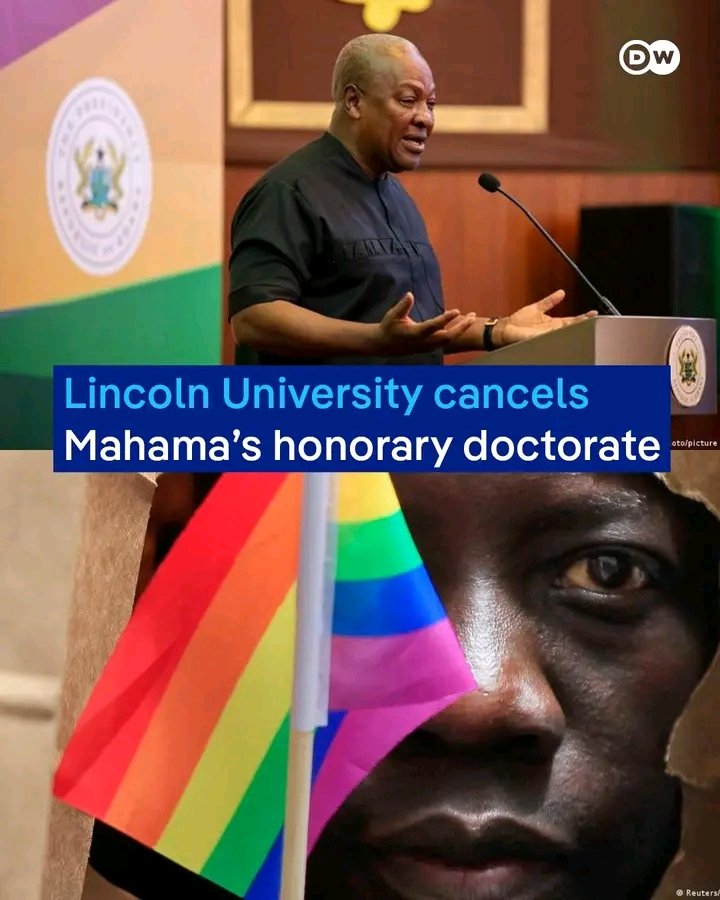
Lincoln University Cancels Honorary Degree for Ghana’s President Amid Anti-LGBTQ+ Bill Controversy
LINCOLN UNIVERSITY, Pa. — Lincoln University in Pennsylvania has abruptly cancelled a planned honorary doctorate ceremony for Ghanaian President John Dramani Mahama, just two days before the event was scheduled to take place, citing concerns over Ghana’s newly passed Human Sexual Rights and Family Values Bill.
The university, one of the United States’ oldest historically Black institutions of higher learning, had intended to honour Mahama for his leadership and public service. However, the sudden reversal followed internal and external backlash regarding Mahama’s support for the controversial legislation, which has been widely condemned internationally as anti-LGBTQ+.
In a statement, university officials confirmed the cancellation, explaining that the decision was made after careful consideration of the institution’s values.
“Lincoln University is an institution that stands for equity, inclusion, and the protection of human rights for all,” the statement read. “Given the current climate surrounding the legislation in Ghana, we determined that proceeding with the ceremony would be inconsistent with the values we strive to uphold.”
The bill in question, passed by Ghana’s parliament, imposes stringent restrictions on LGBTQ+ rights, including severe penalties for identifying as queer or advocating for LGBTQ+ issues. While Mahama has not yet signed the bill into law, his public support for its passage has drawn sharp criticism from human rights organizations and international partners.
The cancellation has sparked intense debate across Ghana, where many view the decision as foreign interference in the nation’s sovereignty and cultural values. Supporters of the president argue that the bill reflects the moral convictions of the Ghanaian people and that Western institutions should not impose their standards on African nations.
“It is disappointing that a respected institution like Lincoln University would allow foreign political debates to overshadow the recognition of a leader’s broader contributions to democracy and development,” said a spokesperson for the Ghanaian presidency.
Conversely, LGBTQ+ advocacy groups in Ghana have praised the university’s decision, noting that it underscores the global consequences of the bill. They argue that the legislation endangers the safety of queer Ghanaians and contradicts international human rights norms.
This incident reflects a broader trend across the African continent, where several nations—including Uganda, Kenya, and Nigeria—have faced significant international pressure, aid cuts, and diplomatic sanctions after enacting or advancing strict anti-LGBTQ+ legislation. Western governments and institutions have increasingly used diplomatic channels and economic leverage to push back against such laws, creating tensions between national sovereignty and global human rights expectations.
The cancellation marks a rare instance of a foreign academic institution directly intervening in the political discourse surrounding the bill, highlighting how domestic legislation in African nations is increasingly becoming a flashpoint in international relations.
About The Author