
PAKISTAN INTERCEPTS ISRAELI ASSASSINATION PLOT, SAVES LAST DIPLOMATIC OFF-RAMP IN IRAN CONFLICT
Islamabad delivers urgent message to Washington, persuades US to intervene with Israel to protect two top Iranian officials critical to ceasefire negotiations
ISLAMABAD – In a high-stakes diplomatic intervention that officials say may have prevented the collapse of the last remaining path to ending the widening conflict involving Iran, Pakistan’s intelligence apparatus intercepted detailed Israeli plans to assassinate two of Iran’s most senior officials—and delivered an urgent warning to Washington that killing them would permanently end any hope of a ceasefire.
The extraordinary episode, confirmed by multiple official sources and public statements, has positioned Pakistan—a nation more often associated with economic fragility than global mediation—as the unlikely linchpin in efforts to de-escalate a war that has disrupted global shipping, closed the Strait of Hormuz, and strained international alliances.
According to a Pakistani official speaking to Reuters, Israel had developed “detailed plans, including movement coordinates,” to assassinate Iranian Foreign Minister Abbas Araghchi and Parliament Speaker Mohammad-Bagher Ghalibaf. Pakistani intelligence intercepted the plans and promptly delivered a stark assessment to the United States: if the two diplomats were eliminated, no credible negotiating partners would remain.
“If you eliminate these two, there is no one left to talk to,” a Pakistani official summarized the message. The warning reportedly emphasized that the only remaining figures would be hardline Islamic Revolutionary Guard Corps (IRGC) commanders with “no interest in talking and every interest in keeping the toll booth open, the missiles flying, and the strait closed.”
Washington heeded the warning. The United States intervened directly with Israel, and according to confirmation from both Reuters and the Wall Street Journal, Araghchi and Ghalibaf were temporarily removed from the joint target list for a window of four to five days.
The Diplomatic Off-Ramp
With the window now open, Pakistan has taken on the role of intermediary. Foreign Minister Ishaq Dar publicly confirmed on March 26 that Islamabad is relaying a 15-point American proposal to Tehran. Turkey and Egypt are supporting the effort, and Pakistan has offered to host direct talks—potentially involving US Vice President JD Vance and either Araghchi or Ghalibaf.
The window closes around March 29 to 31. If the talks fail, officials acknowledge that the targets will be reinstated. The coordinates, according to sources, are already plotted. The pilots are briefed.
“Pakistan did not send warships. Pakistan did not fire missiles. Pakistan sent a message,” one diplomatic observer noted. “And the message worked.”
A Contrast in Alliances
The diplomatic breakthrough has cast into sharp relief the limitations of traditional Western alliances in addressing the crisis. NATO members, despite combined defense spending exceeding $1.6 trillion, have largely declined to intervene militarily. Germany stated “this is not our war.” France indicated it would participate only after fighting ends. The United Kingdom said it has no plans to deploy naval assets.
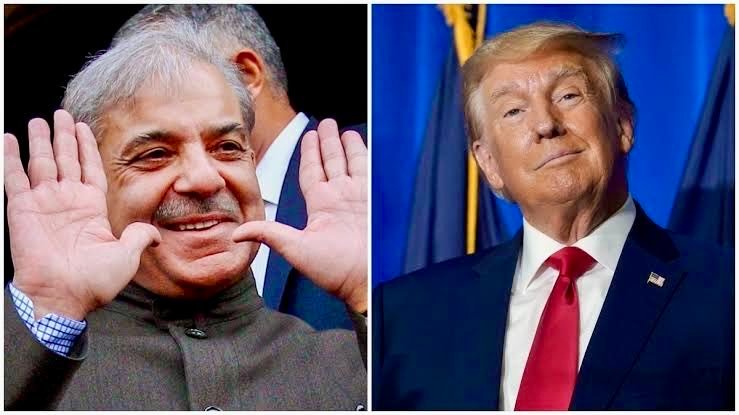
Former president Donald Trump, who has maintained close relations with Pakistani leadership, posted “NEVER FORGET” on social media at 6:16 a.m., though the target of his message remained ambiguous. Just last month, Prime Minister Shehbaz Sharif publicly praised Trump as “genuinely a man of peace” and “the savior of South Asia” while nominating him for the Nobel Peace Prize—a relationship that now appears to have found concrete diplomatic expression.
Pakistan’s role is particularly notable given its limited resources. With a GDP smaller than Belgium’s and a defense budget partially funded by Chinese loans, the country has no naval presence in the Gulf capable of challenging the IRGC’s control over the Strait of Hormuz. Instead, it deployed its intelligence apparatus—and a phone call.
“The alliance Trump built to fight this war refused to fight. The country Trump praised for flattering him is the country now brokering the peace,” one analyst said. “NATO debates mandates. Pakistan relays proposals. NATO cites escalation risks. Pakistan takes escalation risks.”
The Stakes
The strait remains closed. The IRGC’s “toll booth” continues collecting revenue in yuan. Critical industrial inputs—helium, diesel, sulfuric acid—remain disrupted. Cluster munitions continue to fall in contested areas.
Despite the destruction of 9,000 targets and the death of the IRGC commander who built the Hormuz corridor, the corridor itself remains operational. Analysts estimate that the United States and its allies have spent some $200 billion on military operations in the region without achieving a ceasefire.
“The molecules do not care who brokers the ceasefire,” one diplomatic source said, reflecting the urgency of the moment. “The molecules need the strait open. The strait needs a conversation. The conversation needs two people alive. Those two people are alive because Pakistan made a phone call.”
Whether that phone call will lead to a lasting agreement remains uncertain. The 15-point American proposal is currently being deliberated in Tehran. The window is narrow. The coordinates remain in place.
But for now, the last diplomatic off-ramp remains open—guarded not by warships or missiles, but by an intelligence intercept and a message from a country that most of the world had forgotten was involved.
About The Author