
Otafiire Rejects Parole as Solution to Prison Congestion, Calls for New Prisons and More Judges
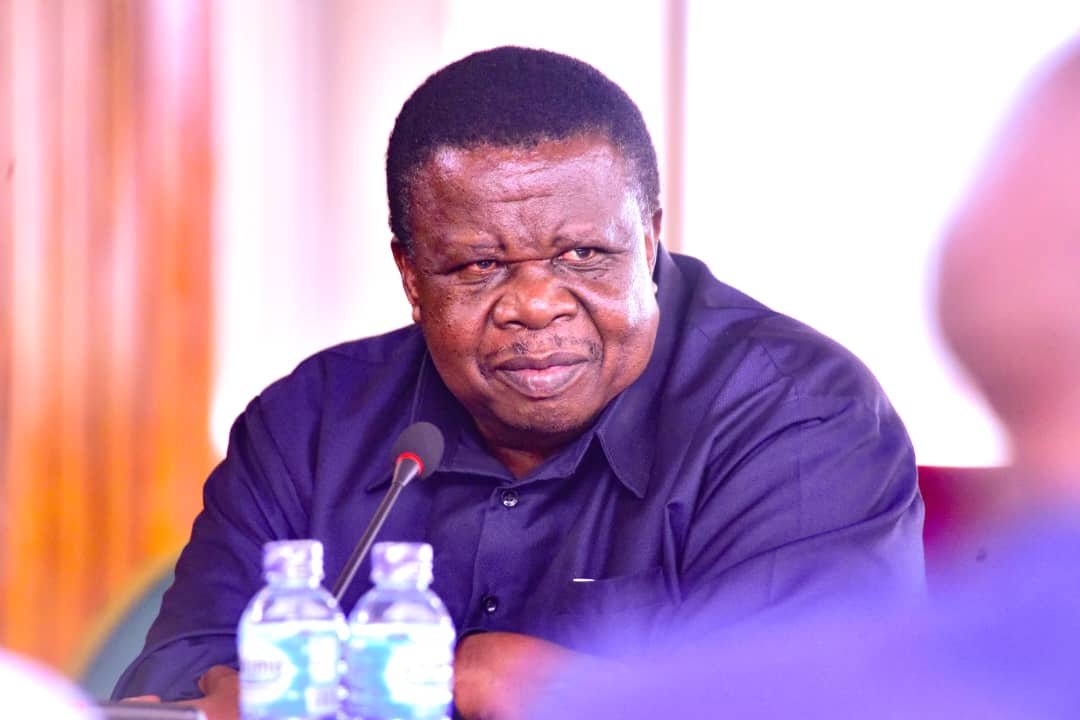
The Minister of Internal Affairs, Kahinda Otafiire, has dismissed proposals to rely on plea bargaining or the impending parole system as the primary solutions to Uganda’s crippling prison overcrowding, insisting instead that government must build new prisons and appoint more judicial officers to expedite case hearings.
Appearing before Parliament’s Defence and Internal Affairs Committee, Mr. Otafiire argued that the country’s prison infrastructure is a relic of the colonial era and has failed to keep pace with population growth. He noted that most facilities were established in 1922, with a few added in the 1960s, and that no significant expansion has taken place since.
“The prison capacity we have was put in place by the colonialists in 1922, when there were some prisons built in the 60s, and we have not increased the space since then. The population has increased, and the space for parole has also increased; therefore, we must construct prisons,” the Minister said.
According to Uganda Prisons Services, the current prison population stands at over 80,000 inmates against a holding capacity of just 23,104—an occupancy rate of 345%. Officials project the inmate count could reach 111,822 by 2030 if no action is taken.
While prison authorities have welcomed the planned rollout of a parole system in the 2026/27 financial year, describing it as a potential “game changer,” Mr. Otafiire cautioned that parole requires substantial investment in supervision—funds that are currently not available.
“But then we need money to supervise those on parole, as well as the local governments, which money is not available,” he said.
The Minister also highlighted a deeper injustice within the judicial process. He pointed to cases where convicts sentenced to six months end up spending three years in custody simply because there are insufficient resources to hear their matters.
“Now, they can’t plea bargain because to plea bargain will be for themselves. You have been in jail for three years whereas you would have served six months. When you plea bargain, you are still convicted; it is on record, it is a catch-22. But if you don’t plea bargain, you don’t get out,” Mr. Otafiire explained.
His remarks underscore a growing divergence between Uganda Prisons Services, which sees parole as a quick win, and the Ministry of Internal Affairs, which advocates for a dual approach of expanding physical infrastructure and strengthening the judiciary to tackle the root causes of congestion.
With the prisons service seeking an additional UGX 75.099 billion to construct new facilities, the debate over how to resolve the overcrowding crisis—now at 345%—is set to intensify as Parliament continues reviewing the 2026/27 Ministerial Policy Statement.
(Courtesy Photo)
About The Author