
Uganda Lawmakers Suspend Disbelief Over BoU Laptop Theft, Cite Governor’s Stand Against Sovereignty Bill
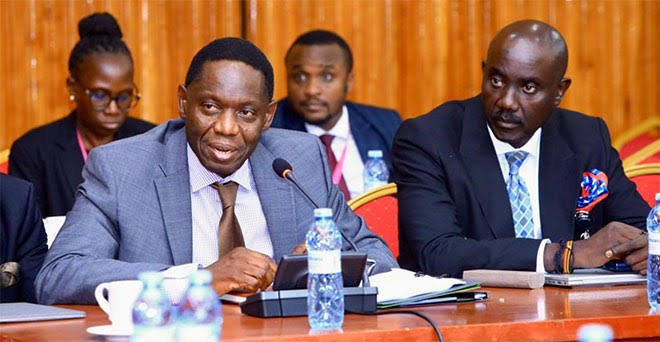
Parliament, Uganda – A brazen break-in at the heavily fortified Bank of Uganda (BoU), where thieves made off with seven laptops, has ignited a political firestorm in Parliament. Legislators are increasingly skeptical of the “ordinary crime” narrative, instead linking the heist to Governor Michael Atingi-Ego’s recent defiance of the controversial Protection of Sovereignty Bill, 2026.
The security breach, detected on the morning of Monday, May 4, 2026, was met with sharp criticism during a parliamentary session on March 5. The incident marks yet another security lapse for the central bank, following a devastating cyber heist in November 2024 where hackers siphoned over UGX 60 billion from the treasury system.
“It’s a Shame”
Lawmakers expressed disbelief that physical intruders could penetrate the country’s premier financial institution despite prior parliamentary recommendations for enhanced security.
“I am surprised that it can still happen,” said Medard Lubega (Busiro East). “We made a report in COSASE advising the Bank of Uganda on security measures. In 2026, somebody can tell the country that Bank of Uganda has been invaded by a group of thugs, not even cyber crime, but physical computers taken. It’s embarrassing. It’s a shame.”
A Scheme to Intimidate the Governor?
The most explosive allegations came from legislators who dismissed the idea of an ordinary criminal act. Paulson Luttamaguzi (Nakaseke South) directly linked the timing of the theft to Governor Atingi-Ego’s resistance to the Sovereignty Bill.
“We don’t think any small or big group can attack Bank of Uganda with all its security,” Luttamaguzi stated. “This is a scheme to relieve the Governor of his duties. The State expected the Bank to support the bill, which it never did. If they want to punish him indirectly by claiming his facility was attacked, then we should pray for this country.”
Jonathan Odur (Erute South) echoed concerns about the intimidation of independent institutions, suggesting the stolen laptops may contain evidence related to ongoing investigations into irregular payments. “There is a tendency to intimidate independent-minded public officials in this country,” Odur warned. “I hope the Governor is not being harassed indirectly.”
Kajara County MP Michael Timuzigu argued the thieves were not after hardware for resale, but sensitive data. “They are stealing information, maybe to hide some information, maybe there is fraud they want to cover up, or enemies of Uganda want to disorganise the bank,” he said, urging management to root out internal saboteurs.
Gaffa Mbwatekamwa (Igara West) labeled the incident a “diversionary ploy” designed to shift media and public attention away from the Sovereignty Bill and punish Atingi-Ego.
Downplaying the Breach
Not all lawmakers viewed the incident as a high-risk threat to national security. Paul Omara (Otuke County), citing his banking experience, sought to reassure the public. He noted the laptops were taken from a lower-level operational area, not executive offices.
“As far as I know, there is really no particular information you can get from a laptop in a financial institution which might be helpful to anybody,” Omara said, describing it as a “petty criminal incident.”
Conversely, Boniface Okot (Youth, Northern Region) called for expedited investigations, raising alarms over potential loss of passwords and electronic data critical to Uganda’s financial system.
Arrests Made
On April 8, 2026, police announced the arrest of two suspects in connection with the break-in: Boaz Kule, 19, and Ramadhan Kabuye. The incident continues to heighten scrutiny of security protocols at Uganda’s central bank and intensify debates over political interference in independent bodies.
About The Author