
NUP Rejects ‘Protection of Sovereignty Bill’, Says It Criminalises Opposition
The National Unity Platform (NUP) has called on Parliament to reject The Protection of Sovereignty Bill, 2026 in its entirety, arguing that the proposed legislation seeks to criminalise legitimate opposition activities and suppress political criticism.
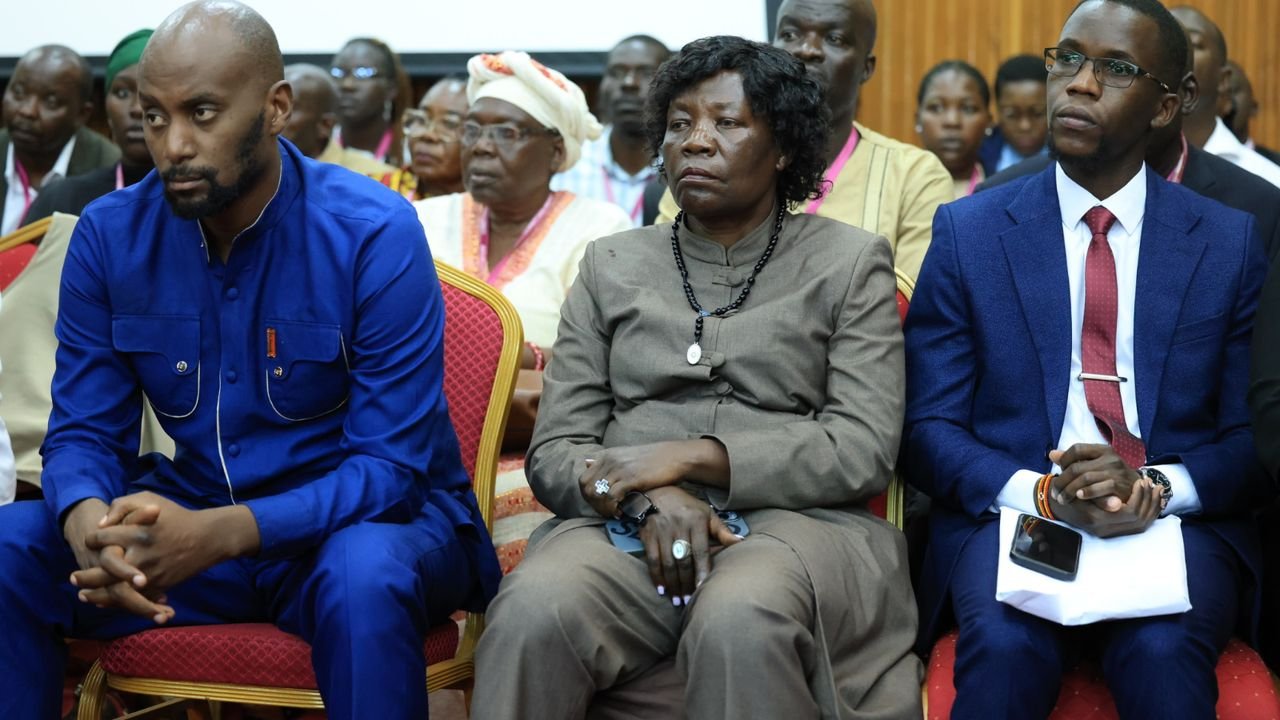
NUP Secretary General Lewis Rubongoya made the request while appearing before Parliament’s Joint Committee of Legal and the Committee on Defence and Internal Affairs to present the Party’s views on the Bill.
‘Bill Targets Opposition Over Diaspora Engagement’
Rubongoya told the committee that the Bill specifically targets the National Unity Platform given its increased engagement with the Ugandan diaspora community, and because the Party does not receive government financing under the Inter Party Organization for Dialogue (IPOD). He described the law’s intended objective as “persecutorial in nature.”
“This Bill definitely targets the opposition right now as it is, especially because of our engagement with the Ugandan diaspora and because Government has tried and done everything possible to limit the operations,” Rubongoya explained.
“When they see Robert Kyagulanyi addressing the European Union Parliament on what has gone wrong in Uganda, they feel that they need to bring such a law. Our advice to them would be to correct what has gone wrong. Instead of trying to come up with all these laws to criminalise every legitimate political participation and activities of the opposition.”
Concerns Over Vague Provisions
According to NUP, clause 13 of the Bill makes it an offence for anyone to publish any information—even if true—or participate in any act that weakens or damages the economic system or viability of the country, causing economic disruption, insecurity or instability.
“How do you define this? It is so broad that the government will wake up one day and choose to interpret it in any way it desires,” Rubongoya said.
He added that the provision suppresses journalism and political criticism, “which disproportionately violates citizens’ right to speak freely and access information, as well as Article 43 itself, as no legitimate democratic society criminalises truthful publication.”
The NUP Secretary General also cited clause 8(3), which prohibits citizens from opposing government policy or hindering the implementation of government policy.
Opposition’s Right to Criticise
Rubongoya defended the Opposition’s role, arguing that while Ugandans have a right to criticise government programmes, this does not mean everything will be opposed.
“But what I am saying is that we have a right, and the people of Uganda, whether in Uganda or the diaspora, should have a right to oppose those government policies or programmes,” he noted.
“If a person is in the diaspora and wants to communicate to the people of Uganda or mobilise them to oppose a certain policy which they think is oppressive or repressive towards them, they must have a right to do that. And that is why we talk about alternatives; we have a right to offer alternatives and definitely to oppose those things which we do not agree with.”
“Our duty as the opposition, whether we are in Uganda or abroad, is to oppose government policy. That is why we are there, as the opposition, to oppose what the present government is doing. This bill is essentially criminalising opposition. We know that in Uganda, opposition has already been criminalised, but once you say that citizens should not oppose the policy of government, then that is extremely unconstitutional.”
Mixed Reactions from MPs
David Livingstone Zijan (Butembe County) commended Rubongoya for his eloquence, but expressed concern over the assertion that the goal of the Opposition is to oppose government policy.
“This, as he has stated, implies that even if Government says we will bring national health insurance and universal education for all, you will oppose because the goal of your existence is to oppose,” Zijan remarked. “So, it doesn’t necessarily mean that these are negative or injurious to society, you are simply doing your job, which is to oppose.”
Peter Okeyoh (Bukooli Island) questioned whether NUP’s position includes opposing programmes like the Parish Development Model (PDM). “One of the policies of the government is UPE, PDM. I wanted you to put light on this, that the opposition is supposed to oppose PDM, that brings money into people’s pockets.”
However, Isingiro West’s Rauben Arinaitwe reminded NUP that it is not the only party with diaspora support. “All the political parties have support base in the Diaspora. For example, NRM has even a directorate in its secretariat in charge of Diaspora. So, NUP, I want to allay your fears that this law is only affecting you, it will affect across the board of all political parties.”
The Bill remains under review by the joint committee.
About The Author